
In this first-time guide to Genoa, we will take you to this historic and enchanting port city in northern Italy. We will show you what to see, where to go, and stay, what to eat, and many more helpful tips. If you’d like to go there, please stay with us.

Short introduction
Genoa is a historic port city located in northern Italy and serves as the capital of the Italian region of Liguria. Although it is often overshadowed by more famous cities like Rome and Venice, Genoa has a rich history as an influential trading hub. More importantly, the city features a wealth of hidden gems nestled within its cozy alleyways, excellent cuisine—especially seafood—and a renovated old port. Visitors can enjoy beautiful sights, including one of Europe’s largest aquariums.
As the European Capital of Culture in 2004 and the birthplace of the explorer Christopher Columbus (Cristoforo Colombo), Genoa is gradually gaining recognition in the tourism market. With its charming houses, lovely seaside villas, and numerous luxurious boutiques, Genoa is a destination not to be missed for those seeking an authentic Italian experience. The city’s vibrant culture, from its colorful shops to its spicy scents, is a unique blend that captivates visitors. Suppose you’re traveling through northwestern Italy, particularly Milan or Turin. In that case, it’s worth spending a couple of days or a weekend in Genoa.
Where is Genoa, Italy?
Genoa, the coastal capital of the northern Italian region of Liguria, is conveniently located between the Ligurian Alps and the Mediterranean Sea. Its medieval name, Janua, is derived from the Latin word for “door,” reflecting its historical role as a crossroads for different cultures and a vital trading port during the Middle Ages. The city is easily accessible, whether you’re arriving by car from Milan or Marseille (an 8-hour drive). This accessibility makes it an ideal destination for a weekend getaway or a more extended stay.
Short History of Genoa
Genoa made its wealth at sea through trade, colonial exploitation, and piracy. It was one of the four central Italian maritime republics, alongside Venice, Pisa, and Amalfi, and enjoyed a well-developed system of governance that lasted for several hundred years.
By the thirteenth century, after playing a significant role in the Crusades, the Genoese traversed the Mediterranean, bringing back ideas and goods. Notably, the city’s architects used Arab pointed arches a century before the rest of Italy adopted this style.
The San Giorgio banking syndicate controlled the city for much of the fifteenth century. It turned down Christopher Columbus—who grew up in Genoa—when he sought funding for his voyages. With backing from Spain, Columbus opened new Atlantic trade routes, ironically diminishing Genoa’s prominence.
Following a foreign invasion, the Banco di San Giorgio was forced in 1768 to sell the Genoese colony of Corsica to the French. A century later, the city became a hub of radicalism. Giuseppe Mazzini, a key figure in the Risorgimento movement, was born here. In 1860, Giuseppe Garibaldi set sail for Sicily with his “Thousand” from the city’s harbor.
Around this time, Italy’s industrial revolution began in the city, with steelworks and shipyards spreading along the coast. However, these industries suffered heavy bombing during World War II, leading to a prolonged economic decline for the city.
Things began to improve in the 1990s when state funding was allocated to celebrate the 500th anniversary of Columbus’s 1492 voyage. This funding was used to renovate many of the city’s late Renaissance palaces and the old port area. Renzo Piano, Genoa’s most famous modern son and co-designer of Paris’s Pompidou Centre, played a leading role in these efforts. The results of a twelve-year program culminated in Genoa being named a European Capital of Culture in 2004, and the positive changes are visible throughout the city.
How to Get to Genoa
Genoa Airport is less than 8 km from the city center. A convenient airport shuttle (Volabus) takes about 30 minutes to arrive. Depending on traffic, a taxi ride will take about half that time.
Genoa’s AMT public transportation system offers a 24-hour card for just 10 Euros that can be used on all the city’s trains, buses, elevators, and funicular railways. Suppose you’re arriving from another Italian town. In that case, your best option is to take the train to Genoa’s central station, Piazza Principe. From Milan, the ride will be 1 hour and 30 minutes by high-speed train. From Turin, the ride is as fast as 1 hour and 40 minutes.
How do you get around in Genoa?
The easiest way to explore Genoa is on foot; however, alternative options are also available. Subway Line 1 connects the Rivarolo area to the city center, with eight stations that provide access to attractions such as the Aquarium and the Ducal Palace. Notable stations include Genoa’s Piazza Principe, which is linked to the train station, and De Ferrari, located in the city’s shopping district.
The Azienda Mobilità e Trasporti (AMT) operates an extensive bus network with over 140 routes and a standard ticket costing 1.50 euros for 100 minutes of travel. Genoa also features ten elevators that help navigate its hilly terrain.
For a unique experience, the Navebus sea service connects Pegli to the Old Port in about 30 minutes, providing a scenic route. The “AMT Genova” mobile app offers information on transportation to Genoa and ticket purchasing, available for free on the App Store and Google Play.
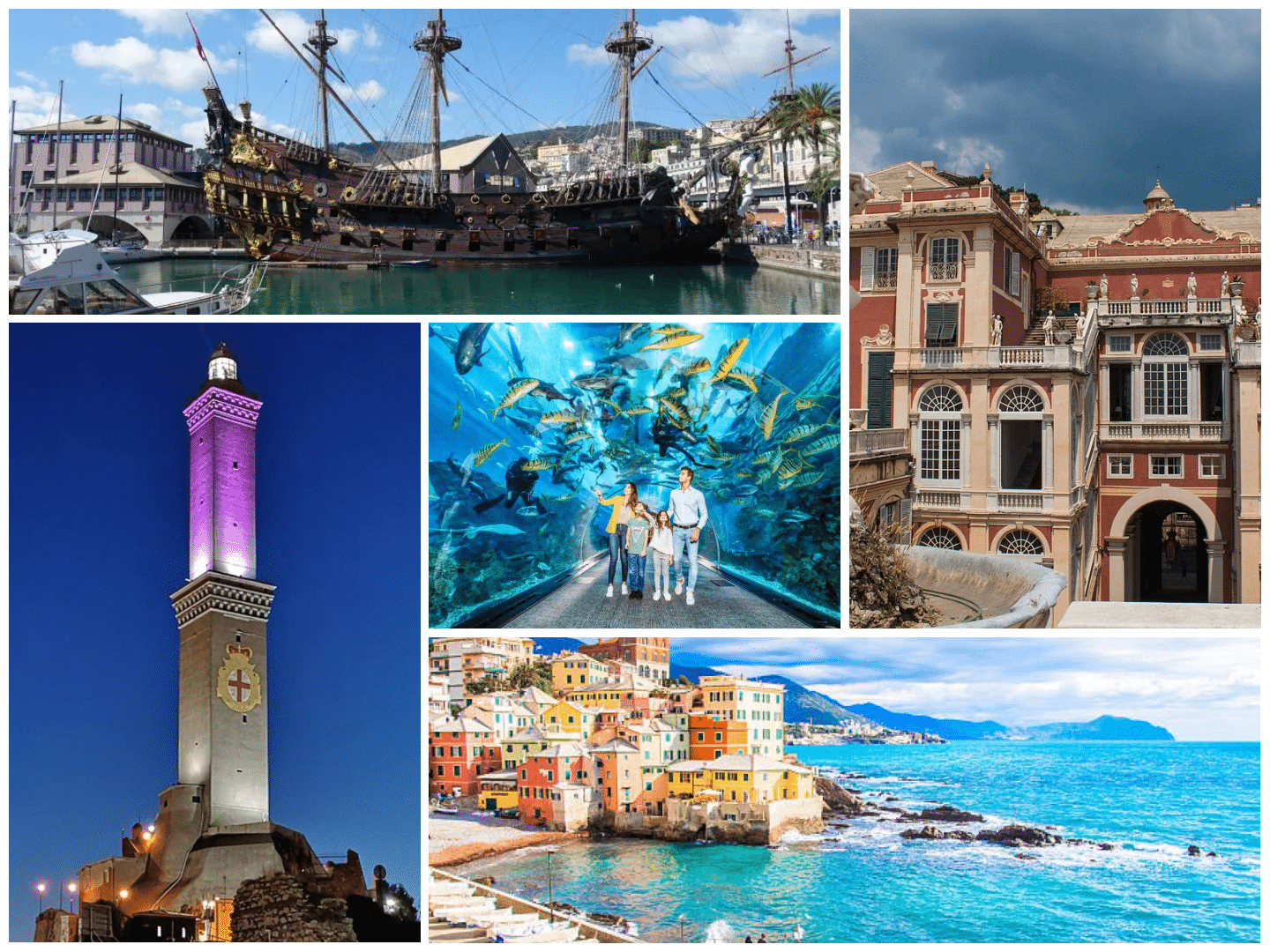
A guide to Genoa – Top Attractions
From breathtaking views to divine gelato, here’s what not to miss in the capital of Italy’s Liguria region.
Porto Antico
Explore the Old Port, a vibrant area that combines history and modernity, featuring the waterfront and the Bigo (a lift offering stunning city views).
Historic Center
The historic center of Genoa, one of the largest in Europe, captivates visitors with its maze-like alleys, known as caruggi, which lead to the sea. Here, you’ll experience Genoa’s vibrant culture through colorful shops, spicy scents, and picturesque streets. Explore the UNESCO-listed Palazzi dei Rolli, featuring stunning Renaissance palaces that reflect the city’s rich maritime history.
Key landmarks include the Porta Soprana towers, built in the 12th century, which offer great views from the top. Don’t miss the Cathedral of San Lorenzo, a blend of medieval and Gothic styles known for its striking black-and-white striped façade.
Via Garibaldi, part of the first urban development project in Europe dating back to 1550, showcases Renaissance and Baroque architecture. Many of its luxurious buildings were part of a hospice “quality system” m for dignitaries. Stroll through this elegant street, peek into palaces like Palazzo Doria Tursi, Palazzo Rosso, and Palazzo Bianco, and appreciate the architecture. It’s easily accessible by foot or public transport from the city center.
What are the Palazzi dei Rolli?
The Rolli was originally a list of the country’s most beautiful and elegant noble palaces in Italy, considered worthy of hosting prominent figures visiting Genoa. Today, declared a UNESCO World Heritage site, the Palazzi dei Rolli is partly open to the public and hosts various museums and exhibitions. Others, which can only be visited during the Rolli Days, held about twice a year, feature offices and banks.
Doge’s Palace (Palazzo Ducale)
The Palazzo Ducale stands as a powerful testament to Genoa’s rich history. It was constructed in 1291 by the influential Spinola and Doria families. In 1339, it became the official residence of the Doge of Genoa and has since been a symbol of political authority. Visitors can explore significant features such as the Grimaldi TDon’t, the former prison, and the impressive neoclassical rooms of Maggior and Minor Consiglio, where the G8 meeting was hosted in 2001.
The palace has undergone several key renovations, notably a stunning redesign by Simone Cantoni after a devastating fire in 1777, which introduced a grand Neoclassical style. Once a fortress, it symbolized political power and housed political prisoners until the 20th century. Further restorations in the 19th century revitalized its historical splendor, culminating in its public opening in 1992. Today, the Palazzo Ducale serves as the central cultural hub of Genoa, hosting a range of exhibitions and events. It has an unwavering city as a vital symbol of the city.
Palazzo Reale
When visiting the Palazzi dei Rolli, make Palazzo Balbi–Durazzo, known as Palazzo Reale, your top choice. This former residence of the Savoy dynasty is a must-see, featuring magnificent terraced gardens, exquisite furnishings, and an extraordinary collection of 17th-century art, highlighted by the stunning Hall of Mirrors.
Initially constructed in the 17th century by the Balbi family of Genoa and transformed into a striking Baroque-style mansion by Eugenio Durazzo, this palace became the Genoese residence of the Savoy in 1824. Now a state property, it proudly houses the Galleria di Palazzo Reale museum.
Located on the piano nobile, the museum showcases elegant 18th-century rooms curated by the Durazzos, as well as refined 19th-century spaces from the Savoy, including the impressive Throne Room and Ballroom. Notable artworks include Van Dyck’s “Portrait of a Lady” and “Crucifix.” Moreover, the palace features breathtaking terraces, an enchanting garden, and intricate risseu pebble mosaics in the courtyard—all essential experiences you should not miss.
Christopher Columbus’ House (Casa di Cristoforo Colombo)
The Christopher Columbus House in Genoa, Italy, is an 18th-century reconstruction of the house in which Christopher Columbus grew up. According to historian Marcello Staglieno, the original house was most likely destroyed in the French Bombardment of Genoa in 1684. It was rebuilt in the early 18th century based on the original ruins. This tiny house, located just outside the Porta Soprana and within steps of the beautiful cloister of Saint Andrew, is where Christopher Columbus was born. Debate rages about whether this is true, with valid arguments on both sides. The tiny museum contains surviving documents that prove the illustrious navigator at least lived there from 1455 to 1470. It’s attractive from the outside and features some interesting artifacts. Currently, the building operates as a museum under the management of the “Porta Soprana” Genovese Cultural Association. Its central location and nearby parking make it a popular meeting place for the Genovese.
Genoa Aquarium
Experience marine life at the Genoa Aquarium, one of Europe’s largest, featuring over 600 species. Visitors can admire dolphins, sharks, penguins, and a variety of other marine life.
The aquarium features three sections, including the Cetacean Pavilion, designed by Renzo Piano, where guests can learn about cetaceans in the Pelagos Sanctuary. The Columbus’ity Pavilion focuses on the Mediterranean Sea and Madagascar and features a touch tank for interacting with stingrays.
Opened in 1992 to celebrate Columbus’s discovery of America, the Genoa Aquarium attracts over one million visitors annually and promotes marine conservation and research.
Galata Museo del Mare
The Galata Museo del Mare, located in Genoa, is the largest naval museum in the Mediterranean, offering insights into the history of seafaring. It is a unique place where history, culture, and technology combine to illustrate the profound connection between humanity and the sea.
So, visitors can embark on a journey through the evolution of navigation, discovering how humans have explored the oceans—from ancient sailing ships to modern ocean liners. Moreover, the museum features immersive experiences, allowing guests to walk among reconstructions of historic boats and virtually experience life aboard the Nazario Sauro submarine.
Additionally, the museum shares the stories of migration, highlighting the journeys of millions of Italians who traversed the globe. These narratives are filled with themes of courage, hope, and the bonds forged between different cultures.
Finally, visitors can enjoy breathtaking views from the museum terrace, offering a unique perspective of the port of Genoa and the Mediterranean Sea.
Piazza De Ferrari
Piazza de Ferrari is the main square of Genoa, where the old city meets the new. This vibrant hub honors Raffaele De Ferrari, a benefactor who financed various projects for the port. At its center stands a monumental bronze fountain crafted by architect Cesare Crosa in 1936. Surrounding the square are notable buildings, including the Palazzo Ducale, the Palazzo della Regione Liguria, and the Palazzo della Nuova Borsa, all of which showcase the beauty of Genoese Art Nouveau.
The square is not only architecturally striking but also serves as the heart of the city’s commercial district. By day, it bustles with tourists, students, and locals, while at night, it transforms into a lively spot for socializing. Initially designed in the 19th century, Piazza de Ferrari holds significant historical importance, as it was the site of key events, including the city’s liberation on April 25, 1945.
Lanterna (Lighthouse)
Climb to the top of the iconic Lanterna, the tallest lighthouse in the Mediterranean at 77 meters, for stunning panoramic views of Genoa and its coastline. Built in 1128 and reconstructed in 1543, it stands on a 40-meter-high rock, totaling 117 meters above sea level. Visitors can ascend 172 stairs to the first observation terrace for breathtaking views of the harbor and historic center.
At the base, a multimedia museum features around 150 videos that illustrate Genoa’s history, art, and culture. The path to the lighthouse is an 800-meter pedestrian route starting near the Ferry Terminal.
Spianata Castelletto
Enjoy breathtaking city views from the hilltop terrace of Spianata Castelletto, offering panoramic sights of Genoa’s skyline and its beautiful harbor. Access this famous viewpoint via the art nouveau Ascensore di Castelletto, which requires a ticket to Piazza del Portello. Alternatively, you can take a bus or taxi or walk up the scenic routes.
The viewpoint, also known as Belvedere Luigi Montaldo, overlooks the historic center, where you can admire medieval towers and traditional slate rooftops. Explore the Castelletto neighborhood for a pleasant walk and delicious gelato. Don’t forget to enjoy the views and capture photos of the sea and port. Visit Spianata Castelletto to experience the stunning beauty of Genoa!
Walk the promenades and parks.
Experience authentic Italian charm along Genoa’s 2-kilometer Corso Italia promenade, which stretches from the old harbor to Capolungo. This scenic path offers stunning sea views and is ideal for people-watching, dining, and soaking in the vibrant atmosphere, especially at sunrise or sunset.
Linking Foce to Boccadasse, Corso Italia features attractions such as the Chiesa di San Pietro and the Fort of San Giuliano. During the summer, the area comes alive with bars and clubs. Dotted initially with villas and home to the Abbey of San Giuliano, it’s now a favorite spot for fitness lovers, with jogging paths that lead to Boccadasse.
Additionally, for more breathtaking coastal views, take a walk along the Spianata Castelletto or explore Corso Aurelio Saffi in Carignano, where you can enjoy vistas from the terraces of Villa Croce. You can also relax at Marina di Sestri or the elegant Pegli promenade, both of which are accessible by ferry.
Nervi is home to the famous Anita Garibaldi promenade, characterized by its light blue balustrades and Mediterranean charm. Nearby, the Nervi Parks feature historic villas and a beautiful rose garden. These parks lead to the Capolungo cliffs, offering stunning views of the Golfo di Paradiso and the Portofino promontory.
With its mild climate, Nervi attracts visitors year-round, particularly during cultural events such as Euroflora and the International Festival of Ballet and Music.
Boccadasse
It is a picturesque fishing village with colorful houses and a charming atmosphere. Boccadasse is one of the most famous ancient fishermen’s villages that you can visit in Genoa. Here, you can find colorful houses, rounded cobblestones, fishing boats, fishermen’s nets on the small beach, stone staircases, unforgettable ice creams, and also restaurants where you can taste typical dishes and have a drink looking at the sea. That’s why this charming Boccadasse is one of the most beloved places by Genoese and visitors.
Mercato Orientale
MOG, or Mercato Orientale di Genova, is a vibrant market spanning nearly 2,000 square meters in the city’s heart. Inspired by iconic European markets like La Boqueria in Barcelona, it serves as a cultural and social” hub.
The market features eleven food corners, including a 50-seat restaurant and a bar with over 100 drinks. It also includes a multipurpose event room, a bakery school, and a walkable upper-level Central Bar designed as a performance space. MOG showcases enogastronomy with high-quality local ingredients from renowned chefs and regional talent.

From left to right: Genoa’s famous wines, Focaccia, Pesto sauce, Tortellini with Walnut Sauce.
Enjoy the local food and wine.
Genoa is renowned for its traditional pesto and focaccia. The region’s pesto, known as Genoese pesto, is made with basil from the Ligurian mountains, garlic, pine nuts, Parmigiano Reggiano, pecorino cheese, and Ligurian olive oil. It is typically prepared with a mortar and pestle and complements various dishes, including pasta, soups, and pizzas.
Focaccia is another local favorite, celebrated for its crispy edges and soft center. It’s made with high-quality, locally sourced olive oil. Furthermore, authentic Genoese focaccia sticks to specific standards for thickness and texture, and locals often prefer to buy it from expert bakeries.
Another must-try dish is the “Tortelli with Walnut Sauce,” a large ravioli filled with wild herbs and topped with a creamy walnut sauce. Torta Pasqualina, a savory pie traditionally enjoyed at Easter, features layers of Swiss chard, ricotta, and eggs.
Genoa’s culinary scene also features dishes such as Genoese Cima (veal with peas and herbs), Trippa (slow-cooked cow entrails), and seafood options like Fried Anchovies. Local gelaterias offer delicious artisanal gelato for dessert, making the city a gastronomic destination. So, are you already hungry?

From left to right: Cinque Terre ( Rio Maggiore), Genoa promenades, Portofino.
Best day trips from Genoa
Liguria is a beautiful region renowned for its stunning sea views, charming mountain villages, and delectable cuisine. It is an excellent destination for travelers. Starting your trip in Genoa is a good idea, as it offers easy train connections to many lovely seaside towns.
Cinque Terre
Explore the charm of Cinque Terre, which has five beautiful villages: Monterosso, Vernazza, Corniglia, Manarola, and Riomaggiore. You can visit all five in one day or spend more time in just one or two. Enjoy the local atmosphere, relax on the beaches, try the fresh seafood, and see historic sites. Trains run regularly to Cinque Terre from Genoa Brignole station, and getting the Cinque Terre Card makes traveling between the villages easier.
San Remo
San Remo is perfect for a relaxing day along the Italian Riviera. You can sunbathe on lovely beaches like Morgana and La Brezza or visit historical sites, including Alfred Nobel’s villa.
Camogli
This lively village boasts a scenic promenade and a fun atmosphere, making it an ideal spot for hiking in the Portofino Promontory. Trains to Camogli frequently leave from Genoa Brignole station for easy access.
Portofino
After taking a train to Santa Margherita Ligure, enjoy a nice boat ride to Portofino. This famous spot offers stunning views and lovely beaches, making it an ideal destination for a refreshing visit.
Note: For more information about Portofino, we recommend reading our comprehensive guide.
By exploring these highlights, you can truly enjoy the beauty and culture of Liguria!
A Guide to Genoa’s nightlife
Genoa has a lively nightlife, especially along Corso Italia. This area is known for its busy Punta Vagno and Lungomare Lombardo discos, which stay active even on Thursdays. Boccadasse and the Albaro pool area are excellent choices for drinks before dinner.
Piazza Delle Erbe is a vital nightlife spot in the Old Town. Thanks to the many crowded restaurants, it is filled with weekend activities. The historic center has charming squares like Piazza Lavagna, where you can enjoy drinks and local snacks like Frisceu and Focaccia.
Many bars and traditional restaurants are located around Piazza De Ferrari. In the summer, you can walk from Corso Italia to Boccadasse or Nervi for beautiful views and tasty food.
Genoa’s nightlife picks up on weekends. With about a dozen clubs, you can enjoy music styles, from Caribbean to jazz, while supporting local musicians. During the summer, outdoor DJ sets and dance nights take place at the Old Port and Corso Italia, along with the popular Silent Disco at Palazzo Ducale.
When should I go to Genoa?
Genoa starts to warm up in May, but it rarely experiences the heatwaves common in southern Europe. In July and August, average temperatures reach about 28°C (82°F).
May and June are the best months to visit Genoa. In May, the city hosts the Focaccia Festival, which celebrates its famous focaccia bread. In June, the feast day of St. John takes place, on which the ashes of St. John the Baptist are processed through the streets from the Cathedral of San Lorenzo.
October also has pleasant weather, and pesto is celebrated with the Pesto e Dintorni Festival.
It’s best to avoid visiting from November to January because of rain and cooler, dreary weather. The best times to visit Italy are in spring (April to May) and early fall (September to October), when the weather is pleasant, prices are lower, and crowds are fewer.
Where to stay in Genoa?
For the best experience in Genoa, consider staying near the historic city center and port, particularly in the Molo and Maddalena districts. These areas offer plenty of entertainment and affordable accommodations.
If you’re driving, be aware that the city has a Limited Traffic Zone, which can make parking difficult. Choose hotels with parking or stay in neighborhoods like Foce and Marassi for a more local experience.
Molo is a popular option. It faces the old port and is a lively spot for fun activities, making it an ideal destination for families and anyone looking for things to do.
Be sure to explore Genoa’s seaside area. It includes attractions like the Genoa Aquarium, Bigo, Biosphere, and the Children’s House Museum. The Arena del Mare and Piazza delle Feste host a variety of events.
The Maddalena neighborhood overlooks the old port and aquarium. It features various architectural styles and attractions, such as Garibaldi Street and Edoardo Chiossone’s museum, making it an ideal destination for families.
Visit Castelletto, a beautiful hilltop area featuring parks and stunning views from Spianata Castelletto, Albertis Castle, and the Righi Astronomical Observatory. It’s perfect for family outings.
Foce is a flat area known for its beautiful buildings, shopping, and walking along Corso Italia, which leads to the waterfront. It’s easy to get around with the nearby Brignole metro station.
Lastly, don’t miss Boccadasse, a charming fishing village with a calm vibe and lovely relaxing beaches. It’s an excellent place for families or couples seeking a romantic view. Still, it’s not ideal for those looking for lively nightlife.
Safety in Genoa
Genoa is generally safe, but be cautious of minor crimes, such as pickpocketing, especially in crowded areas. Keep a close eye on your belongings in congested areas, such as Piazza del Duomo and the historic center.
At night, areas like Principe Station may feel empty, so exercise caution there. While neighborhoods like Pré have charm, they might seem rough after dark. It is best to avoid remote areas and stay in safer parts of the city.
Some of the safest areas to visit include the city center, Nervi, Pegli, and Quinto. However, be cautious in neighborhoods such as Cornigliano, Marassi, and Bolzano, where crime rates may be higher. Overall, Genoa is a welcoming city to explore if you take the proper precautions.
How many days do you need in Genoa?
To fully explore GenChildren’sommend spending at least two to three days in the city. This timeframe allows you to visit the main attractions, enjoy the local cuisine, and immerse yourself in the charming atmosphere.
During your stay, be sure to visit the historic center, known as the “Genoa’s Chiossone,” a UNESCO World Heritage site. This area features the city’s most significant landmarks. Exploring the historic center can take a day or more, especially if you plan to visit the various museums and art galleries.
Take a look at
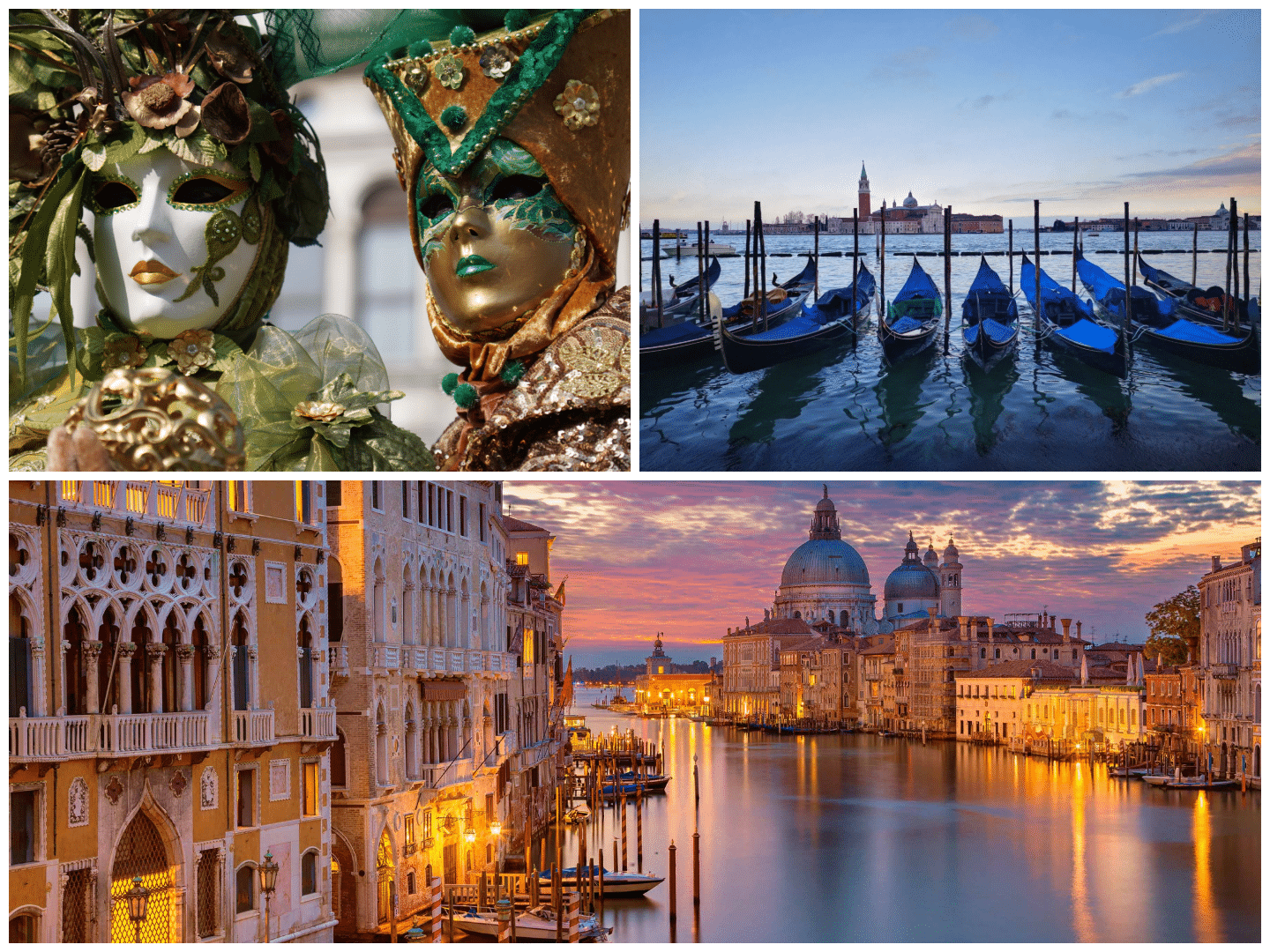
Venice Guide
This Venice guide will introduce you to this magnificent historical city in Italy. Furthermore, we will show you what to

Lake Como Guide
This Lake Como Guide will show you what to do when to go, where to stay, some safety tips, and
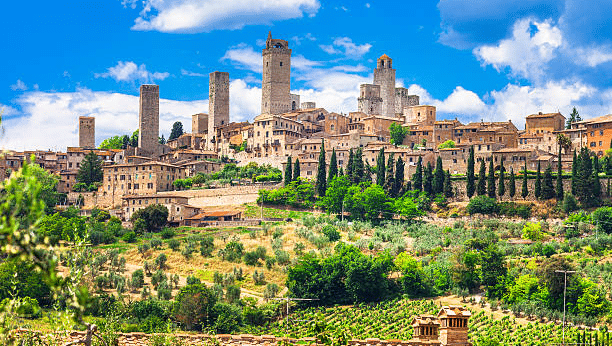
The most beautiful villages in Italy
This article will show you the most beautiful villages in Italy. We could name hundreds of them—that’s how beautiful Italy