
In this Triest travel guide, we are going to present you with this underrated Italian destination, which is truly magnificent. Furthermore, we will show you what to do and see, what to eat, where to stay, and many more helpful tips. So, if you want to learn more, please stay with us.
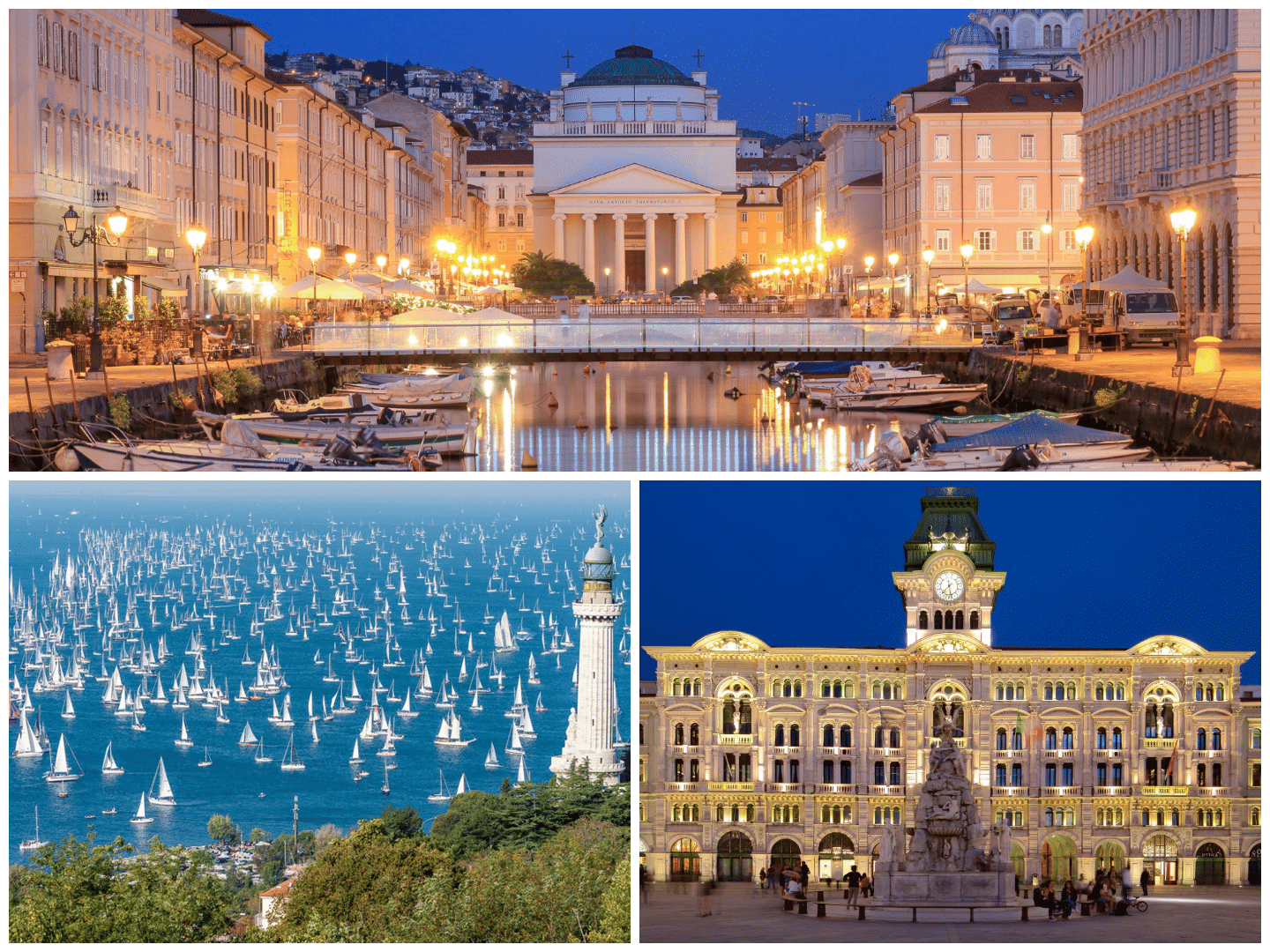
©placesofjuma.com
Overview
Trieste, a gorgeous city in northeast Italy at the border with Slovenia, is a cultural mosaic of Latin, Slavic, and German influences. Though less renowned than other Italian destinations, its charm is a treasure trove for those seeking a unique cultural experience.
As the capital of the Friuli Venezia Giulia region, Trieste, with its over 200,000 residents, is a living testament to history. Situated within 100 km of Ljubljana, Slovenia’s capital, and approximately 160 km from Venice, Trieste’s roots as a free commune in 1300 and its growth as a major port under the Habsburgs starting in 1719 are engraved in its very streets.
Furthermore, its journey through the 20th century was marked by social unrest and significant transitions. Joining Italy in 1920, the city faced the trials of World War II, including the impact of fascist laws on its Jewish community. Yet, Trieste emerged from these challenges, returning to Italy in 1954 after the war, a testament to its resilience.
James Joyce lived in Trieste, adding to its literary heritage. The city is small enough to explore on foot, with historical sites and a beautiful seafront, making it an excellent spot for anyone interested in culture and history.
How to get to Trieste
Trieste is easy to reach from many places in Italy and other countries. There are direct trains from Udine and Venice and fast trains from Rome, Florence, Milan, and Turin. You can also take a train from Slovenia and Austria (Vienna) or a bus from parts of Italy, Slovenia (like Koper), and Croatia.
Trieste has an airport with flights from cities in Italy and Europe. You have several ways to get to the Port of Trieste Cruise Terminal from the airport:
By taxi: This is a convenient option. It costs about €60 and takes 30 minutes, depending on traffic.
By bus: Shuttle services are a cost-effective choice. They regularly transport passengers to the cruise port.
By train: Trains run three times an hour from Trieste Airport to Trieste Centrale Train Station.
How to get around Trieste
Trieste is a very walkable city, especially the main areas of interest like Città Vecchia, Borgo Teresiano, and Borgo Giuseppino. For longer distances or if you prefer not to walk, the bus system is efficient. It covers the city and the surrounding areas. Taxis and car rentals (including Uber) are also available.
You can easily walk to Trieste’s main attractions.
For further destinations, use the public transport system with frequent buses. A bus ticket costs 1.25€ and can be bought from kiosks or machines. Remember to validate your ticket when you board. The buses are safe, even late at night, and their schedules are on Google Maps.
You cannot buy a ticket on the bus, so get one from a tobacco shop first. You can also take the hop-on-hop-off bus to visit the main attractions.
Taxis are available and can be a convenient option, especially for getting to and from the train station or airport. Car Rentals: While walking and public transportation are often sufficient, car rentals can help explore areas outside the city center or for day trips. You can find economy car rentals through Uber in Trieste.
Parking in Trieste can be tricky due to the limited traffic zones (ZTLs) and narrow streets. It’s best to familiarize yourself with the ZTLs, which restrict access to certain areas, and be prepared to pay for parking in designated areas, especially in the city center. Consider using public transportation or parking outside the center and walking in.
What to do and to see?
The historic center of Trieste has recently undergone renovations, restoring its elegance and beauty. Visitors can see Roman ruins and impressive Austro-Hungarian palaces. The main attraction is Piazza dell’Unità d’Italia, the largest seaside square in Europe. Also worth seeing is the San Giusto complex on the hill above the city and the Teresian district, which shows the cultural history of the Austrian period.
Walking through Trieste, you’ll notice a mix of architectural styles, including neoclassical and Liberty designs.
If you have extra time, visit the nearby Karst plateau, which has beautiful forests and meadows that are incredibly stunning in autumn. You can also explore nearby attractions like the quaint town of Muggia, Duino with its castle, Portopiccolo, and the Villaggio del Pescatore, known for its paleontological site.

Start Your Day with a Coffee
Before you begin your sightseeing tour in Trieste, relax in one of the city’s many historical cafes. These cafes reflect Trieste’s unique coffee culture from its Habsburg history. Trieste was the main harbor of Austria-Hungary and had a strong coffee tradition. Locals have slang for ordering coffee, and the city is known for its ‘espresso,’ a strong, short coffee. The first cafe opened in 1768, and today, essential places like Caffè San Marco and Caffè degli Specchi offer lovely vintage settings and different coffee options.
The first cafe opened in 1768, and today, essential places like Caffè San Marco and Caffè degli Specchi offer lovely vintage settings and different coffee options.
Piazza Unità d’Italia is a beautiful square worth visiting because of its architecture and lively atmosphere. It often hosts events. A guided tour can help you learn more about this square and Trieste’s history.
Admire Miramare Castle
Miramare Castle is a key attraction in Trieste. It is a short distance from the city center and easily accessible by public transport. The castle was built in the mid-19th century for Archduke Ferdinand Maximilian Habsburg. It features original rooms that show how aristocrats lived at that time. The castle is surrounded by a beautiful park filled with rare and exotic plants.
Maximilian lived in the castle for four years with his wife, Archduchess Charlotte of Belgium. He left for Mexico after being offered the crown, but he was executed after a short reign. His wife was heartbroken. In 1955, Miramare became a national museum. Visitors can see the furniture and artwork collected by the Emperor and walk through the grounds, which include unique trees like Mexican araucarias and redwoods.
Marvel the Piazza dell’Unità d’Italia
Piazza Unità d’Italia is the main square in Trieste and is famous for its beautiful architecture. It is the largest square facing the sea in Europe.
Initially, it was called St. Peter’s Square, named after a church built in 1367. Over the years, the square changed names and became Piazza dell’Unità d’Italia in 1918 when Italy annexed the city.
The square was once closed off from the sea, but in 2001, it was restored to highlight its beauty. The paving was redone with large sandstone blocks. Substantial buildings surround the square, including the Model Building, the Palace of the Prefecture, and the Grand Hotel Duchi d’Aosta.
The City Hall has a bell tower with two bronze statues that have told time since 1876. During celebrations, flags fly atop two tall pillars at the end of the square. A blue LED light on the pavement shows the ancient sea level limit.
San Giusto Hill: castle, basilica, and lapidary garden
The hill shows Trieste’s rich history of faith. It features the San Giusto castle, cathedral, and lapidary garden. Frederick III built the castle in 1469 to control and protect the city against Turkish attacks. The castle also has elements from the time of Federico II, including the Square Tower and the museum.
The San Giusto Cathedral sits on the foundations of two older churches. It has five naves and an elegant Gothic rosette. The bell tower, originally Romanesque, was rebuilt after being struck by lightning in 1421. Inside, the apse has a notable XIII-century mosaic.
The castle we see today dates back to the 16th century, although the Romans first settled the area. Visitors see ancient artifacts and enjoy the fantastic views of Trieste from the fortifications. The small entrance fee is worth it for the stunning panorama!
In this photo, you can see the beautiful Soča Valley in Slovenia, Piran, and Grotta Gigante.

©Jürgen Reichenpfader (Piran – right below)
See the picturesque Canal Grande.
One of the most beautiful places to visit in Trieste is Canal Grande. It is located between the train station and Piazza Unità d’Italia. The canal was built in the mid-18th century to help boats deliver goods closer to the city center. At first, it was longer than it is now, extending past the church of Sant’Antonio.
The buildings along the canal include churches and palaces, making them some of the most interesting sights in Trieste. Most buildings date back to the first half of the 19th century. There are also a few bridges to cross the canal and some intriguing statues, including one of James Joyce.
Don’t miss Canal Grande when you visit Trieste!
See the impressive lighthouse.
One of Trieste’s most iconic landmarks, visible from nearly every corner of the city, is the magnificent Victory Lighthouse. Although it’s located outside the city center, it’s impossible to overlook.
This lighthouse, at an impressive 68 meters, ranks among the tallest in the world. Initially slated for construction near Pula in Croatia, Trieste and the heights of Gretta Hill were ultimately chosen for their ideal elevation and the robust foundations of an old Austrian fort.
Inaugurated in 1927, the lighthouse continues to shine brightly today, serving as a tribute to those who lost their lives at sea during World War I and honoring Italy’s victory in the conflict.
Visiting the Victory Lighthouse is necessary, but its opening hours are limited. Be sure to check in advance to make the most of your visit!
Find the Roman arch.
On the way up to the castle, turn into one of the back streets to find the ancient Roman Arco di Riccardo. The impressive structure is likely to date back to the 1st century AD, to the time of Tergeste, as it was the gate in the city walls then. The surroundings make it unique – the arch is located on a small square surrounded by modern buildings. It creates a big contrast between old and new and is a symbolic bridge between Trieste’s ancient and recent history.
Visit Grotto Gigante
When you visit Trieste, don’t miss Grotto Gigante, located just outside the city. This impressive cave was in the 1995 Guinness Book of Records as the world’s largest show cave, a title it held until 2010. The central part of the cave is 107 m high, 65 m wide, and 130 m long. It’s enormous, and you will be amazed.
Remember to bring warm clothes, as the temperature inside is about 11°C. Trieste is on the Karst plateau, known for its many caves. You can explore Grotto Gigante and the nearby Cave of Trebiciano, which goes 1,150 feet deep. At the bottom, the Timavo River flows into Slovenia’s Škocjan Caves, a UNESCO World Heritage site only 19 miles from Trieste.
Experience the Barcolana in Trieste
The Barcolana regatta in Trieste is back on the second Sunday of October. It lasts a week and includes many events, including activities for kids.
From September 29th to October 8th, families can enjoy the Gulf of Trieste. Professional sailors and amateurs will race together for an exciting experience. The race starts near Miramare Castle and ends in front of Piazza Unità d’Italia, where spectators can enjoy great views from the square and the surrounding hills. This is an event everyone can join in.
Go for day trips
Due to its location, Trieste can be a great base to explore the area and go on day trips to Slovenia, Croatia, and Italy. Some of the best places you can easily visit from Trieste include Gorizia, Udine, Muggia, and Aquileia.
If you don’t mind venturing abroad, Slovenia is a stone’s throw away from Trieste. Since both countries are in the Schengen area, you won’t even notice the border. Some of the best places to visit in Slovenia, such as Koper and Piran on the seaside, Skocjan Caves, Postojna Cave, or Ljubljana, are easily reachable from Trieste as a day trip.
You can even visit the Istria region in Croatia (although it is not in the Schengen zone, so you need to go through passport control at the border).
Try some local food and sweets.
Try Trieste to enjoy its mix of cultures. You’ll discover local specialties with your European influences alongside traditional Italian dishes. Ingredients like cabbage and horseradish, rare in the rest of Italy, are shared here. Popular local dishes include goulash and cabbage rolls.
A must-try is jota soup, made with fermented cabbage, red beans, sausage, smoked pork, and sometimes potatoes. Gnocchi di susini is another unique dish. It combines gnocchi made from plums, sugar, and cinnamon and is served as a first course.
As a port town, Trieste also offers fresh seafood. You can find fried sardines, bass, tuna, mussels, and clams from the Gulf of Trieste.
Try local favorites influenced by Vienna, such as strudel and krapfen, for dessert. Don’t miss pizza, presnitz, and putizza, Easter and Christmas cakes made with walnuts, raisins, and dried fruits.
Where Should I Stay in Trieste?
In Città Vecchia, many streets are for pedestrians only. This makes it the best place to stay, as you will be near the main attractions, bars, and restaurants. The older part of Trieste includes Borgo Teresiano, which is excellent for nightlife and shopping. If you prefer a quieter, romantic setting with green views, consider staying in San Giusto. Moreover, Trieste offers a range of accommodations, from hostels to luxury hotels. Here are some recommendations:
Budget: Trieste Center Rooms & Apartments, located near Viale XX Settembre.
Mid-Range: Urbanauts Studios in the walkable Cavana area.
Luxury: Savoia Excelsior Palace, right by the Adriatic Sea and Piazza Unità d’Italia.
Recommended: Forvm Boutique Hotel—This boutique hotel is in the center and is ideal for couples. It has parking and rooms for people with disabilities. Casa Vacanze Barcola- The apartment has a garden and barbecue, perfect for groups and families. Free Parking.
Trieste meets various budget needs and is a good base for enjoying the coast or traveling to Slovenia and Croatia. We usually book our rooms through Expedia or Booking.com.
FAQs
Is Trieste Worth Visiting?
We think so! If you’re visiting Verona or Florence, maybe not, but Trieste is a great stop to add if you’re in the area. Given its history, no other city in Italy (or Slovenia or Croatia) has the same feel as Trieste, making it entirely its own.
When to go to Trieste?
The best times to visit Trieste are spring and autumn, April to June, and September to October, for nice weather and outdoor activities. Winter is good for exploring historical sites like the Risiera di San Sabba and enjoying warm Art Nouveau cafes. Each season has different attractions, but April, May, and September are perfect for sunny days without many tourists.
Come for beach visits in June, July, or August, but be ready for hot weather. October, November, and March are great options to save money. December through February can be cold and windy, with rain or snow, unless you want to enjoy the Christmas markets.
How many days are needed to visit Trieste
To see Trieste correctly, you need at least two days. You can visit attractions far from the center and enjoy the fantastic local cafe culture.
Add some extra days for day trips from Trieste, as a few excellent places are nearby.
Is Trieste Safe?
Trieste, Italy, is a safe city for travelers, including solo female visitors. It has a rich history, culture, and great food, making it a good place to visit in 2024. The city also has low crime rates.
If you are exploring Trieste, let a friend know your plans. This helps you feel more at ease. Although Trieste is generally safe, remember to watch your belongings when out.
Is Trieste expensive to visit?
Trieste is an increasingly popular Italian destination, offering options for every budget. There are many choices, from hostels for young travelers to budget hotels with breakfast in the old town. For those seeking more luxury, there are beautiful boutique hotels and new upscale accommodations for a dream vacation.
Can you swim in the sea in Trieste?
Even though Trieste is by the sea, swimming there is not easy. The city center is unsafe because it is where big cruise ships and ferries dock. The best swimming places are further north in Barcola or south in Muggia.
How to tip in Trieste?
A 10-20% gratuity in Italian restaurants is often included, so verify if a tip is already added before paying. If not, a 10-15% tip is suggested, particularly in tourist areas, and should reflect the level of service received.
Final thoughts on visiting Trieste
We highly recommend visiting Trieste. The city is lively and unique, with a rich history, beautiful buildings, and many attractions beyond monuments. It’s a pleasant place to be, and it’s easy to fall in love with it.
Trieste is great for a city break, though it’s not on the main tourist routes. If traveling to Slovenia or Venice, include Trieste in your plans. You won’t be disappointed!
Take a look at
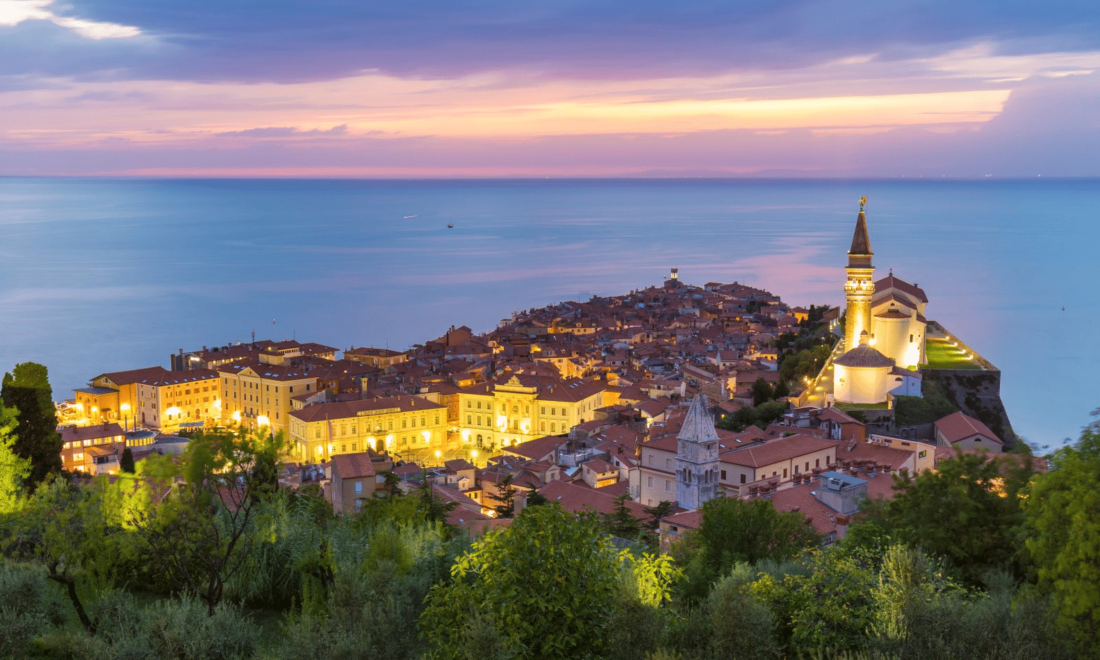
Discover Piran
In this Piran guide, we will briefly introduce the little Slovenian jewel, explain why you should visit it, what to
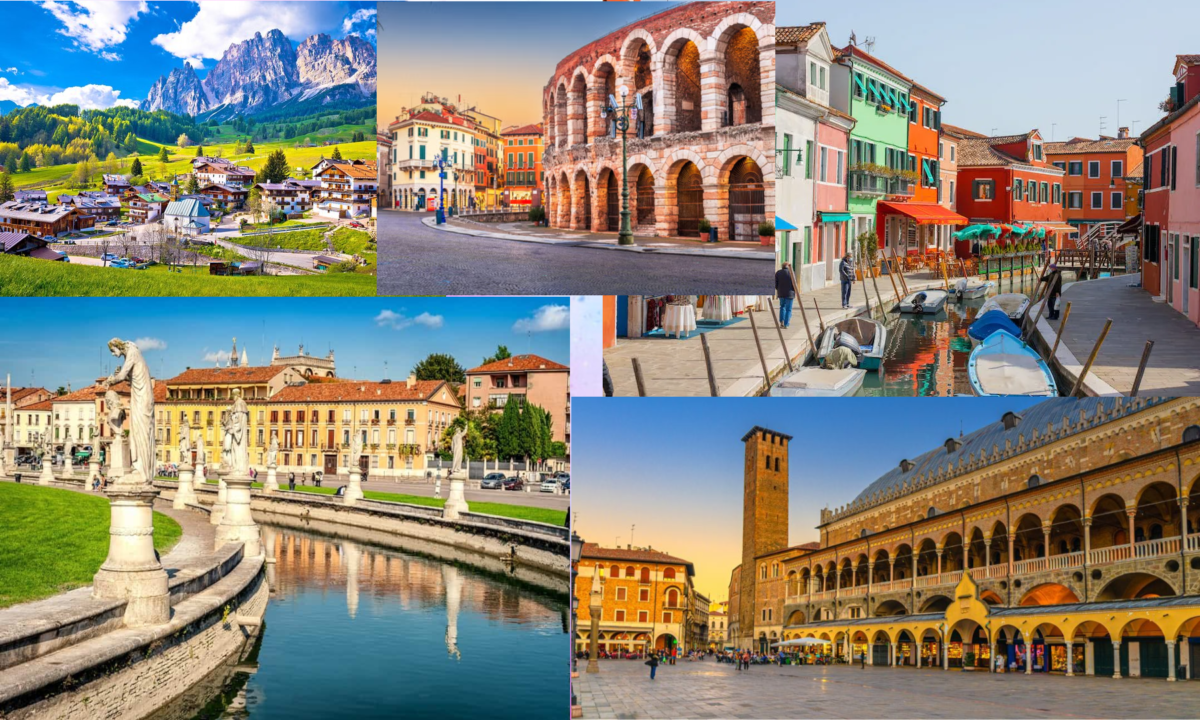
Perfect Day Trips from Venice
In this article, Exciting Day Trips from Venice (part of our extensive Venice Guide), we will show you how to
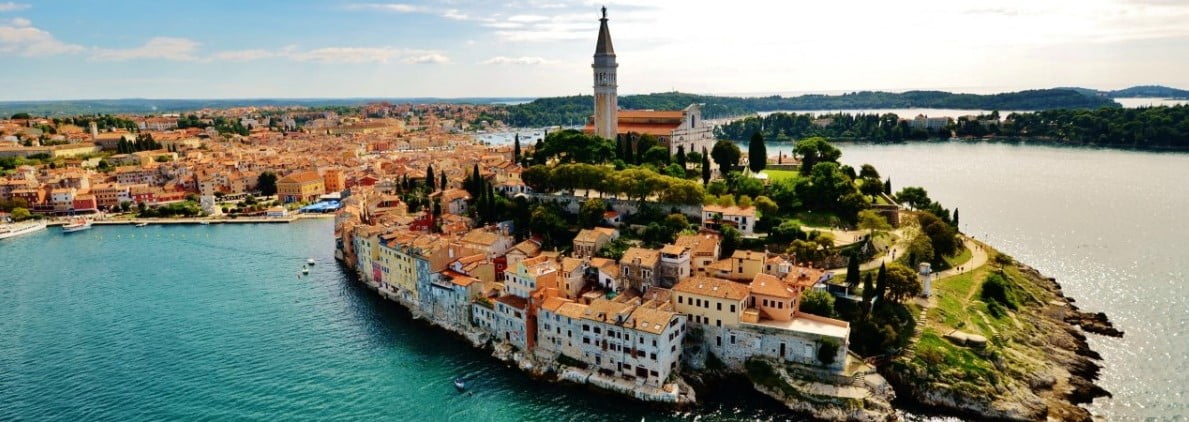
Ultimate travel guide to Rovinj
In this Ultimate travel guide to charming Rovinj, we will introduce this magnificent little town in the peninsula of Istria
References and sources:
Photo credits:
Feature photo: @ placesofjuma.com