
Bank Card Safety for Travelers: Protecting Your Money in Europe

Is your wallet a target while traveling in Europe? From avoiding card skimming in Europe at ATMs to spotting sneaky exchange rate scams at restaurants, our essential bank card safety for travelers guide has you covered. Learn how using Apple Pay vs physical cards abroad and using Google Pay can keep your money secure and private. Plus, discover the best travel cards for LGBTQ+ travelers and practical steps to make every payment safer and smarter while you explore new destinations.

Bank Card Safety for Travelers

Protecting Your Money in Europe

Paying for things in Europe looks totally different now. Most cities are nearly cashless. You can tap to pay everywhere, from a tiny queer-owned café in Ljubljana to the metro in Madrid. But with this convenience comes new risks—like card skimming and privacy concerns. Bank card safety for travelers is essential, especially for LGBTQ+ folks and our allies. If you’re vigilant, your travel budget stays safe and accessible. Let’s make it happen together.

First up: use digital wallets like Apple Pay or Google Pay whenever you can. Let’s be real—using Apple Pay vs physical cards abroad is a game-changer. You don’t have to pull out your wallet in public or worry about someone catching your card number. Using Google Pay? Same deal: your real card details stay hidden, so you’re protected from card skimming and other nonsense. Both apps use a token system. Even if a store’s computer is hacked, your money stays safe.

To keep your physical cards safe, we suggest following these rules:

 
  • The “Two-Card” System: We never travel with just one card. We keep one “daily” card in our phone or wallet and a “backup” card hidden in a different bag. Thus, if one is stolen, we aren’t left stranded.
  • Let’s talk about how to avoid exchange rate scams—because nobody wants to get ripped off. When you pay by card, the terminal sometimes asks if you want to pay in “Euros” or “Your Home Currency.” Always pick Euros! If you don’t, the merchant’s bank will set a bad exchange rate and tack on extra fees. It’s a tiny choice, but it can save you real money. We all deserve to keep more of our cash for queer nightlife or that extra scoop of gelato.
  • RFID Protection: While rare, some thieves use “scanners” to read card data through your pockets in crowded areas. We suggest using an RFID-blocking wallet or a small metal card holder. Consequently, your card’s signal is blocked from outside “sniffing.”

Gay-Related Topics: Safety on The Grindr

As we have discussed, “The Grid” is the screen on dating apps like Grindr or Scruff where you see profiles of people nearby. Because meeting people from the grid often involves going to new places, you should be careful with how much “wealth” you show.
 
Specifically, if you are meeting a date for the first time, try not to use a physical card that looks “expensive” (like a heavy metal or gold card). By doing so, you avoid signaling that you are a high-value target. Furthermore, we suggest never letting your card leave your sight. If a waiter or a date offers to “take the card to the bar” to pay the bill, politely decline and go with them. Ultimately, keeping your card in your hand keeps the power in your pocket.

How to Get In and Around

Using your cards for transport is the easiest way to move through Europe, but you must be alert.
 
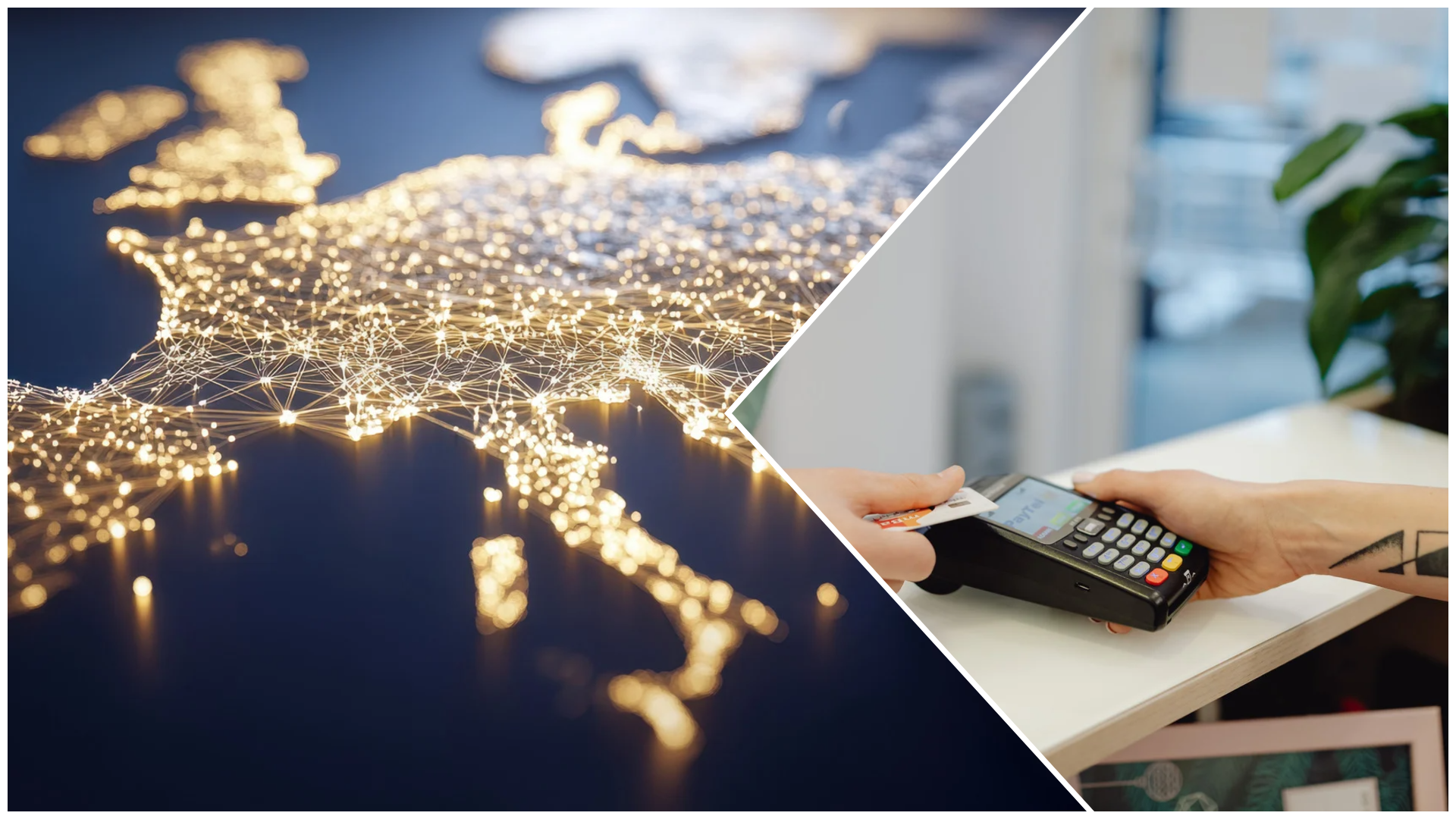
  • Tap-and-Go Safety: Many cities, like London or Milan, allow you to “tap” your bank card to enter the subway. In general, we suggest using your Apple Watch or phone instead of your card. Specifically, it is much harder for a thief to snatch a watch off your wrist than a card from your hand.
  • Let’s get real about avoiding card skimming in Europe. Only use ATMs inside a bank lobby. Street-side ATMs are easy targets for skimmers. That’s how folks steal your card info! Lobby machines are much safer and are watched more closely. This one habit can keep your finances—and your pride—intact.

Choosing Your 2026 Travel Bank: The Big Comparison

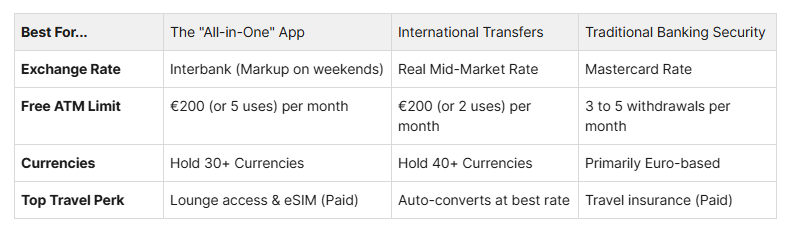
In 2026, the “Big Three” for European travel are Revolut, Wise, and N26. Specifically, each one has a different “superpower.” By choosing the right one, you can save enough on fees to pay for an extra night in a boutique hotel in Ljubljana or a fancy dinner in Madrid.
Choosing Your Travel Bank - The Big Comparison

Which one should we choose?

  • We suggest Revolut if… You want a “Swiss Army Knife” for your phone. Specifically, it’s great for splitting bills with friends, getting instant spending notifications, and even buying a travel eSIM directly in the app. However, remember that they charge a 1% fee for currency exchange on weekends.
  • We suggest Wise if… You are moving between many different currencies (like going from the UK to the Eurozone and then to Switzerland). Because they use the real “Google” exchange rate without any weekend markups, it is often the cheapest for pure spending.
  • We suggest N26 if… You want the safety of a full European Banking License. Specifically, your deposits are protected up to €100,000 by the German government. Consequently, it feels the most like a “real” bank while still being 100% digital.

Keeping your bank details secure is just one way we protect our travel funds. For more ways to stretch your budget—including why we recommend using apps like BlaBlaCar for affordable city-to-city hops—check out our Useful money-saving travel tips.

Related posts

Take a look at

Photo credits:

About Charming Vibes 4u

“Travel Smarter: Safe steps, smart spends, and a suitcase lighter than your worries—everything you need to make the ‘Old Continent’ your playground.”


Recommended guides for Your Trip-Planning

Scroll to Top