
Years ago, we wandered Siena’s cobblestone alleys, enjoying gelato as a cool breeze offered relief from Rome’s heat. We love Rome (Italy), but sometimes we need a break! Join us as we explore the best day trips from the Eternal City. Whether you want Tivoli’s Renaissance magic, Siena’s medieval charm, or a sunny beach day in Sperlonga, we have the ultimate queer-friendly guide. We’ll share the stories behind the stones, tips for staying on Gay Street, and advice on traveling in Italy like a local.

“Support our site! We earn a small commission when you book through our links—at zero extra cost to you. Happy travels!”
Rome day trips are a great way to see the best of Italy. While Rome is full of secrets, some of the best day trips from Rome will show you stunning scenery and local culture. As queer travelers, we know feeling safe and welcome matters. That’s why we focus on friendly destinations, queer-friendly spaces, and helpful tips for every traveler.
When planning your time in your destinations, ensure you find the most valuable experiences. We recommend checking both GetYourGuide ➡️ [Find the Best Tours and Activities with GetYourGuide] and Viator ➡️ [Find Great Local Experiences with Viator] for discovering and booking the best tours, attractions, and day trips in advance.
Coastal Escapes and Ancient Wonders
Ostia Antica – Rome’s answer to Pompeii
- Take the Metromare (formerly Roma-Lido) train from the Roma Porta San Paolo station (right next to the Piramide metro stop on Line B).
- The journey takes about 30 minutes, and you can use a standard 1.50€ BIT ticket or your integrated Roma pass.
- Once you exit the Ostia Antica station, it is a simple 5-minute walk across the blue pedestrian bridge to the entrance of the archaeological site.
- The site itself is massive, so be prepared to walk several miles; we recommend wearing comfortable sneakers.
Sperlonga: A Slice of Greece in Italy
- Catch a regional train from Roma Termini heading toward Naples (the “Via Formia” line) and get off at the Fondi-Sperlonga station. The ride takes about 1 hour and 15 minutes.
- From the Fondi-Sperlonga station, you must take the dedicated Piazzoli bus that waits outside to take you down to the town and the beaches (about a 15-minute bus ride).
- Sperlonga is divided into two parts: the “Upper Town” (the historic center on the cliff) and the “Lower Town” (the beaches).
- According to information about Sabaudia, the town features a historic center known for its Fascist-era architecture, making it an interesting place to explore on foot, especially if you walk up to the center for lunch and then head down to the beach for the afternoon.
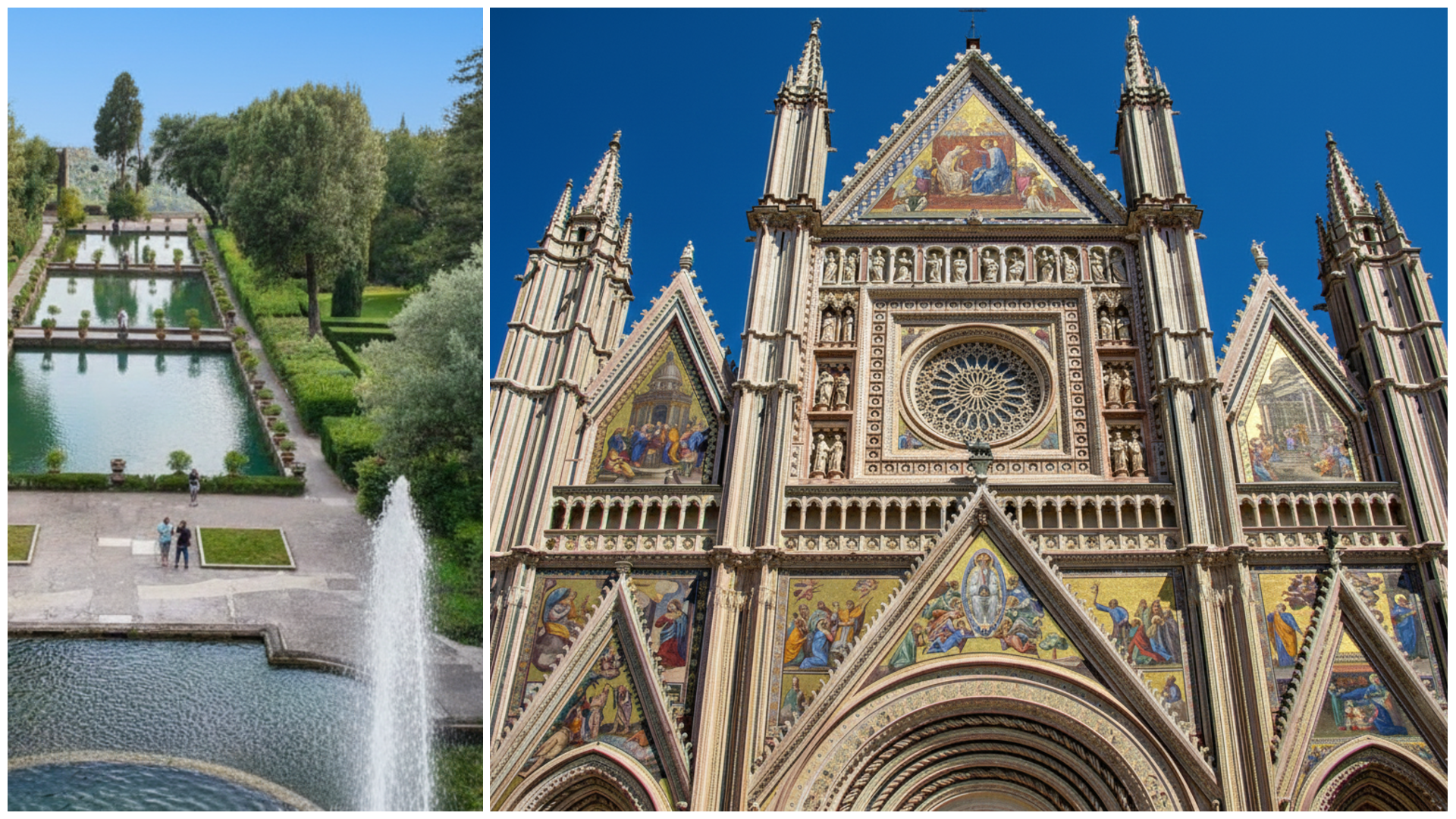
Renaissance Gardens and Medieval Hilltops
Tivoli: Fountains and Ancient Ruins
- Catch a regional train from Roma Tiburtina station toward Tivoli; the journey takes about 45 to 60 minutes.
- Alternatively, the Cotral bus departs from the Ponte Mammolo metro station (Line B) and drops you closer to the town center.
- Villa d’Este is a short walk from the Tivoli train station.
- To reach Hadrian’s Villa from the town center, we suggest taking the local orange bus (Line 4), as it is about 4km away.
Orvieto: The Jewel of Umbria
- Take a regional train from Roma Termini or Roma Tiburtina.
- The trip is very easy and takes roughly 70 to 90 minutes.
- When you arrive at the Orvieto train station, take the funicular (cable car) located right across the street.
- It will take you up the cliff directly into the medieval center, which is almost entirely pedestrian-friendly and best explored on foot.

Beyond the Marble: Rome’s Most Stunning Natural Jewels
The Volcanic Lakes: Bracciano and Martignano
- Take the FL3 regional train from Roma Ostiense or Roma Tiburtina towards Viterbo.
- Get off at the Bracciano station (about 1 hour). For Lake Martignano, you’ll need a car or a long hike from the Anguillara station.
- Bracciano is very walkable from the station to the lakefront.
- To see the different lakeside villages (Anguillara Sabazia and Trevignano Romano), we suggest using the local Sabatina bus line that connects the three towns.
Terme Di Saturnia

The stars on their own right
Siena: The Medieval Heart of Tuscany
- It is easy to reach Siena by bus from Rome.
- By Train: Trains from Roma Termini usually require a change at Chiusi or Florence, and the station in Siena is at the bottom of a hill, quite far from the center.
- Siena is a very hilly, pedestrian-only city. Be prepared to walk.
- From the train station, there is a series of escalators (risalita) that will take you up the hill toward the historic center.
- Once inside the walls, no public transport is needed as all the main sights are close together.
Naples: Chaos, Culture, and the Best Pizza
- Much of the historic center (Spaccanapoli) is best explored on foot.
- Use the Metropolitana di Napoli; the stations are famous for their art—don’t miss the Toledo station, often called the most beautiful in Europe.
- Funiculars are available to take you up to the Vomero district for panoramic views.
Going Solo vs. Booking a Tour: Which is Best for You?
Decision Aid: To make your choice quicker, consider these factors:
- Time: Solo trips allow flexibility but require planning; tours save time with set itineraries.
- Cost: Self-organized trips are cheaper, paying only for transport and entry fees, whereas tours cover everything but are pricier.
- Confidence: If navigating logistics is daunting, tours offer peace of mind; solo trips are for the adventurous.
Self-Organized: The Freedom Seekers
- Pros: You control the schedule. If you fall in love with a lakeside cafe in Bracciano, you can stay for three hours instead of moving to the next stop. It is significantly cheaper, as you only pay for your train ticket and entrance fees.
- Cons: You are responsible for the logistics. If there is a train strike (which happens occasionally in Italy) or a missed bus, you have to solve it yourself.
- Use the Trenitalia app to buy tickets in advance and avoid the lines at Termini.
- Always validate your paper tickets in the small green machines on the platform before boarding to avoid heavy fines.
Organized Tours: The Stress-Free Choice
- Pros: Everything is taken care of—transport, tickets, and often lunch. Many tours include expert guides who share the history you might miss on your own. For queer travelers, booking through sites like Viator or GetYourGuide adds a level of safety and trusted drivers. You can also look for LGBTQ+-owned and queer-friendly tour companies like Gaily Tour in Rome and Quiiky LGBTQ+ Tours. These tours offer a sense of community and share stories about Rome’s queer history. According to TripAdvisor, some tours may not offer the authentic LGBTQ+ experience they advertise, as reviews warn that certain companies use LGBTQ+ branding without genuinely delivering on that promise. You’ll have less flexibility to explore hidden alleys or stay longer at a specific site.
- Most tours meet at a central point like Piazza della Repubblica or offer hotel pickup.
- You will usually travel in a climate-controlled coach or a private minivan, making it the most comfortable way to see the countryside.
Our Recommendation
- Go Solo for: Orvieto, Naples, and Ostia Antica. These are ‘train-to-door’ destinations where the logistics are very simple. Keep in mind that during summer, trains can sell out fast, so it’s best to book your tickets in advance to secure your spot.
- Book a Tour for: Tivoli (to see both villas in one day) or complex coastal trips. The time saved on bus transfers is often worth the extra cost.
The Best Gay & LGBTQ+ Tours in Rome
The Roman Gay
This is a fantastic alternative for our community and is currently one of the only official operators in Rome dedicated to LGBTQ+ history. They specialize in uncovering the “hidden” side of the city’s most famous landmarks.
The Experience: Their Vatican & LGBT History Tour is a standout. It moves beyond the standard dates and names to explore the private lives of Renaissance geniuses like Michelangelo and Leonardo da Vinci. We loved how they point out specific details in the Sistine Chapel that reflect the artists’ own experiences and passions, turning a crowded museum visit into a deeply personal historical journey.
Why book it: It’s an intimate and safe way to explore Rome’s treasures. Their small-group format makes it easy to connect with other gay travelers, and the guides are incredibly welcoming. Plus, their walking tours often finish on Rome’s “Gay Street” with a drink, giving you the perfect transition from ancient history to the modern local scene.
Quiiky LGBTQ+ Tour
- The Experience: They offer “Untold History” tours of the Colosseum and Imperial Forum. They focus on the lives of Emperors like Hadrian (and his famous love for Antinous).
- Why book it: Their guides are incredibly knowledgeable and provide that “story behind the stone” we all love, making the ancient ruins truly come to life.
- Whether you’re an experienced traveler or just starting to explore queer-friendly places, sharing your favorite spots helps everyone. Feel free to leave a comment about your favorite queer-friendly places or day trips. Together, we can make this space more inclusive and welcoming for all.
Take a look at
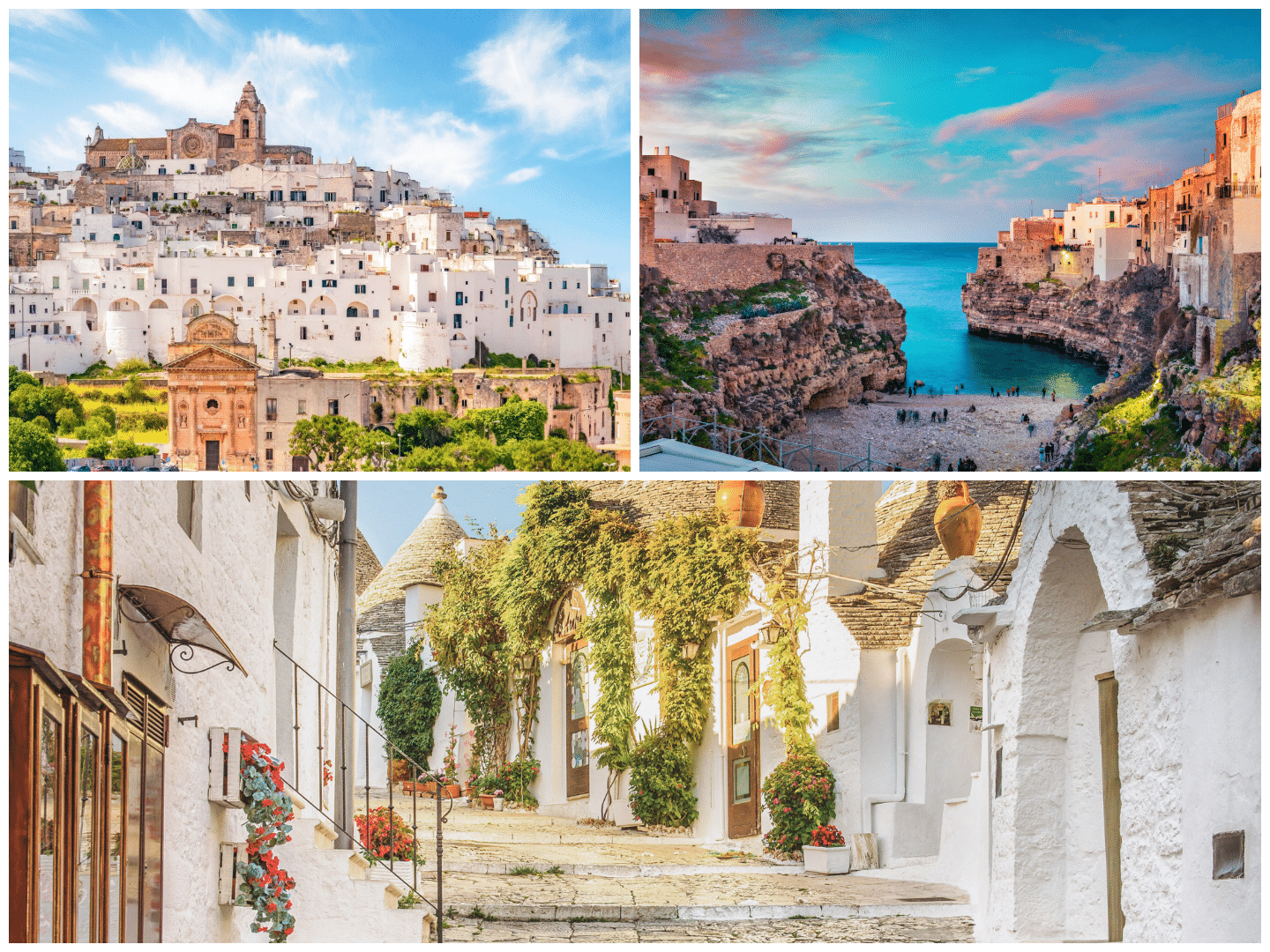
The most beautiful towns of Apulia
In this article about the most beautiful towns of Apulia,
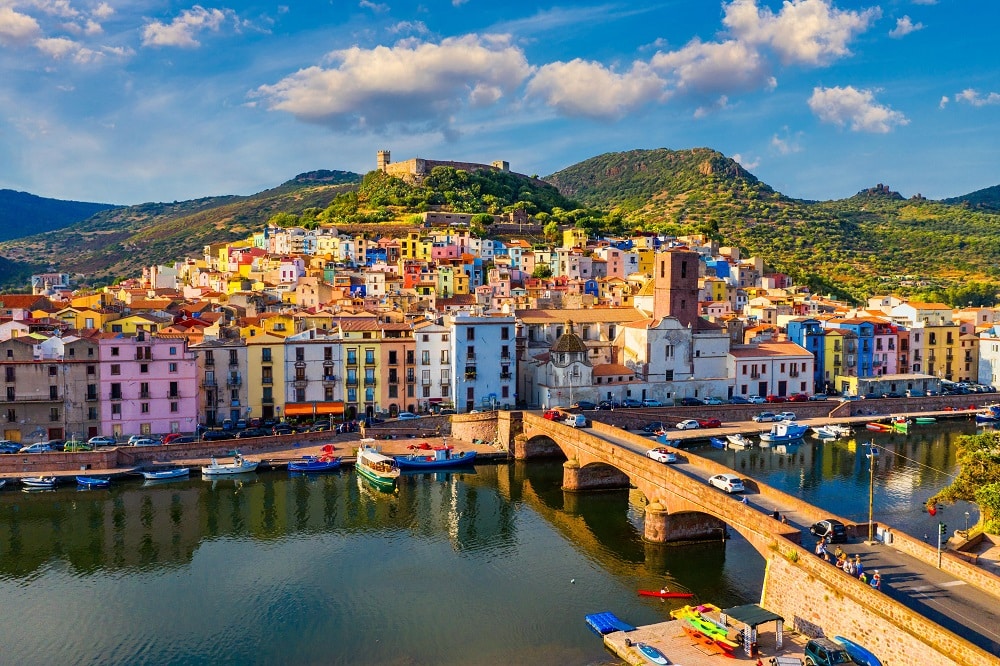
Wonderful Village of Bosa in Sardinia
The guide to the Bosa in Sardinia will reveal some

San Teodoro in Sardinia
San Teodoro in Sardinia is regarded as one of the