

The subtle Difference Between People-Pleasing and Other-Centeredness

Have you ever heard of other-centeredness? Many people confuse it with people-pleasing; however, this is not the same. So, if you’d like to find out more and discover if you are an other-centered person, please read this article.

Other-Centeredness

©iStock.com

In this short guide, we will explore the concept of other-centeredness, discuss its benefits for you and your self-esteem, and provide some practical tips on how to cultivate this mindset. Additionally, we will include specific suggestions for LGBT+ individuals, recognizing their unique needs.

What is Other-Centeredness?

Other-centeredness is a concept that describes the positive habit of putting other people’s needs before your own. Unlike other ways of prioritizing others, true other-centeredness does not come from fear of rejection or a need for approval. Instead, it comes from the belief that everyone is equally important.

This mindset includes:

  • A balanced perspective: A person who focuses on others doesn’t think their own interests are more or less vital than anyone else’s. Wheelse’sng a choice, they put others first, not because they neglect themselves, but because they believe this is the correct and most valuable thing to do.
  • Building a genuine connection: This tendency puts a high value on relationships and the well-being of the group. People find satisfaction in building connections and helping others to be happy.
  • Intrinsic motivation: Helping others comes from a genuine desire to make a difference. It is not about getting something back, like praise or approval.

Note: You might also like our article about The Fastest Way to Happiness.

The Core Difference between other-centeredness and people pleasing

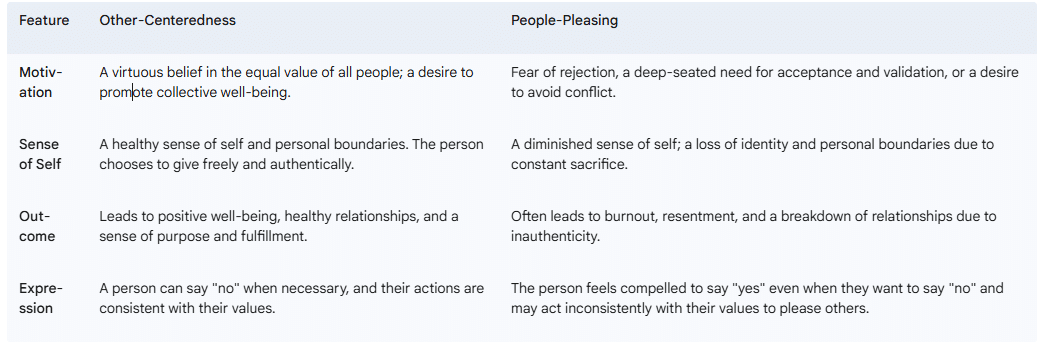
At first glance, both other-centeredness and people-pleasing are about prioritizing others. The crucial difference, however, lies in the motivation behind the behavior.

Other-centeredness is a healthy, authentic, and virtuous trait. It stems from a secure sense of self and a genuine belief that every individual’s worth is equal. When someone who is other-centered chooses to put another’s needs first, they are doing so out of a place of integrity and compassion, not fear. The act of giving is its own reward, and it strengthens the person’s character and relationships without expecting anything in return.

People-pleasing, on the other hand, is a behavior rooted in insecurity. It is a compulsive act driven by a deep-seated fear of rejection, disapproval, or conflict. A people-pleaser gives their time, energy, and resources not out of a belief in equal value, but out of a desperate need for external validation. This behavior is a transaction: “If I do this for you, you will like me.” This creates a cycle of resentment and burnout because the pleaser’s own needs are constantly sacrificed.

The subtle Difference Between People-Pleasing and Other-Centeredness

In short, other-centeredness is an act of love and integrity. At the same time, people-pleasing is an act of fear and self-preservation.

Note: You might also like the following guide: How to Become a Skillful Seducer

What is the Road from People-Pleasing to Other-Centeredness for LGBT+ individuals?

The journey from people-pleasing to other-centeredness is empowering, especially for LGBTQ+ individuals who face unique challenges. The need for approval often comes from feeling different or not accepted.

To help with this change, we can create a guide with clear steps for your experiences. Many in the LGBTQ+ community please others because they are afraid they are not “good enough. True acceptance starts from within. By embracing your authentic self, kindness becomes a genuine expression rather than a way to protect yourself. This shift can lead to stronger connections and a more fulfilling sense of self.

Here are some steps to help you on this journey:

Acknowledge Your Past and Unpack Your Motivations

Begin by recognizing that your past experiences have shaped your current behaviors. The need to please may have been a valid way to navigate complex social situations. Still, it’s not a healthy foundation for your adult relationships.

  • Reflect on the “Why”: Before you do something for someone, pause and ask yourself: “Am I doing this because I genuinely want to, or because I’m afraid of what will happen if I don’t?” Be don’t” with yourself. This self-awareness is the first step toward change.
  • Recognize the Fear: What are you afraid of losing if you say no? Is it a friendship, a job, or simply someone’s name? Naming your fear gives you power over it. A fear-based “yes is an “ignof increasing, while a values-based “yes” is an “ignof other-centeredness.

Reclaim Your Limits and Your Voice

People-pleasing often involves having a weak or non-existent sense of personal boundaries. Rebuilding these is crucial to becoming more other-centered.

  • Start Small: Practice saying “no” to small, low-stakes requests. It could be something as simple as turning down an invitation to an event you don’t want to attend. The goal is to build your “no muscle.
  • Use “I Statements”: When you decline a request, frame it around your own feelings and needs. Instead of saying, “I’m sorry, “I’m not,” you can’t,” say, “I’m not about to take that on right now because I need to focus on my own well-being. This isn’t an excuse; it’s a statement of your needs.
  • Recognize Your Right to Be Heard: Your opinion matters. Your feelings matter. In conversations, challenge yourself to express your authentic thoughts and feelings, even if they differ from others. This is not about being confrontational but about embracing your own voice.

Cultivate Self-Compassion and Self-Worth

  • Other-centeredness is impossible without a healthy sense of self. People-pleasing is often a way to outsource your self-worth, making you dependent on others. Establish Your Value: Remind yourself daily that your worth is not tied to how much you can do for others. Your identity, your experiences, and your very existence are valuable. Your cost is inherent, not earned.
  • Connect with the LGBT+ Community: Seek out spaces and people where your identity is celebrated, not just tolerated. Building a strong support network of friends who accept you for who you are helps you feel secure, reducing the need to people-please. This allows you to practice other-centeredness in an environment of unconditional acceptance.
  • Prioritize Your Needs: An empty cup cannot pour. A truly selfless person understands that they need to take care of themselves first to help others effectively and genuinely. Make time for self-care, hobbies, and rest, and protect that time vigorously.

In summary, the journey to becoming more other-centered involves a fundamental shift in perspective: from acting out of fear to acting out of love. It is a process of reclaiming your power, your voice, and your boundaries, all of which are essential to building a life of authentic connection and genuine contribution.

“We analyze how representation like this affects the community’s LGBTQ+ Well-being and mental health in our Gaytopia hub.”

Related posts

Take a look at

Understanding the Bottoms

Understanding the Bottoms

Since people often mistake bottoms for weak, we will explain the meaning of the Bottom expression. So, if you want

Scroll to Top