
Our Munich Guide makes planning your trip easy and enjoyable. Whether exploring the historic Old Town or discovering the charm of Munich’s unique neighborhoods, this travel guide has everything you need for an enriching visit. Moreover, we will share recommendations on culture, shopping, and the best spots for dining and relaxation.
©shutterstock
Our website includes affiliate links. So, remember that we may receive commissions when you click our links and make purchases. Please read our legal disclaimer document for more information about our Affiliate disclaimer and other disclaimers like the Fair-Use disclaimer.
Overview of Munich Guide
Munich, or “München,” is known as Germany’s lifestyle capital. It combines luxury with traditional Bavarian charm. The city has beautiful skies and scenery, and people enjoy its beer gardens, shopping streets, and the Bayern Munich stadium.
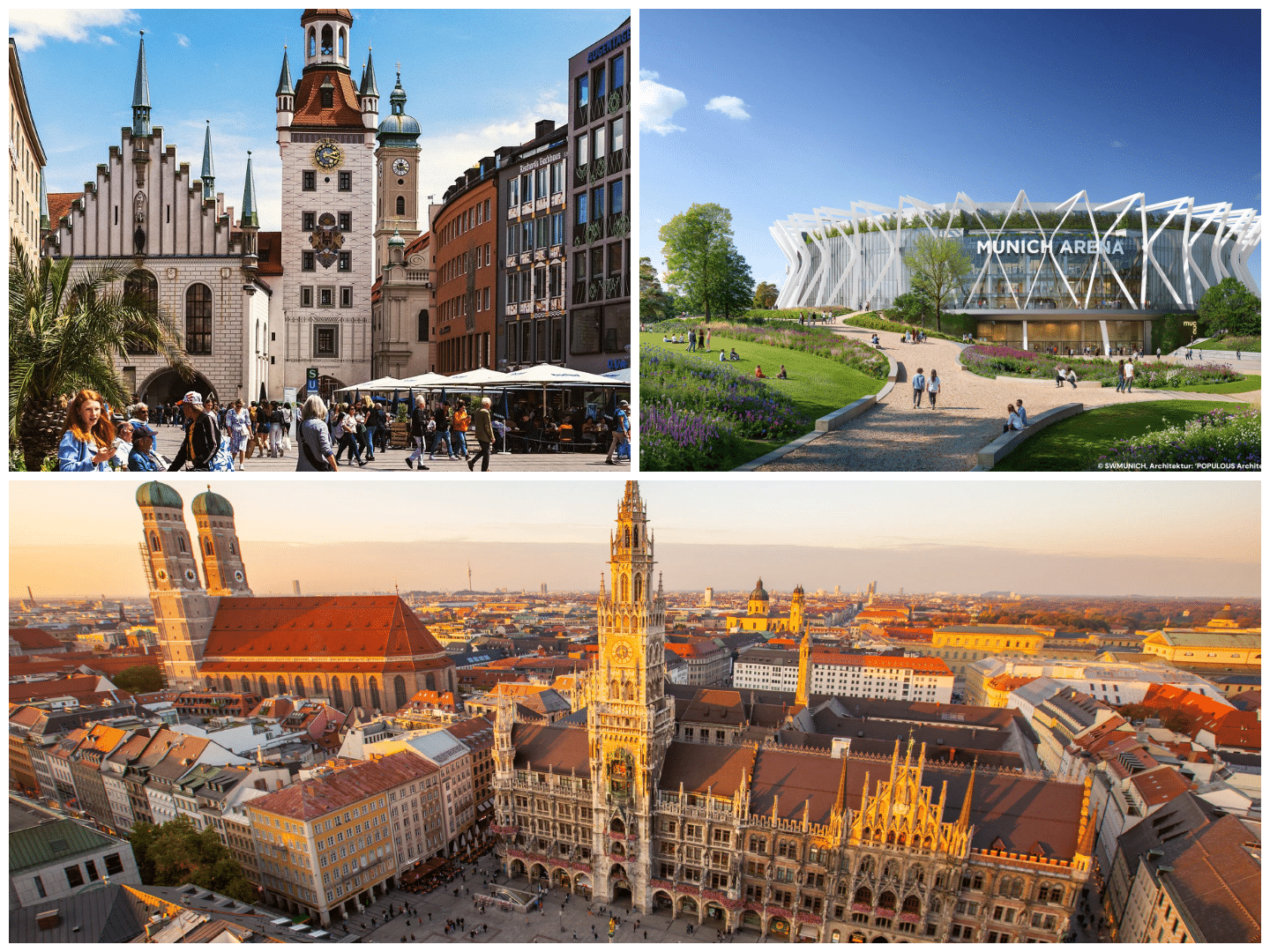
A key attraction is Marienplatz, where you can see the Old and New Town Halls and the famous Glockenspiel. Viktualienmarkt is a great spot to explore local food and culture. For luxury shopping, visit Ludwigstrasse and Maximilianstrasse. For a more casual experience, check out Glockenbachviertel and Gärtnerplatz Square.
The name München means “home of the monks.” It comes from an 8th-century Benedictine monastery. The first mention of Munich was in 1158. The city grew in size and wealth during the Medieval era, despite fires and wars, including the Thirty Years’ War.
In the 18th century, Munich thrived under Habsburg rule, leading to the first Oktoberfest in 1810. The 19th century brought cultural growth, but there was also political unrest during the Industrial Revolution, which helped Adolf Hitler gain power and made Munich the center of National Socialism.
During World War II, heavy bombing damaged the city. However, it was rebuilt and kept its historic character. In 1972, Munich hosted the Olympic Games, which ended with a tragic terrorist incident. Today, Munich is a strong hub for industry and tourism, with a rich cultural scene, a high standard of living, and low crime rates.
How to get to Munich
As one of Germany’s most prosperous cities, Munich is exceptionally well-connected to the rest of Europe. Discover the best way to get there!
By plane
Munich’s international airport is the second busiest in Germany. It has daily flights from low-cost airlines and luxury long-haul carriers. You can fly directly from major cities with companies like EasyJet, Lufthansa, and KLM for reasonable prices. Additionally, you can find affordable options even when flying from Australia or the USA. Please use our flight search engine to find the best prices for your trip!
How to get to Munich from the airport
There are a few ways to get to the city center from Munich Airport (MUC), which is about 40 kilometers away.
S-Bahn (Train): The S1 and S8 lines connect the airport to the city center. The ride takes about 40-45 minutes to reach Hauptbahnhof. Trains run every 10-20 minutes. A one-way ticket costs around €13.60. An Airport-City-Day-Ticket costs about €16.30 and lets you use public transport in the city until 6 am the next day.
- Lufthansa Express Bus: This bus goes directly to the Hauptbahnhof in about 45 minutes. It runs every 20 minutes. A one-way ticket costs around €13, and a return ticket is about €24.50.
- Taxi or Ride-Sharing: If you have a lot of luggage, a taxi is the easiest choice. It takes about 35-45 minutes and costs between €70 and €90.
- Summary: The S-Bahn is the best choice for saving money. The Lufthansa bus is comfortable, and a taxi is the quickest option.
By train
The German train system is efficient and eco-friendly for traveling to Munich from nearby cities. However, it may take longer and be more expensive than flying. Check the Deutsche Bahn website for schedules and tickets.
By bus
Buses are a convenient way to reach Munich from cities like Berlin, Paris, and Frankfurt. The central bus station is close to the Hauptbahnhof. FlixBus and other services offer many routes, making bus travel the cheapest option.
By Car
Driving to Munich may not be the best choice because parking is expensive and hard to find. However, highways are well-maintained and do not require tolls for personal vehicles.
The best ways to get around in Munich
Getting around Munich is easy. The city has an excellent public transport system, many bike lanes, and more options for shared mobility. While Munich is known for cars, traffic, and limited parking, there are other ways of traveling.
Munich is a walkable city. On foot, you can easily explore old towns and neighborhoods like Haidhausen, Maxvorstadt, and Isarvorstadt. The parks and main shopping area are also easy to reach on foot.
Munich’s public transport includes U-Bahn, S-Bahn, trams, and buses. The S-Bahn is best for getting to popular spots like Karlsplatz and Marienplatz. Travel cards, such as the Munich City Pass, offer discounts and free access to some attractions.
Tip: Airport tickets cost €15.50 for one person and €29.10 for a group of up to five people. These tickets allow unlimited travel until 6 am the next day. You can buy them at the airport and at most S-Bahn station ticket machines.
Munich City Tour Card
The Munich City Tour Card offers unlimited public transport and discounts at over 80 attractions in Munich, including Nymphenburg Palace and the Residenz.
If you plan to use public transport often, the card can help you save money. Buying a group ticket can be cheaper than getting separate cards if there are just two travelers. For families, two children aged 6 to 14 are one adult, making it a good option for larger groups with kids.
You can buy the Munich City Tour Card online at Tourist Information Offices in Marienplatz, Munich’s central train station, or MVG ticket offices and machines.
What to do and see in Munich?
Munich’s city center has many famous places to visit. You can see the Frauenkirche (cathedral), Marienplatz, and Altes Rathaus (Old Town Hall). In the north, you can find the Allianz Arena (football stadium), BMW Welt, and Olympiapark (Olympic Park). The Kunstareal is home to world-famous museums. The city also features beautiful architecture and a zoo. You can walk in Nymphenburger Schlosspark (palace park) or the Englischer Garten and watch surfers on the Eisbach wave. If you want, you can book a guided tour, where a certified guide will show you Munich’s best attractions.
©Getty
Drink some beer at Munich’s Hofbräuhaus Brewery.
With a history dating back to 1589, the Hofbräuhaus Brewery has become Munich’s most popular beer hall and one of the most famous in the world.
After centuries of producing beer for the royals, in 1828, the Hofbräuhaus was opened to the public by King Ludwig I of Bavaria. The beer hall quickly became the center of public and political life in Munich, counting famous names such as Mozart and Lenin among its regular customers. Every day, more than 35,000 people visit the brewery’s immense beer halls, making it one of Munich’s main tourist attractions, especially during the annual celebration of Oktoberfest. Its fascinating history, elaborate traditional decor, and diverse and delicious beers still brewed according to the Bavarian Purity Law make it a must-do experience during your trip to the city. When you visit the Hofbräuhaus, sharing a table with other people is perfectly normal, but look for signs indicating “Stammtisch.” These are regular tables, an essential beer hall tradition.
Attend the Oktoberfest
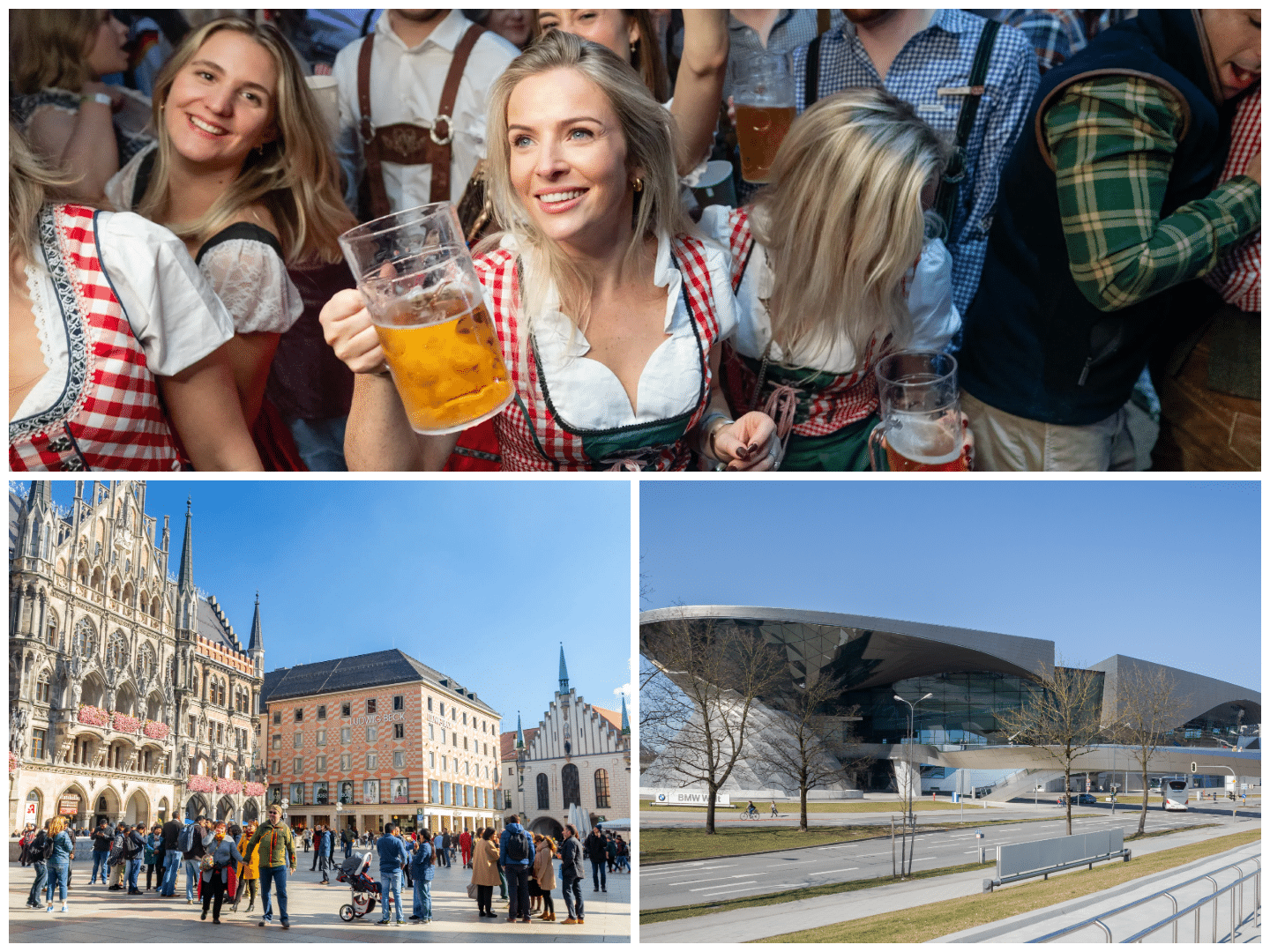
Over six million people visit Munich for Oktoberfest each year in September and October. During the day, families and seniors enjoy “Quiet Oktoberfest” with traditional folk music at a low volume. The music turns electronic at night, and the atmosphere becomes more festive.
Oktoberfest, which started in 1810, is now the largest folk festival in the world. Locals love it, and there are special days for kids. Though it has been canceled 24 times due to war, disease, and inflation, it remains one of Munich’s top attractions.
Munich also hosts festivals like the summer and winter Tollwood, the Spring Festival (Frühlingsfest), and the Kocherlball. However, hotel prices during Oktoberfest can be very high, often three times the regular rates. While it’s a fun event, be ready for the costs.
Marienplatz
Marienplatz has been the geographical and cultural heart of Munich since 1158. The city square houses essential buildings like the Old and New Town Halls. The picturesque square known as Marienplatz has been at the heart and soul of Munich since the city’s foundation. While its current name originates from the famous Marian Column in the center of the square, it was initially called Schrannenplatz, or Grain Market Square, as it was the leading marketplace in the Middle Ages.
Marienplatz has been host to important public events and festivities for as long as it has existed. Over the years, it has managed to maintain its role as one of Munich’s most beloved areas.
New Town Hall
Munich’s New Town Hall, or Neues Rathaus, is one of the city’s most famous buildings. It was built between 1867 and 1908 in a striking Neo-Gothic style and stretches over 100 meters along Marienplatz. The New Town Hall features an 85-meter-tall tower called the Rathausturm.
Inspired by city halls in Brussels and Vienna, this building adds a grand atmosphere to Marienplatz. Its Glockenspiel, the fifth-largest clock in Europe, is well-loved by visitors and locals.
We suggest visiting the Neues Rathaus to see the Glockenspiel chime daily at 11 am, 12 pm, and 5 pm during the summer. The show includes a re-enactment of a Medieval tournament. Don’t forget to take the lift up to the tower for fantastic city views!
Nymphenburg Palace
Visit Nymphenburg Palace, located 5km northwest of Munich’s Old Town. This impressive palace was built in 1664 for Electress Adelaide of Savoy and served as a summer home for the Wittelsbach royal family.
Inside, you’ll find a main villa with beautiful rooms. Start your tour at the Schönheitengalerie, which displays 38 portraits of notable women chosen by King Ludwig I, including Helene Sedlmayr and Lola Montez. You can also see the Queen’s Bedroom, where Ludwig II was born, and the King’s Chamber with stunning ceiling frescoes.
The Marstallmuseum shows royal coaches and Ludwig II’s decorative sled. It also has the world’s most extensive collection of Nymphenburg porcelain. The palace grounds include grand fountains and well-kept gardens. Take a gondola ride on the canal in summer for a memorable experience.
The Frauenkirche is the city’s landmark par excellence.
The Frauenkirche is Munich’s iconic landmark, recognized for its distinctive towers that dominate the skyline. Visitors can climb 89 spiral steps from the south chapel to reach the south tower, then take a lift for stunning city views. Tickets are available for advance online booking.
This Gothic cathedral, serving as the seat of the Archdiocese of Munich, was constructed in the 15th century using bricks to save costs, with completion in 1488 after 20 years. A legend claims the devil left a footprint at the entrance, angered by the church’s construction in God’s name and amused by its lack of windows.
BMW Adventure World near Olympic Park
Munich is well-known for its beer, fairy tale castles, and the BMW headquarters in the north of the city. Although you cannot tour the famous BMW towers, you can visit the BMW Welt and museum nearby.
BMW Welt is a stunning building and one of the few free attractions in Munich. It is an ample space where you can see current and past car models, innovative designs, and racing cars. If you love cars, this is a must-see. The BMW Museum next door requires an entrance fee but is also impressive. It explains the history of Bayerische Motorenwerke, showing how the BMW brand has evolved. At BMW Welt, you can find the latest models from BMW, BMW Motorrad, MINI, and Rolls-Royce Motor Cars.
Deutsches Museum – From atomic physics to robotics
If you enjoy science, visit the Deutsches Museum. It is a large museum focused on technology and science, featuring interactive displays and live demonstrations. Exhibits on many topics, such as physics, engineering, and astronomy, are also on display.
With over 28,000 items in 50 fields, it is the largest museum of its kind in the world. For kids ages three to eight, Kinderreich offers 1,000 fun activities, including water play and building with giant Lego. Remember, Kinderreich closes at 4:30 pm.
The museum can be overwhelming, so plan to see what interests you most. Furthermore, they provide a free app in English and German to help you find your way around and learn more about the exhibits.
Eat local food – that is not beer!!
Bavarian cuisine often includes a lot of meat and vegetables such as potatoes (kartoffel), cabbage (kraut), beets, and knödel, typical German dumplings. Mustard and pickles are popular flavorings, with many flour—and butter-based dishes. Here are some typical dishes
Avoid the panic of not knowing what to order in the restaurant, and decide on your must-try delicacies before you go!
- Wurst: Bavaria is known for its sausages, which are usually made with pork. A particular delicacy is weisswurst, a white sausage often served with sweet mustard. One of the most iconic meals in Bavaria has a hidden superpower; it is the perfect hangover cure.
- Bretzel or pretzel: a baked bread product usually twisted in a knot. There are sweet ones, but it doesn’t get much more typical than a salted pretzel with weisswurst and mustard.
- Kartoffelsalat is potato salad served warm or cold, sometimes with mayonnaise and often with bacon, vinegar, mustard, and onions.
- Kartoffelknödel, potato dumplings, and Semmelknödel, dumplings made from dried wheat bread rolls, are both served as sides to other dishes.
- Dampfnudeln: a steamed white bread roll, sometimes served sweet with a fruit sauce, and sometimes filled or served with meat as a central dish.
- Leberkäse: baked meatloaf-type dish, traditionally including liver, and often consisting of ground corned beef, pork, and bacon.
- Münchner Schnitzel. Wondering what else to eat in Munich? No trip to Bavaria, or Germany, to be fair, is complete without trying out a traditional Bavarian schnitzel. Typically, German schnitzel is breaded fried veal or pork, served with spätzel, potato, and cucumber salad or fries. In Munich, the cutlets are brushed with sweet mustard and horseradish. Absolutely delicious – if we may say so ourselves!
- Obatzda: a typical Bavarian soft cheese dish mixed with paprika, onion, and garlic.
- Sauerbraten: a pot roast of marinated meats and one of Germany’s national dishes.
- Schweinsbraten, a roast pork dish served with dumplings and sauerkraut (pickled, fermented cabbage); Schweinshaxe, roasted ham hock; and Spanferkel, suckling pig, served roasted, especially on holidays like Oktoberfest.
Visit Viktualienmarkt: Simply delicious!
Located in the heart of the old town, Viktualienmarkt used to be a farmers’ market. These days, it attracts epicures and foodies, who find everything they could dream of – from traditional Bavarian delicacies to more exotic produce.
The Viktualienmarkt’s name comes from a Latin word for food, “victuals. “It sells various culinary products, from fresh ingredients to hot snacks like the famous wurst or sausages. The traditional maypole, a historic way to inform illiterate visitors of the city’s trades and crafts, is a popular meeting place.
We recommend heading to Viktualienmarkt on a sunny day, grabbing a picnic from the market, and sitting in the beer garden to enjoy your food and watch the world go by!

English Garden – Munich’s Green Lung
The English Garden is one of Munich’s largest parks. It is popular for jogging, cycling, and volleyball. The Eisbach has a standing wave that attracts surfers and spectators.
People can visit sights like the Monopteros, the Chinese Tower, and the Japanese Tea House. The park hosts yearly events like the Kocherlball and the Japanese Festival. For athletes, there are 78 kilometers of paths for cycling and jogging, along with slacklining and soccer in warmer months.
Surfers show their skills all year at the southern end of the Eisbach. The Kleinhesseloher See Lake is an excellent spot for rowing and pedal boats, attracting visitors even in cooler weather. In the northern part, people practice yoga and Tai Chi, and there is a riding school at the university with several riding trails.
The Stachus – Karlsplatz
Karlsplatz, better known as Stachus, is formed by the Karlstor gate with a semicircle of Rondell buildings on both sides and serves as the entryway to Munich’s most extensive pedestrian zone. The German saying “Da geht’s ja zu wie am Stachus” has spread beyond Munich throughout Bavaria to describe a place where lots are going on.
These days, there’s still a lot going on at Stachus, day and night: Several S-Bahn, U-Bahn, and tram lines run through here, with cars, buses, cyclists, and pedestrians passing through by the thousands every day. Some use it to navigate the old town, while others use it to access the pedestrian zone. It also serves as the starting point for Munich’s shopping district.
Shopping in Munich
From designer boutiques to shops selling traditional Bavarian crafts, Munich has something for everyone. So, what to Buy in Munich?
- Traditional Clothing (Trachten): Lederhosen for men and Dirndl for women make great souvenirs, especially for Oktoberfest.
- Beer Steins: Traditional glass, pewter, or ceramic beer steins, especially those from Hofbräuhaus, are popular.
- Nymphenburg Porcelain: Nymphenburg Palace sells handmade porcelain, including classic dishes and modern art pieces.
- Typical Foods: Locally made chocolate and Lebkuchenherzen (gingerbread hearts) from Viktualienmarkt are tasty and affordable.
Munich has several main shopping streets. Neuhauserstrasse is a pedestrian street with department stores and global brands. Kaufingerstrasse is one of the city’s oldest shopping areas. Theatinerstrasse is a pedestrian-only street filled with designer shops. Leopoldstrasse, located in the Schwabing district, offers shops and cafés. Maximilianstrasse is known for luxury shopping, featuring exclusive boutiques and beautiful buildings, including views of the Residenz Theatre.
Munich also has many markets worth visiting. Viktualienmarkt is the most well-known. You can find flea markets at Olympiapark and Daglfing for unique vintage items. In December, check out the Christmas markets, particularly the traditional one in Marienplatz, which creates a festive atmosphere and has a history that dates back to the 14th century.
Note: If you liked this guide, you might also want to check our Hamburg guide or Berlin Guide.
The best day trips from Munich
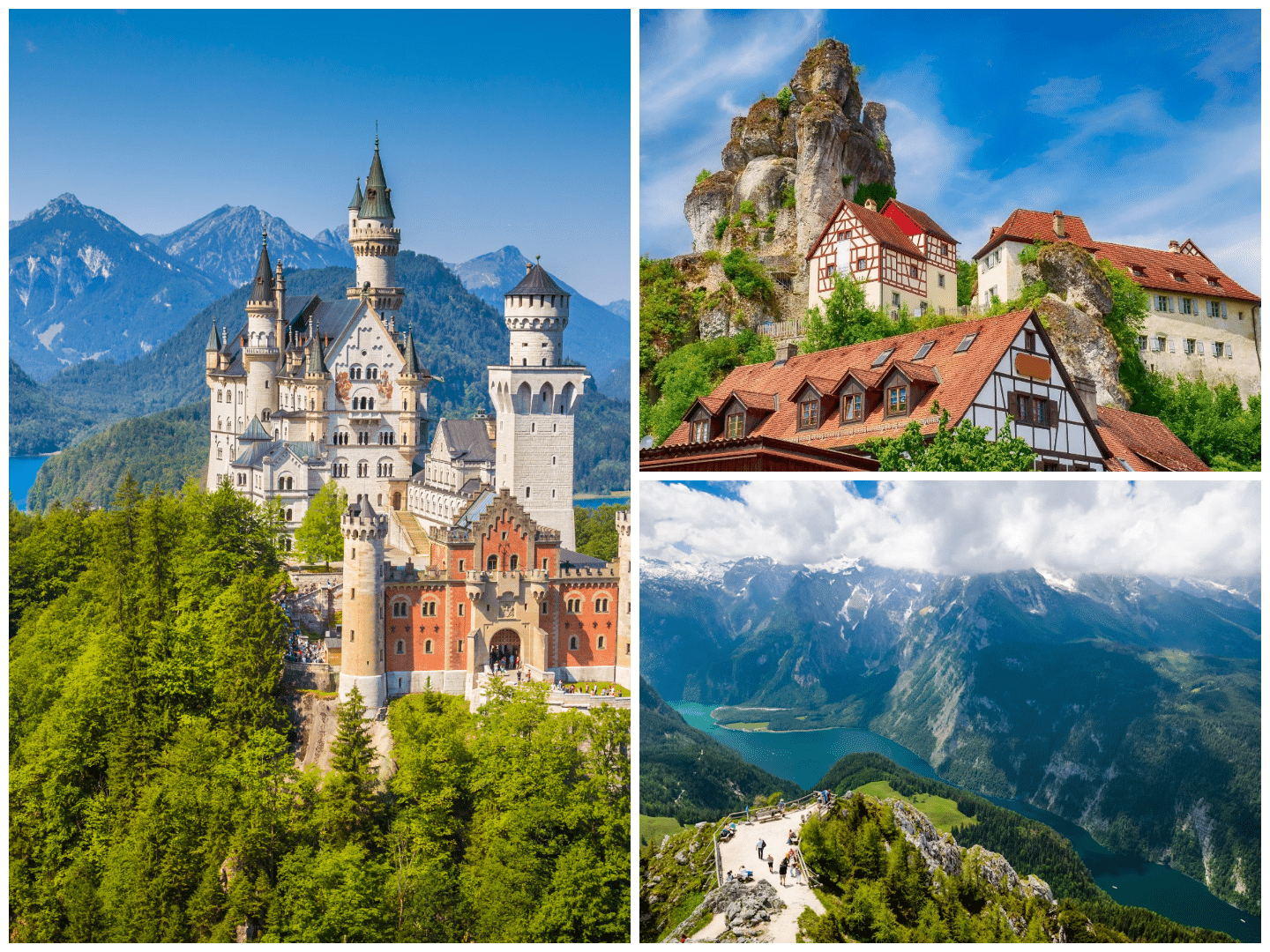
About an hour from Munich, you can reach the Alps, where you can find hiking trails and cable cars that take you to high peaks. In winter, the snowfall attracts many skiers. You can also visit the historic cities of Augsburg or Ulm, or see one of King Ludwig’s famous palaces. Austria is nearby, too, with beautiful Salzburg just a short train ride away. Here are ten great day trips you can take from Munich.
©getty
On clear days, the Alps can be seen from Munich. The mountain peaks look close enough to touch, and the area is filled with beautiful lakes and mountains. Here are some tips for hiking and cycling around Upper Bavaria’s lakes, nearby mountain summits, and cozy huts. Enjoy the scenic beauty of Chiemsee, the largest lake in the region.
You can explore beautiful castles and relaxing parks in and around Munich. Schloss Nymphenburg (Nymphenburg Palace), Schloss Schleissheim (Schleissheim Palace), and Schloss Blutenburg (Blutenburg Palace) are all easy to reach. You can also visit the stunning castles of King Ludwig II or the Sisi Palace in Possenhofen by Starnberger See, where Empress Sisi spent her summers. Here is a list of Munich’s castles and palaces.
Bavaria’s palaces are some of the most beautiful in the world, and getting to them is a pleasure. On a walking tour in Füssen, you will see three castles. Start at the late Gothic Hohe Schloss (High Castle) in Füssen, stroll through the old town, and hike to Kalvarienberg and Schwansee Lake, perfect for a summer swim. From there, reach Hohenschwangau Castle and walk to the fairytale Neuschwanstein Castle. Don’t miss the Marienbrücke (bridge) tour! After that, descend to Alpsee Lake, then follow the Alpenrosenweg trail back to Füssen.
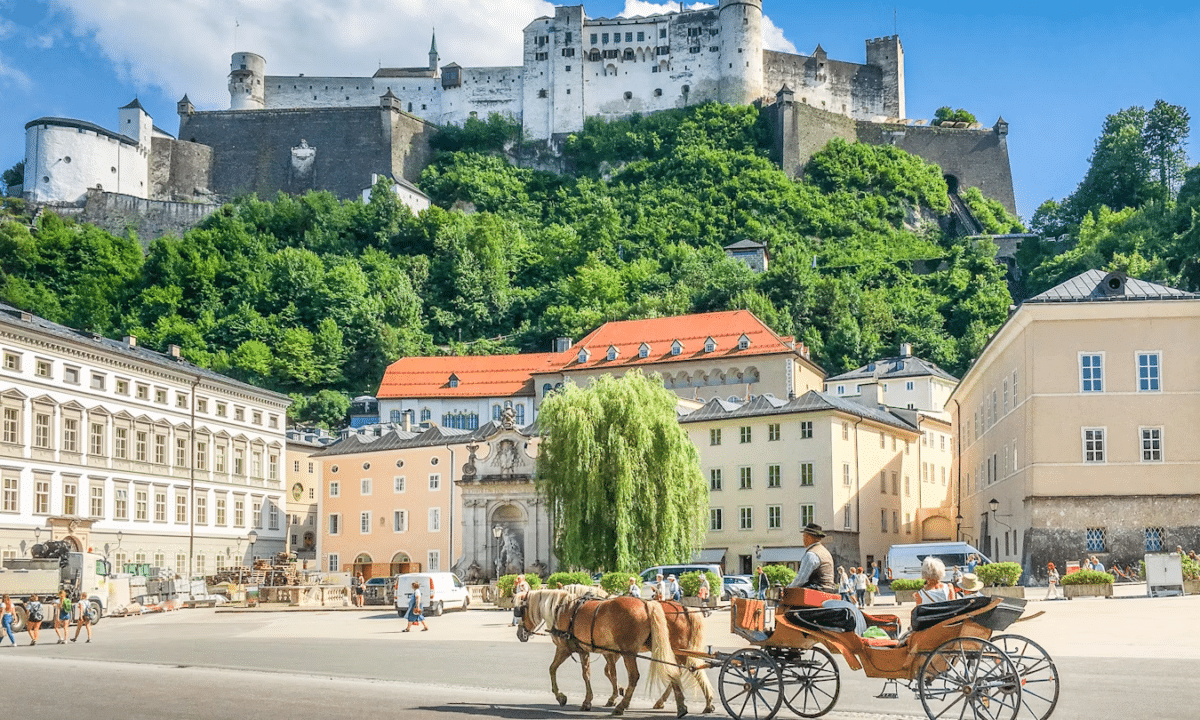
Visit the birthplace of the famous composer Wolfgang Amadeus Mozart. Stroll through the charming Baroque old town, then relax as you travel to beautiful Lake Wolfgang. Sing “The Sound of Music” songs as you head to Salzburg. Continue your musical journey at Mozart’s Birthplace Museum. Check out the stunning interior of Salzburg Cathedral, which looks divine. Enjoy coffee and cake at Café Tomaselli.
On this tour from Munich, you can visit Germany’s Dachau Concentration Camp Memorial Site with a guide. They will walk you through the exhibits and explain critical historical events, such as World War II and the Holocaust. The tour includes transport from Munich to the memorial site and back.
Note: If you want to learn more, you can also read our related article about the best trips from Munich.
The Best Time to Visit Munich
When is the best time to visit Munich? The answer depends on what you want to do.
- Weather: Visit from May to September for mild temperatures and sunshine. This is the best time for outdoor activities and enjoying beer gardens. However, it gets cold and snowy from December to February, and this winter weather may not be great for extended outdoor activities.
- Cheapest Time: The best hotel deals are from late fall to early winter, especially from November to early December, except during the Christmas market. Late September to early October is prime time for Oktoberfest, and hotel prices go up, and many tourists visit. So, that’s when it’s the most expensive.
- Busy time vs. less busy time: Oktoberfest draws large crowds. Consider visiting during the Festival’s last week to avoid the busiest days. Munich is the least crowded from November to Munich, excluding the Christmas market. Remember, it can be cold during winter.
- Key Events: Oktoberfest is from Late September to early October. This is the largest beer festival in the world. You can also visit the Munich Christmas Market from late November to early January in Munich and enjoy festive decorations and holiday shopping. The ultimate key event is Fasching. In February, experience Carnival with parades and costume parties.
- For a great overall experience, visit in late spring or early summer when the weather is pleasant and crowds are smaller. Budget travelers should go in late fall or early winter for lower costs.
How long should you stay in Munich?
The ideal length of a stay in Munich depends on your interests and travel pace. The city offers a great mix of urban attractions and stunning day trips, so you can easily customize your itinerary.
Short Trip: 2-3 Days
This is a reasonable amount of time for a weekend getaway and allows you to hit the major highlights without feeling too rushed.
- Day 1: Old Town & Beer Culture. Start your day at Marienplatz to see the famous Glockenspiel. Climb the tower of St. Peter’s Church for a panoramic view of the city. Explore the Munich Residenz, the former royal palace, and in the evening, enjoy a traditional meal and a beer at the legendary Hofbräuhaus.
- Day 2: Museums & Parks. Dedicate this day to exploring a different side of Munich. Visit the Deutsches Museum, one of the world’s largest science and technology museums, or explore the art at the Pinakotheken museums in the Kunstareal district. In the afternoon, relax in the vast English Garden and watch the surfers on the Eisbach wave.
- Day 3 (optional): A Taste of Modern Munich. Spend a day exploring the city’s modern side, including the Olympiapark, site of the 1972 Summer Olympics, and the striking BMW Welt and BMW Museum.
Ideal Trip: 4-5 Days
A more extended stay gives you the flexibility to explore the city’s diverse neighborhoods and fit in a day trip. This is a very popular option for visitors to Munich.
- In addition to the 3-day itinerary, use your extra time to visit the beautiful Nymphenburg Palace, the summer residence of Bavarian monarchs. You can also explore the trendy and vibrant Glockenbachviertel or the upscale Schwabing district, known for its cafés and lively atmosphere.
- Day Trip: With 4-5 days, you have time for a day trip to a nearby attraction. The most popular choice is the fairytale Neuschwanstein Castle, located a few hours away. Other excellent options include a somber but essential visit to the Dachau Concentration Camp Memorial Site or a trip to the charming, medieval city of Salzburg in Austria.
Extended Stay: A Week or More
If you have a week or more, you can truly get to know Munich and the stunning Bavarian region.
- Deeper Dive: Spend more time in the various museums and galleries, go shopping on Kaufingerstraße, or visit the historic Dachau memorial site. You can also take a tour of the Allianz Arena if you’re a football fan.
- Multiple Day Trips: With a week, you can take various day trips. You could visit the picturesque town of Garmisch-Partenkirchen and take a cable car up the Zugspitze, Germany’s highest peak. Other options include visiting the stunning Königssee (King’s Lake) or the beautiful city of Nuremberg.
In summary:
- Weekend Escape: 2 days is the bare minimum for a quick overview.
- Classic Visit: 3-4 days is perfect to see the main sights and a potential day trip.
- Regional Explorer: 5-7+ days is ideal for a comprehensive experience of Munich and the surrounding Bavarian countryside.
Where to stay?
Munich offers a variety of neighborhoods to suit every type of traveler. The city is renowned for its safety and welcoming atmosphere. Still, each district has its own unique character, from historic grandeur to bohemian cool.
Best for First-Time Visitors and Sightseeing
Altstadt (Old Town)
This is the historical and cultural heart of Munich. Staying here puts you within easy walking distance of iconic sights like Marienplatz, the Munich Residenz, and the Frauenkirche. It’s the most convenient option for first-timers who want to be immersed in the city’s main attractions.
Maxvorstadt
Known as the “brain of Munich,” Maxvorstadt is the city’s intellectual and artistic hub. It’s home to the major universities and a dense concentration of museums, including the famous Pinakotheken art galleries. It’s an excellent choice for those who prioritize culture and want to be close to both the city center and the beautiful English Garden.
Best for Solo Travelers
Altstadt & Maxvorstadt
These areas are excellent for solo travelers due to their central location and safety. You can easily walk to sights, and there’s a constant buzz of activity.
Schwabing
This neighborhood has a youthful and lively vibe, thanks to its proximity to the university. It’s full of cafés, bars, and a relaxed atmosphere. It’s also home to a large part of the English Garden, making it an excellent place for a solo stroll or a calm afternoon.
Glockenbachviertel
This area is an excellent option for solo travelers seeking a trendy and social scene. It’s very walkable and has a wealth of unique shops, eateries, and bars where it’s easy to strike up a conversation.
Best for Budget Travelers and Value
St. Paul
Located near the central train station (Hauptbahnhof), this area offers a wide range of hostels and budget-friendly hotels. While the immediate area around the station can be a bit busy and is known for some minor issues late at night, many of the side streets are perfectly fine. The central location provides excellent transport links, which can save you money on travel costs.
Giesing or Sendling
These are residential districts a little further from the center, but are well-connected by public transport. While they may not have the touristy buzz, they offer a more authentic Munich experience and significantly lower accommodation prices. The cost of a public transport day pass is relatively low, making this a good value option for travelers on a tight budget.
Best for Gay Travelers and Nightlife
Glockenbachviertel
This is Munich’s central LGBTQ+ hub. It’s known for its inclusive and vibrant atmosphere, with a high concentration of gay-friendly bars, clubs, cafés, and shops. It’s a trendy and welcoming neighborhood that is a must-visit for anyone looking to experience the city’s diverse and progressive side.
Schwabing
This neighborhood is another excellent choice for nightlife. Its bohemian roots and large student population give it a dynamic party scene with a mix of laid-back bars and energetic clubs.
Safety and “Dangerous” Areas
Munich is one of the safest major cities in Europe. There are no areas that tourists should altogether avoid. However, some places can have more petty crime, especially at night.
Around Munich Hauptbahnhof (Central Station) and the Bahnhofsviertel, there is a higher police presence. This area can feel busy and intense due to late-night crowds, so be aware of your surroundings after dark.
The central districts, such as Altstadt, Maxvorstadt, Lehel, and Haidhausen, are very safe and well-lit. You can walk comfortably in these areas at any time. Overall, Munich has low crime rates, mostly involving minor incidents like pickpocketing.
Be cautious of your belongings, especially in busy places. Some neighborhoods, mainly south of the central station, can feel less safe at night due to the Red Light District. It’s best to avoid these areas after dark. For nighttime travel, consider using public transport or ride-sharing services. Violent and hate crimes are rare, so that women can feel safe walking at night.
Neighborhood Highlights:
- Altstadt: This area blends history, culture, and shopping, with sights like Marienplatz and the Residenz.
- Glockenbach: Known for nightlife, it has many bars and clubs, especially along Müllerstraße, and is friendly to the LGBTQ+ community.
- Haidhausen: This calm area by the Isar River offers nice cafés and cultural activities at Gasteig.
- Maxvorstadt: Close to Altstadt, it has universities and essential museums, leading to the Englischer Garten, Munich’s large park.
- Schwabing: Once a bohemian area, it has great cafés and shops along Leopoldstraße and Hohenzollernstraße, near Englischer Garten. Schwabing still has beautiful architecture and a lively atmosphere.
Health and Safety Munich Guide
Most importantly, Munich is consistently ranked as one of the safest major cities in the world, with a very low crime rate and a strong sense of public order. Tourists feel secure and can walk around most parts of the city without any significant concerns. However, like any large urban center, it is still wise to take some basic precautions.
General Safety Tips
- Petty Crime: The most common crime that affects tourists is petty theft, particularly pickpocketing. This is most prevalent in crowded areas such as the central train station (Munich Hauptbahnhof) and the surrounding quarter. Additionally, public transport (U-Bahn and S-Bahn) is exceptionally crowded during rush hour. Furthermore, major tourist attractions like Marienplatz are visited during significant events like the Oktoberfest or Christmas markets.
- Prevention: So, always be aware of your belongings. Use a money belt or a secure bag, and avoid leaving valuables on tables at cafés or unattended on public transport.
- Public Transport: Munich’s public transport system is very safe, clean, and efficient. The stations and trains are well-lit and monitored. Even at night, you can generally feel safe using the system.
- Cycling: Munich has a pervasive network of bike lanes. As a pedestrian, be cautious and avoid walking in these lanes. Cyclists have the right of way and can be moving at high speeds. A simple “ding” of a bike bell is a common way for a cyclist to signal you to move out of the way.
Health and Medical Services
Germany has a top-tier healthcare system, and Munich’s medical facilities are excellent.
Emergency Numbers:
In case of a life-threatening emergency, these are the numbers to know:
- 112: For Fire and Ambulance services (medical emergencies).
- 110: For Police.
Routine Medical Care:
For non-emergency situations, you can visit a general practitioner (Hausarzt). Many doctors, especially in a city like Munich, will speak English. It’s often best to call ahead to make an appointment to avoid long waiting times.
European Health Insurance Card (EHIC):
If you are a citizen of an EU country, you can use your EHIC for medical care from public providers.
Travel Insurance:
For all other travelers, it is highly recommended to have comprehensive travel insurance. You will likely have to pay for your medical care upfront and then seek reimbursement from your insurance provider.
Pharmacies (Apotheke):
Pharmacies are easily identified by a red “A” sign. They are a good resource for over-the-counter medications and advice. If you need a pharmacy after hours, a list of open emergency pharmacies is posted on the door of every Apotheke.
Tap Water:
The tap water in Munich is safe to drink and is of very high quality.
Common Scams
While Munich is safe, be aware of a few common scams that can target tourists:
- Fake Ticket Inspectors: On public transport, plain-clothed inspectors will check tickets. An honest inspector will always give you a penalty notice that you can pay later. A scammer will demand a cash payment on the spot and might use a fake badge.
- Bar Scams: In some touristy or nightlife areas, especially in the red light districts, be wary of people who are overly friendly and invite you for a drink. You could end up with a shockingly high bill. It’s best to stick to well-known establishments.
- Beggars and Buskers: While many are legitimate, some beggars, especially those with signs in various languages, may be part of a larger scam where they try to distract you while an accomplice pickpockets you.
Tips for solo travelers, solo female travelers, gay travelers
Munich is a fantastic city for solo travelers of all types. It’s renowned for its safety, cleanliness, and efficiency, making it a comfortable and easy place to navigate on your own. Here are some specific tips for different solo travel groups.
Tips for Solo Travelers (General)
Munich’s laid-back atmosphere and abundance of activities make it a great place to explore on your own terms.
- Embrace the Beer Gardens: Munich’s beer gardens are a social institution. They are communal spaces with long tables, and it’s completely normal to sit down next to strangers. This is a great way to meet locals and other travelers without the pressure of a formal setting.
- Join a Tour: Joining a guided tour is an excellent way to get your bearings, learn about the city’s history, and meet other travelers. Options range from free walking tours to specialized beer tours or bike tours.
- Dine Alone: Don’t hesitate to eat alone. Many traditional Bavarian restaurants have a relaxed, convivial atmosphere, and no one will think twice about a solo diner. You can also grab a quick and delicious meal from a stall at the Viktualienmarkt, which is an excellent place for people-watching.
- Day Trips: Munich is a perfect base for exploring Bavaria. The freedom of solo travel means you can easily plan a day trip by yourself to iconic places like Neuschwanstein Castle or the Dachau Concentration Camp Memorial Site without having to coordinate with anyone else.
Tips for Solo Female Travelers
Munich is widely considered one of the safest cities in Germany and Europe for solo female travelers. While it’s always smart to exercise caution, you can generally feel confident and at ease.
- Public Transport: The city’s public transit system (U-Bahn, S-Bahn, trams, and buses) is very safe, even at night. Stations are well-lit and often patrolled. You can feel comfortable using it to get around at any hour.
- Nightlife: While Munich’s nightlife is generally safe, it’s wise to be aware of your surroundings, especially in crowded party areas. The main train station area and some parts of the city center can be busy late at night, so stay in well-lit, populated areas.
- Accommodation: When booking a hotel or hostel, look for one with good reviews from other solo female travelers. Staying in a central neighborhood like Maxvorstadt or Altstadt can reduce your need for late-night transportation.
Tips for LGBTQ+ Travelers
Munich has a vibrant and welcoming LGBTQ+ scene, making it a very comfortable destination for gay and lesbian travelers.
- The Glockenbachviertel: This is the heart of Munich’s LGBTQ+ community. It’s a picturesque and trendy neighborhood filled with gay-friendly bars, cafés, and shops. The atmosphere is open and inclusive, and it’s a fantastic place to stay or spend an evening.
- Events: If you’re visiting in late June or early July, try to align your trip with Munich Pride (Christopher Street Day – CSD). It’s a significant event with a parade, street parties, and cultural activities that celebrate the city’s diversity. Additionally, the first Sunday of Oktoberfest is informally known as “Gay Sunday,“ a major LGBTQ+ event held at one of the beer tents.
- Safety: The city’s overall safety extends to its LGBTQ+ community. You can feel confident and comfortable holding hands or showing affection with a partner in public without fear of harassment.
Take a look at

Berlin Rhapsody: A City of Art, History, and Limitless Discovery
In this Berlin guide, we will immerse ourselves in the city’s vibrant soul and history. More importantly, we will show you what to do and
Most pleasant One-Day Trips from Vienna
Why did we write the article Most Pleasant One-Day Trips from Vienna in the first place? Let’s suppose you want to avoid the hassle of
Our Amsterdam Travel Guide
This Amsterdam guide will show you why you should visit this magnificent city, how to get there, what to do and see, where and when
References and sources:
Photo credits:
Feature photo credits: ©shutterstock