
In this article, “Where to Stay in Paris,” we’ll show you the safest and most dangerous areas in the city and give you a few helpful tips on how to make your trip to the city as pleasant as possible. If you would like to learn more, please stay with us.
Our website includes affiliate links. So, remember that we may receive commissions when you click our links and make purchases. Please read our legal disclaimer document for more information about our Affiliate disclaimer and other disclaimers like the Fair-Use disclaimer.
Overview
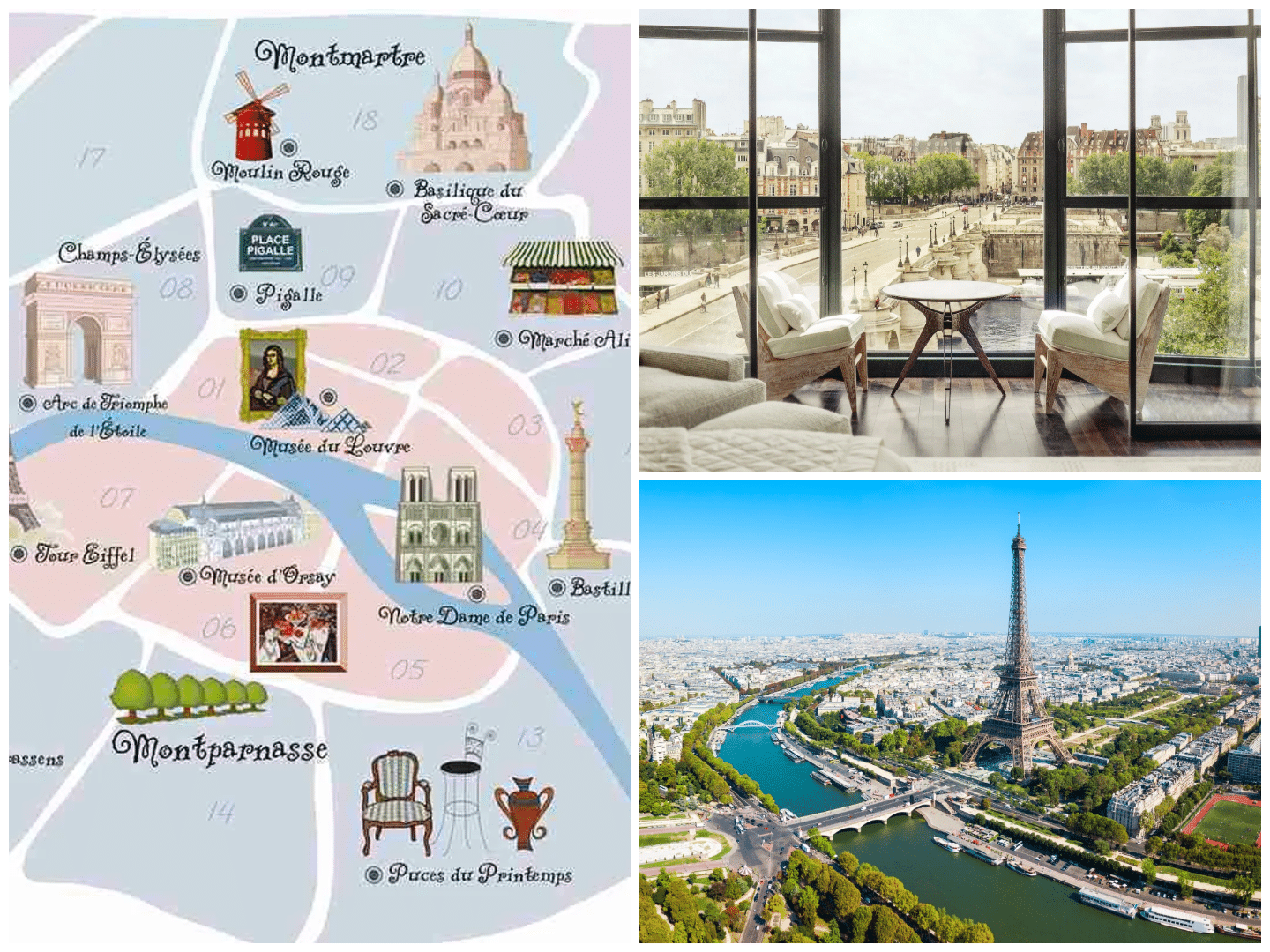
After booking your flight to Paris, the next important choice is picking the right neighborhood to stay in. So, the “Where to stay in Paris question should be your priority. If it’s your first visit, you might wonder which area is nearest to major attractions like the Eiffel Tower, the Arc de Triomphe, Notre-Dame, and the Louvre. You should also consider traveling with kids or experiencing the Paris you’ve seen in movies.
Choosing a hotel can feel overwhelming, but there are many great neighborhoods to consider. You need to choose a neighborhood that aligns with your interests and find a hotel or apartment that suits your budget.
To help you, we have compiled a list of the best neighborhoods for both first-time and returning visitors, along with hotel suggestions tailored to different budgets. Remember that hotel prices can fluctuate significantly by season, so even budget options may be costly in summer, while luxury hotels may offer better deals in winter. Now that we’ve covered a brief introduction, let’s explore where to stay in Paris.

Where to stay in Paris – the best areas
1st Arrondissement
Best Area For Sightseeing
The 1st Arrondissement is an excellent place to stay in Paris if you want to be at the heart of the city. It’s ideal for first-time visitors, as you can walk to major attractions like the Louvre Museum and Sainte-Chapelle.
Many areas in the 1st Arrondissement are luxurious. You’ll find high-end shops near the Metro station at Place de la Concorde, several Michelin-starred restaurants, and friendly hotels. Nearby streets, such as Rue Saint-Honoréé and Rue de Rivoli, also offer more upscale options.
Pros of Staying in the 1st Arrondissement:
– Very central location
– Close to top attractions, including the Louvre and the Palais Royal
– Easy access to Charles de Gaulle Airport
Cons of Staying in the 1st Arrondissement:
– Hotels and restaurants can be expensive
– It is busy, primarily non-residential, and, therefore, not authentic.
3rd Arrondissement
Best Area For Museums
The 3rd Arrondissement is an excellent place to stay in Paris if you’re a museum lover. This area is home to numerous museums, including the small Museum of Hunting and Nature and the large Centre Pompidou, both located close to the city center. It is one of the best neighborhoods for first-time visitors to Paris.
The 3rd and 4th arrondissements make up part of “Le Marais.” Luxury here is more casual and youthful than in the 1st or 8th arrondissements.
There are several Metro stations located around the edges of the 3rd Arrondissement, but not many are situated within it. Therefore, you should explore on foot. Other attractions, like Notre Dame and the city center, are within walking distance.
Pros of Staying in the 3rd Arrondissement:
– Many famous museums
– Centrally located but generally quiet
– Charming, winding streets to walk through
Cons of Staying in the 3rd Arrondissement:
– Metro stations are mainly at the edges
– Hotels are often small and fill up quickly
4th Arrondissement
Best Area For Parisian Charm
The 4th Arrondissement is where to stay in Paris if you’re coming for the charm. This fantastic neighborhood encompasses the oldest parts of Paris, including the Île de la Cité and the Île Saint-Louis, situated on the Seine River. The oldest house in Paris (Nicolas Flamel’s house) and the oldest planned square (the Place des Vosges) are also in the 4th.
Pros of Staying in the 4th Arrondissement:
- Centrally located yet residential
- Close to the Seine River
- Beautiful architecture (including Notre Dame) and parks
Cons of Staying in the 4th Arrondissement:
- Hotels can be pricey
- Very busy on the weekends
5th Arrondissement
Best Area For History
If you love history, the 5th Arrondissement is the best place to stay in Paris. This area is home to many important historical sites, including the Latin Quarter and Sorbonne University, which was founded in the 13th century.
The 5th Arrondissement is centrally located, making it easy to visit other historic areas. Notre Dame, Le Marais, and Saint Germain are all within walking distance. You can also explore the medieval Cluny Museum, which has centuries-old Roman baths. For more recent history, visit the Panthéon, where some of France’s greatest heroes are buried.
Pros of Staying in the 5th Arrondissement:
– Many historical sites to see
– A mix of lively nightlife and family-friendly areas
– Home to many schools and a young atmosphere
Cons of Staying in the 5th Arrondissement:
– The eastern part of the area is far from major attractions
– Some parts can be hilly and more demanding to walk around
6th Arrondissement
Best Area for Cafés and Families
The 6th Arrondissement is a charming, upscale residential district best known for the iconic Saint-Germain-des-Prés neighborhood and the picturesque Latin Quarter. It’s also celebrated for its cafés, especially Café de Flore and Deux Magots, and its stunning access to the Luxembourg Gardens.
This area boasts excellent hotels, theaters, and vintage bookstores. Saint-Germain-des-Prés is a cultural hub where notable 20th-century movements flourished. You can enjoy high-end shopping from designers like Cartier and dine at historic restaurants like Le Procope.
Pros of Staying in the 6th Arrondissement:
– Beautiful streets and famous boulevards
– Renowned restaurants and historic cafés
– Unique hotels
Cons of Staying in the 6th Arrondissement:
– Higher restaurant prices
Public transportation can be limited; however, areas near the Montparnasse Tower offer better access.
7th Arrondissement
Best Area for First-Time Visitors
The 7th Arrondissement is the best place to stay for first-time visitors to Paris. From here, you can easily walk to the Eiffel Tower. This area also features attractions such as the Musée d’Orsay, which showcases 19th-century Impressionist art. Upscale department stores, such as Bon Marché, are also located here.
Another reason to choose the 7th Arrondissement is its calm streets, especially away from the busy Champ de Mars near the Eiffel Tower. Overall, it’s a great area to return to at the end of the day. However, it may not be the best choice for those looking for a lively nightlife.
Pros of Staying in the 7th Arrondissement:
– Peaceful, residential streets
– Walking distance to main attractions
– Great views of the Seine River and the Eiffel Tower
Cons of Staying in the 7th Arrondissement:
– Limited nightlife
– Buses are easier to access than the subway, which can be far away
8th Arrondissement
Best Area For Fashion and Luxury
The 8th Arrondissement is a great place to stay in Paris for a luxury trip. The wide streets here have some of the world’s most famous designer shops. You can also enjoy upscale dining at historic restaurants, such as Café de la Paix, where notable figures like writer Emile Zola and actress Marlene Dietrich have dined.
Be careful when booking a stay in the 8th Arrondissement. This area has different neighborhoods. The areas around Opéra Garnier, the Champs-Elysées, and the Arc de Triomphe are upscale. However, the northeastern part of the district is not as luxurious.
Pros of Staying in the 8th Arrondissement:
– Home to essential landmarks like Champs-Elysées Boulevard and the Arc de Triomphe.
– Many luxury stores and upscale boutiques.
– Close to cultural sites, including the Grand Palais.
Cons of Staying in the 8th Arrondissement:
– Some areas, especially in the northeast, are less fancy.
- – Central attractions, such as the Louvre, are far away.
10th Arrondissement
Best Area For Budget Travelers
The 8th Arrondissement is a great place to stay in Paris for a luxury trip. The wide streets here have some of the world’s most famous designer shops. You can also enjoy upscale dining at historic restaurants, such as Café de la Paix, where notable figures like writer Emile Zola and actress Marlene Dietrich have dined.
Be careful when booking a stay in the 8th Arrondissement. This area has different neighborhoods. The areas around Opéra Garnier, the Champs-Elysées, and the Arc de Triomphe are upscale. However, the northeastern part of the district is not as luxurious.
Pros of Staying in the 8th Arrondissement:
– Home to essential landmarks like Champs-Elysées Boulevard and the Arc de Triomphe.
– Many luxury stores and upscale boutiques.
– Close to cultural sites, including the Grand Palais.
Cons of Staying in the 8th Arrondissement:
– Some areas, especially in the northeast, are less fancy.
– Central attractions, such as the Louvre, are far away.
11th Arrondissement
Best Area for an authentic and artsy Atmosphere
The 11th Arrondissement is ideal for travelers in their 20s and 30s seeking a quirky stay in Paris. Its convenient location near metro lines at Bastille and Nation makes it easy to reach major attractions like the Eiffel Tower.
This artsy neighborhood is home to pottery studios, pop-up shops, and a cat café. Nightlife thrives here, with bars in unique settings, from old warehouses to dive bars. While primarily residential and trendy, the area lacks major landmarks besides Place de la Bastille and Opéra Bastille, which hosts concerts and ballets.
Pros of Staying in the 11th Arrondissement:
– Artistic shops and galleries
– Lively nightlife
– Great value for a central location
Cons of Staying in the 11th Arrondissement:
– Fewer attractions nearby
– Neighborhood energy may not suit everyone
16th Arrondissement
Best Area For Families
The 16th Arrondissement is a good choice for families, offering peaceful luxury and numerous parks. You’ll be close to cultural institutions like the Louis Vuitton Foundation here. It’s in the Bois de Boulogne park, where you’ll also find a pool and the “Jardin d’Acclimatation,” a garden and play area for kids.
The 16th Arrondissement is also great for business travelers. It’s one of the closest areas to the city limits, near La Défense, the business district west of Paris.
Note that the 16th Arrondissement differs from where you should stay in Paris if you want the most central location. However, it is within walking distance of the Eiffel Tower.
Pros of Staying in the 16th Arrondissement:
- Calm and residential.
- It is an excellent location for day trips from Paris, close to highways.
- Beautiful architecture and parks.
Cons of Staying in the 16th Arrondissement:
- Travel to central Paris can be time-consuming.
- The area is large, making it hard to walk to significant monuments.
18th Arrondissement – Montmartre,
Best Area For Returning Visitors
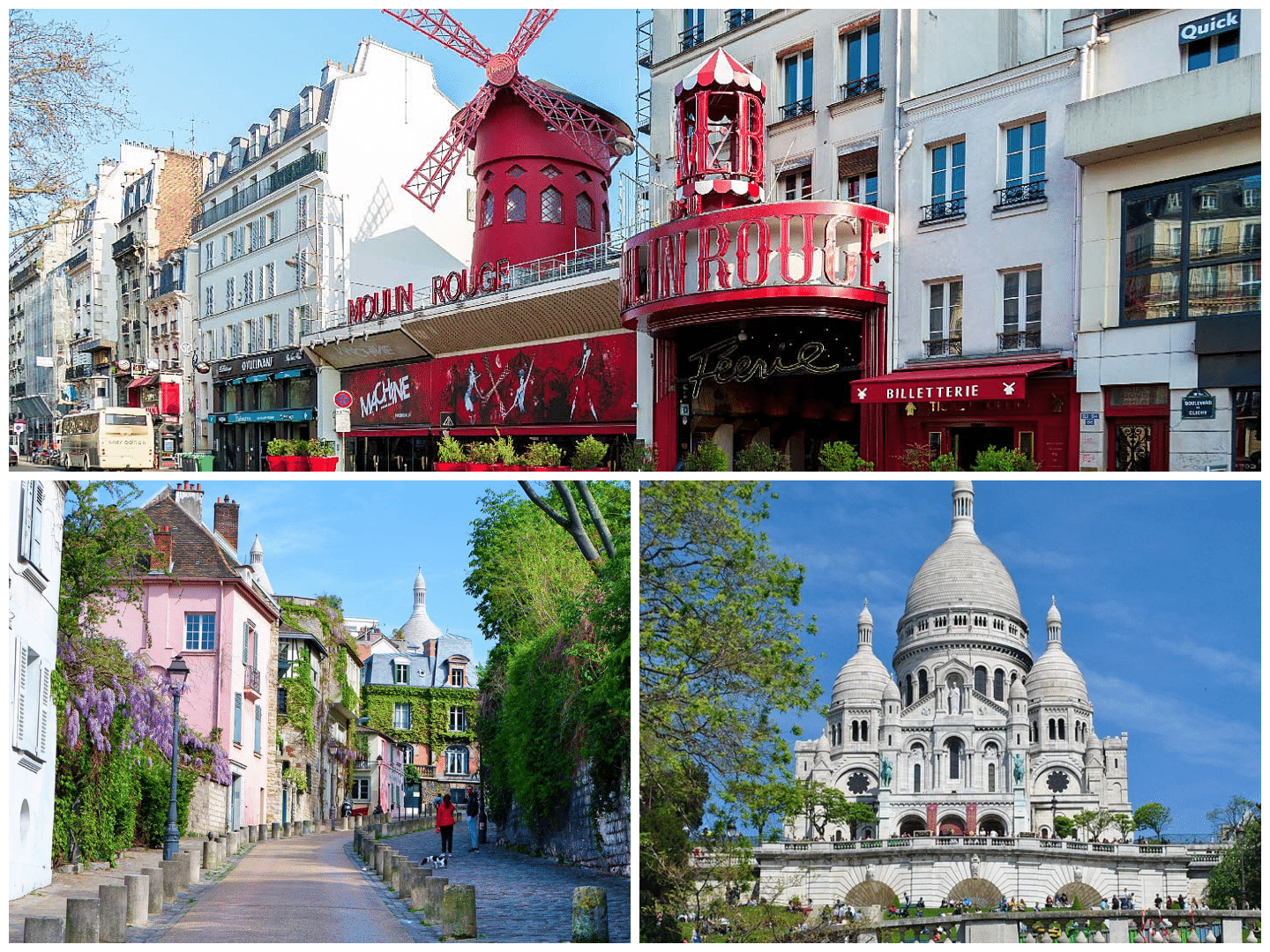
The 18th Arrondissement, renowned for its famous attractions and rich artistic heritage, is a charming area of Paris that attracts numerous visitors. Montmartre, with its cobblestone streets, is ideal for wandering and easily accessible via multiple Metro lines, connecting it to the rest of the city. Key highlights include the Place du Tertre, where artists create portraits, and the Sacré-Cœur Basilica, which offers stunning city views, including a panoramic view of the Eiffel Tower.
Pros of Staying in Montmartre:
– Vibrant artistic heritage
– Charming streets
– Great city views
Cons of Staying in Montmartre:
– Steep hills can be challenging
– Proximity to the red-light district
Where NOT to Stay in Paris
Is Paris safe?
Paris is generally safe, but crime rates are rising, like in other major cities. You don’t need to be afraid every time you leave your hotel. Most violent crime is linked to drugs or gangs and happens in specific neighborhoods, not where tourists usually go.
The most significant risk in tourist areas is the threat of pickpockets. Train stations in Paris can be in less safe areas. The 10th district has two major stations: Gare de l’Est and Gare du Nord. Many main train lines start or end here, so you will likely use them.
These areas are delicate during the day, and we’ve taken many trains from here. However, at night, you might see drunk people or those using drugs. Their behavior, including fights, can make you feel uncomfortable.
If you’re a first-time visitor to Paris, there are some places you should avoid staying. However, first, we’ll share a few tips that’ll make your trip easier and, above all, safer.
Stay Near a Metro Station
The metro is the fastest way to get around the city, so being close to a station will save you time. Aim for a walking distance of 5 minutes or less, which is about 400 meters. It usually takes about 45 seconds on the metro to travel between stations in the city center (or about 60 seconds if you’re on the Seine River).
Before booking a hotel, check its location on a map and find the nearest metro station. You should be fine in the single-digit districts or the Montmartre area (18th district). You can also consider other double-digit neighborhoods, but be sure to check how far the closest metro station is, as some may be farther away.
Consider Mobility Needs
If you have mobility issues—like pushing a baby stroller or dealing with a sore knee—choose a hotel just a block away from a metro station. This usually means bus stops will be nearby, making it easier to get around without navigating stairs at metro stations.
Paris offers many great options, including hotels, apartments, metro stations, and bus stops.
What Else to Know
Train stations can be unsafe, so avoid these areas, especially at night. Furthermore, at night, please stay away from Bois de Boulogne and Bois de Vincennes; they are fine during the day but not safe after dark. Be cautious on the subway, particularly at stations like Château-Rouge and Gare du Nord. Also, avoid any subway station that starts with “Porte“ when you are alone. So, check reviews about your hotel to see what it is like at night. Always keep a close eye on your belongings and leave valuable items at home. Avoid wearing flashy jewelry or carrying large amounts of cash. Try to appear confident and know where you are going.
Here are our tips for areas NOT to stay in Paris:
Avoid Paris’s Double-Digit Districts (If You’re a First-Time Visitor)
If you’re visiting Paris and want to see its top attractions, stay in the single-digit arrondissements or Montmartre in the 18th district. It would help if you could speak a little French. You’ll enjoy walking along the Seine and being close to famous sights, great cafés and restaurants, and lively neighborhoods like the Latin Quarter and Champs-Élysées.
The double-digit districts also have charming neighborhoods, unique places to explore, tasty bistros, fun nightlife, and good shopping. However, these areas are farther from the main attractions, and not everyone will speak English.
Don’t book a Hotel Beyond the Périphérique.
If you search online for hotel deals in Paris, you will notice many low rates at large tourist hotels just outside the city’s ring road. Brands like Ibis and AccorHotels often offer these low prices compared to central Paris. However, if your time is valuable, consider whether it makes sense to travel back and forth multiple times.
Additionally, many hotels outside the city have standard, generic rooms and limited amenities. They are often located in industrial areas, so you might miss out on the Paris experience and its vibrant atmosphere.
However, if you stay outside the city for a night or two, there are exceptions.
FAQs About Where to stay in Paris
The best area to stay in Paris is the 7th Arrondissement. It’s cloIt’so most significant attractions, like the Eiffel Tower, but also residential, making it a calm trip.
Where should I stay in Paris for the first time?
Stay in the 1st or 7th Arrondissement when visiting the Arrondissement for the first time.
Which is the best neighborhood to stay in Paris for first-time visitors?
If this is your first time visiting Paris, we suggest booking a hotel or a room in a central neighborhood. You can easily walk to many attractions or take the metro. The Marais is close to Notre Dame and the Louvre. It has streets along the Seine, as well as many restaurants and cafés. Saint-Germain-des-Prés and the Latin Quarter are also lovely and picturesque. You could also consider staying in the 8th Arrondissement, where you will be near the Arc de Triomphe and the high-end shopping streets of the city.
What are the safest areas to stay in Paris?
The safest places to stay in Paris are mixed residential and commercial areas, like the Marais district. It’s best to avoid areas near train stations, especially Gare du Nord and Gare de l’Est. City limits can also be risky for visitors. Paris is a large and busy city, and while most visits go smoothly, paying attention to your surroundings is essential. Like in many big cities, theft and pickpocketing can happen. Use common sense: in busy areas, ensure your bags are secure; don’t keep your valuables (like your passport, credit cards, and phone) in one place; and stay alert in crowded tourist spots and on the metro. According to data from International Citizens, which examines annual crime statistics from the French Interior Ministry, these neighborhoods include the 15th Arrondissement, near the Champ de Mars, and the 11th Arrondissement, known for its arts scene.
Where should you not stay in Paris?
If this is your first visit, we recommend avoiding the outer districts of Paris (10-20). These districts are farther from the main monuments, so you’ll spend more time traveling to them.
Is Paris safe at night?
Some crowded stations are safe at night, but we usually avoid taking the subway alone late at night. If you are worried, it’s better to take a taxi.
Where to stay in Gay Paris?
If you are part of the LGBTQ+ community, we recommend reading our Gay Paris Guide.
Take a look at
How to plan your trip to Provence
Have you chosen Provence (France) as your next holiday destination? Here’s some information to help you decide how to get there and which means of

Rome for the first-timers
In this brief guide to Rome for first-time visitors, we offer practical advice on what to see, do, and how to experience the city when

The Definitive Madrid Travel Guide: The Heart of Spain
This is your Definitive Madrid Guide, the lively capital of Spain. Madrid is a great European destination. It is famous for its world-class art, late-night