
In this Hamburg Guide, we will show you the city’s vibrant culture and activities. We will recommend what to do and see, where to stay, and share information about its famous musicals and the Beatles’ connection to the city. Plus, we’ll offer many helpful tips. So, stay with us.

©Getty
Our website includes affiliate links. So, remember that we may receive commissions when you click our links and make purchases. Please read our legal disclaimer document for more information about our Affiliate disclaimer and other disclaimers like the Fair-Use disclaimer.
Why should you visit Hamburg?
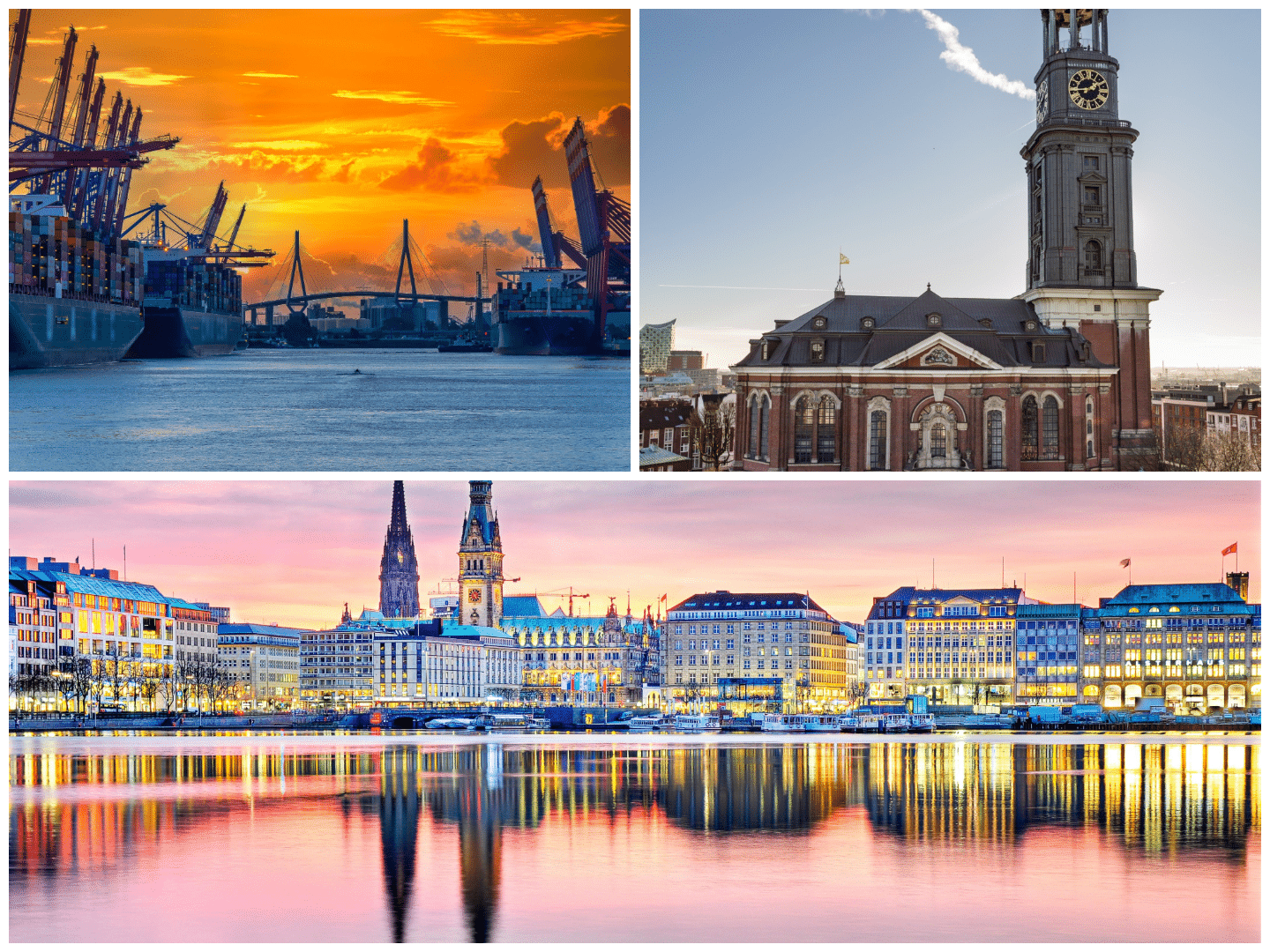
Most importantly, Hamburg (Germany) is an exciting place that combines history, culture, and maritime charm. More significantly, the city is known for its large port, one of the biggest in Europe, which gives it a unique character with canals and many bridges. You can explore the bustling waterfront by boat or on foot. The Speicherstadt is a UNESCO World Heritage site filled with red-brick warehouses and narrow canals that show the city’s trading history.
Furthermore, Hamburg has a rich cultural scene. It is famous for musicals and has many theaters, art galleries, and museums, including the important Kunsthalle Hamburg. The nightlife is lively, especially in the Reeperbahn area, which offers theaters, live music, bars, and clubs for all tastes.
Even though it’s a busy city, Hamburg has beautiful parks like Planten und Blomen, where you can relax and enjoy botanical gardens and water light shows. The food scene is diverse, with options like traditional fish sandwiches at the harbor and various international cuisines. Don’t miss the Sunday Fischmarkt for a fun atmosphere, fresh food, and live music.
Overall, Hamburg is a walkable city with an excellent public transport system and friendly locals. It offers a rich experience for anyone interested in its history, culture, or vibrant port city life.
How to get to Hamburg?
Hamburg is a central transportation hub in Northern Germany, making it relatively easy to reach from both within Europe and from further afield. Here’s a breakdown of how to get there:
By Air:
Hamburg Airport (HAM):
This is the main international Airport serving Hamburg. It’s well-connected with numerous direct flights from major European cities via both full-service carriers (like Lufthansa, Eurowings, KLM, Air France, British Airways) and low-cost airlines (like Ryanair, easyJet, Wizz Air).
The S1 S-Bahn (suburban Train) line directly connects the Airport to Hamburg Hauptbahnhof (Central Station) and other key city locations. The journey takes about 25 minutes.
Direct Flights (Limited):
While Hamburg Airport has many European connections, direct flights from intercontinental destinations are less common than to major hubs like Frankfurt, Munich, or Amsterdam. There are some direct flights from destinations like Dubai.
Connecting Flights
Most travelers from outside Europe will fly into a central European hub and then take a connecting flight to Hamburg (HAM). Popular connecting airports include:
Frankfurt (FRA)
Germany’s largest Airport, with excellent global connections and frequent short domestic flights or ICE train connections to Hamburg.
Munich (MUC):
Another central German hub, also with good global connections and frequent onward flights or ICE trains to Hamburg.
Amsterdam (AMS), London (LHR/LGW), Paris (CDG)
Other major European hubs with extensive global networks and frequent flights to Hamburg.
Booking:
Use online travel agencies (OTAs) or airline websites to search for flights. Consider “multi-city” or “open-jaw” tickets if you plan to visit multiple destinations.
By Train (Deutsche Bahn – DB)
Hamburg Hauptbahnhof is one of Germany’s busiest train stations and a key hub for national and international rail traffic. It offers High-Speed Trains (ICE) with excellent connections to major cities like Berlin, Munich, and Frankfurt, as well as direct services to Copenhagen and Vienna. Additionally, Intercity (IC) and Eurocity (EC) trains connect to various European cities, while regional trains link Hamburg to smaller towns in Northern Germany. Tickets can be booked through the Deutsche Bahn website or at the station, with booking for ICE trains often offering savings. For those flying in, direct ICE trains run from major airports like Frankfurt to Hamburg, making for a quick journey of about 3.5 to 4 hours.
By Bus (Long-Distance Coaches):
FlixBus is the dominant long-distance bus operator in Europe, offering extensive connections to Hamburg from countless cities across Germany and neighboring European countries (e.g., Amsterdam, Copenhagen, Prague, Berlin, Munich). Buses typically arrive at the Hamburg ZOB (Central Bus Station), which is conveniently located near Hamburg Hauptbahnhof. Tickets can be booked online via the FlixBus website or app. It’s generally a more economical option than trains, though journeys can be longer.
By Car:
Hamburg has good connections to Germany’s motorway network. The main routes are the A1, which runs north-south and connects to Bremen and Cologne; the A7, also north-south, linking to Hanover, Berlin via the A2, and Denmark; and the A24, which goes east-west to Berlin.
Warning: Be aware that parking in Hamburg, especially in the city center, can be costly and difficult to find. It’s a good idea to use park-and-ride facilities on the outskirts and take public transport into the center.
Tips for International Travelers:
- Visa Requirements: Check if you need a Schengen visa to enter Germany.
- Currency: The currency in Germany is the Euro (€).
- Language: German is the official language, but English is widely spoken in tourist areas, hotels, and among younger generations.
- Customs and Immigration: Be prepared for customs and immigration procedures upon arrival in Europe.
No matter where you’re coming from, Hamburg’s excellent transportation infrastructure ensures a relatively smooth journey to this vibrant port city.
How to come from the Airport to the city
Many international travelers from outside Europe will indeed land at larger hubs like Frankfurt (FRA) or Berlin (BER) and then connect to Hamburg.
Let’s break down how to get to Hamburg from these three points:
From Hamburg Airport (HAM) to Hamburg City (e.g., Hamburg Hauptbahnhof)
Hamburg Airport is easy to reach because it connects directly to public transport.
To get to the airport, take the S-Bahn (Suburban Train) Line S1. The station “Hamburg Airport (Flughafen)” is right in front of Terminal 1, so it’s a short walk. Just follow the “S” signs. The S1 train goes straight to Hamburg Hauptbahnhof (Central Station), which is the main hub in the city center. It also stops at important places like Jungfernstieg and Landungsbrücken. The journey takes about 25 minutes to Hamburg Hauptbahnhof, and trains run every 10 to 20 minutes. Remember to buy a ticket for the HVV (Hamburg’s public transport system). A single ticket (Einzelkarte) is enough. You can buy it from vending machines at the S-Bahn station.
From Berlin Brandenburg Airport (BER) to Hamburg
If you arrive at Berlin’s BER airport and want to go to Hamburg, take the train. First, travel from BER Airport to Berlin Hauptbahnhof (Central Station). This trip takes about 30 minutes, and you’ll need a VBB ticket for zones ABC.
From Berlin Hauptbahnhof, catch a direct ICE (Intercity-Express) train to Hamburg Hauptbahnhof. This train ride takes about 1 hour 45 minutes to 2 hours, with trains running every 30 minutes to an hour.
To buy tickets, visit the Deutsche Bahn website at http://www.bahn.com. Booking in advance can save you money, as tickets purchased on the day are usually more expensive.
From Frankfurt Airport (FRA) to Hamburg
Frankfurt Airport (FRA) has direct ICE (Intercity-Express) trains to Hamburg. To catch the train, go to the Frankfurt (Main) Flughafen Fernbahnhof, the long-distance train station. You can reach this station from Terminal 1 via a pedestrian bridge. If you arrive at Terminal 2, take the SkyLine shuttle to Terminal 1, then follow the signs to the train station. Do NOT go to the Regionalbahnhof if you are traveling to Hamburg. Direct ICE trains take about 3.5 to 4 hours and usually leave every 30 minutes. For the best prices, book your tickets in advance at http://www.bahn.com. Buying tickets on the same day will cost more.
Key Recommendations for Travelers from Outside Europe:
- Book Train Tickets in Advance: For the best prices on ICE trains from Berlin or Frankfurt to Hamburg, book your tickets via www.bahn.com as far in advance as possible (up to 6 months). Look for “Sparpreis“ or “Super Sparpreis“ fares.
- Allow Buffer Time: Especially when connecting from an international flight, build in extra time for potential flight delays, immigration, and getting to the train station.
- Deutsche Bahn Navigator App: This app is handy for real-time train schedules, platform information, and even buying tickets on the go.
- Consider Flying Directly to Hamburg: If your international flight destination allows for a convenient connection, sometimes a direct flight into Hamburg (HAM) is possible, saving you the train leg. However, if your long-haul flight goes to FRA or BER, the Train is generally the most efficient and comfortable way to reach Hamburg from there.
How to get around Hamburg?
Getting around Hamburg is effortless and efficient thanks to its comprehensive and well-integrated public transportation system (HVV), as well as being a very walkable city in many areas.
Here’s a breakdown of your options:
Public Transportation (HVV – Hamburger Verkehrsverbund)
This is by far the best way to navigate Hamburg. The HVV system includes:
- U-Bahn (Underground/Subway): The subway system is fast, frequent, and covers most central areas and popular attractions.
- S-Bahn (Suburban Train): Connects the city center with outer districts, the Airport, and some regional destinations.
- A-Bahn (Alster Valley Railway): A small regional train line serving the northern parts of the city.
- Buses: An extensive bus network fills the gaps where trains don’t go, reaching virtually every corner of the city. Night buses operate after the U/S-Bahn stops.
- Ferries (Fähre): Operated by HVV, these are a fantastic and scenic way to get around parts of the harbor and the Elbe River. Some ferry lines are even included in standard HVV tickets!
Tickets:
- Single Tickets (Einzelkarte): Valid for one trip in a specific zone or several zones.
- Day Tickets (Tageskarte): Great value if you plan to make more than 2-3 trips in a day. Available for different durations (e.g., 9 AM onwards, all day).
- Group Tickets (Gruppenkarte): Economical for small groups (up to 5 people).
- Weekly/Monthly Tickets: If you’re staying longer.
- Hamburg CARD: This is often the best option for tourists. It provides unlimited travel on all HVV public transport and discounts on many attractions, museums, and harbor tours. Available for 1-5 days.
- Where to Buy: Vending machines at all U/S-Bahn stations, bus drivers (for bus tickets only), HVV customer service centers, and the HVV app.
- Validation: Most tickets are valid immediately upon purchase from a machine. If you buy a ticket in advance (e.g., a multi-day ticket), remember to validate it by stamping it in one of the small red boxes on the platform before you board.
Tips for HVV:
- HVV App: Download the official HVV app. It’s excellent for planning routes, checking real-time schedules, and buying digital tickets.
- Google Maps: Works very well for public transport routing in Hamburg.
- Reliability: The HVV system is generally very reliable and punctual.
Walking
Many of Hamburg’s key attractions in the city center, HafenCity, Speicherstadt, and around the Alster Lake are within comfortable walking distance of each other.
- Pros: Allows you to soak in the atmosphere, discover hidden gems, and enjoy the beautiful architecture and waterfronts.
- Cons: Hamburg is quite spread out, so walking alone won’t get you everywhere.
Cycling
Hamburg is becoming increasingly bike-friendly with dedicated bike lanes.
- Stadtrad Hamburg: This is the city’s bike-sharing system. You can easily register and rent bikes for short periods (the first 30 minutes are usually free after registration). Look for the distinctive red bikes at numerous stations around the city. It’s excellent for exploring parks or getting between closer attractions.
- Rental Shops: Several shops offer daily or weekly bike rentals.
Taxis / Ride-Sharing
- Taxis: Readily available at major hubs (stations, airports), taxi stands, or by hailing one on the street. They are metered and quite reliable.
- Ride-Sharing: Uber operates in Hamburg, as do other local services.
Car (Not Recommended for City Center Tourism)
- Pros: Useful for day trips outside Hamburg or if you need to carry a lot of luggage.
- Cons: Driving in the city center can be challenging due to traffic, and parking is expensive and often complicated to find. For most tourist activities, public transport is faster and more convenient.
For most visitors, a combination of public transportation (HVV), especially with a Hamburg CARD, and walking will be the best way to explore Hamburg. Consider Stadtrad for leisurely rides in parks or along the waterfront.
Parking in Hamburg
Parking in Hamburg can be tricky, especially in the city center and tourist areas, where it is costly and spaces are limited. If you need to drive, use multi-storey car parks (Parkhäuser) in central areas like HafenCity and near attractions such as the Elbphilharmonie. Expect to pay €3-5 per hour and daily maximums of €20-35 or more. Pay close attention to parking signs for rules.
If you’re coming by car from outside the city, consider using Park & Ride (P+R). Park at a designated spot on the edge of the town and take public transport (HVV) to the center. P+R is much cheaper, often only a few euros for the day, and some locations may be free for 24 hours with an HVV ticket. Many hotels outside the city center also have parking, usually for an extra fee (around €15-€30+ per night). Check with your hotel in advance for details.
Tips for Parking in Hamburg:
- Plan Ahead: If you must use a car, research parking options near your destination in advance using Google Maps or dedicated parking apps.
- Check HVV First: For most tourist activities, the best “parking“ is to take the HVV.
- Apps: Consider using apps like “Parkopedia“ or “ContiPark“ (for their specific garages) to find available parking and compare prices.
- Environmental Zones (Umweltzone): Be aware that parts of Hamburg are designated as “Umweltzonen“ (Environmental Zones). Your car will need a green environmental badge (grüne Plakette) to enter these zones. Most modern vehicles (including rental cars in Germany) will have this. Fines apply if you enter without one.
- Read Signs Carefully: German parking signs can be detailed. If in doubt, it’s safer to find a multi-storey car park.
- Don’t Park Illegally: Fines are strict, and cars can be towed.
In summary, for visitors, using Park & Ride or relying on hotel parking (if available) and then switching to public transport (HVV) for getting around the city is generally the most stress-free and cost-effective approach.
The best things to do and see in Hamburg.
Hamburg truly has something for everyone, blending its maritime heritage with a vibrant modern culture. Here’s a comprehensive guide to the best things to do and see, covering your interests:
©Medi
Main Attractions (Must-Sees)
Speicherstadt & HafenCity (UNESCO World Heritage)
- Speicherstadt: The historic warehouse district, a labyrinth of red-brick buildings, narrow canals, and charming bridges. Explore by foot, take a canal cruise, and visit the Miniatur Wunderland (see below). It’s magical at night when illuminated.
- HafenCity: Europe’s largest inner-city development project, a striking contrast of modern architecture right next to the Speicherstadt. Home to the Elbphilharmonie.
- Elbphilharmonie: Hamburg’s iconic concert hall. Even if you don’t attend a concert, go up to the Plaza (public viewing platform) for breathtaking panoramic views of the harbor and city. Book free tickets online in advance or get them on-site.
Miniatur Wunderland
The world’s largest model railway exhibition is a truly astounding experience for all ages. It features intricately detailed miniature worlds from various countries, with working trains, cars, boats, and even a miniature airport. Book tickets online well in advance!
Port of Hamburg (Hafen)
The “Gateway to the World.” Take a harbor cruise to experience the scale of this working port, passing container ships, dry docks, and historical vessels. Walk along the Landungsbrücken (St. Pauli Piers) for views and vibrant activity.
St. Michaelis Church (Michel)
Hamburg’s most famous landmark church. Climb the tower (or take the lift) for another incredible 360-degree view of the city, harbor, and Alster. The interior is also impressive.
Rathaus (City Hall)
A magnificent neoclassical building with an opulent interior and a beautiful courtyard. Take a guided tour to see its impressive state rooms.
Alster Lakes (Inner & Outer Alster)
Two beautiful artificial lakes in the heart of the city, perfect for walks, jogging, sailing, kayaking, or enjoying a coffee with a view. A walk around the Outer Alster (Außenalster) is a classic Hamburg pastime.

©
Food & Drink
- Fischbrötchen: A classic Hamburg street food – fresh fish (often herring or mackerel) in a crispy bread roll. Grab one at Landungsbrücken or the Fish Market.
- Labskaus: A traditional sailor’s dish, a hearty mix of corned beef, potatoes, onions, beetroot, and a fried egg. You’ll find it in traditional pubs and restaurants.
- Franzbrötchen: A sweet, cinnamon-filled pastry, unique to Hamburg. Perfect with coffee for breakfast.
- Craft Beer: Hamburg has a growing craft beer scene. Check out breweries like Brauhaus Joh. Albrecht or specialty beer bars in St. Pauli or Sternschanze.
- Fischmarkt (Fish Market): (Sunday mornings, 5 AM – 9:30 AM/7 AM-9:30 AM in winter) An iconic Hamburg experience. Beyond fresh fish, you’ll find live music, street food, and a lively atmosphere – even if you’re finishing a night out!
Does the word Hamburger derive from the city of Hamburg?
The word “hamburger” comes from Hamburg, Germany. There, people enjoyed a dish called “Hamburg steak,” made from minced and seasoned beef. German immigrants brought this dish to the U.S. in the 19th century. While the name is linked to Hamburg, the hamburger we know today—a beef patty in a bun—was created in the U.S. in the late 19th and early 20th centuries.
If you visit Hamburg, try Frikadelle (or Bulette), which is like Hamburg Steak. You can also try “Rundstück Warm,” a local sandwich that is similar to the American Hamburger.
- Dining Scenes:
- HafenCity / Speicherstadt: Modern, sometimes upscale restaurants with great views.
- Karolinenviertel & Sternschanze (Schanzenviertel): Trendy areas with a vast variety of international restaurants, cozy cafes, and cool bars. Great for casual dining.
- St. Georg: Diverse culinary options, from traditional German to numerous international eateries.
Party & Clubbing (Reeperbahn & Beyond)
Hamburg is definitely a major party and clubbing town. It has a long and storied history of nightlife and offers a diverse range of options from world-famous entertainment districts to trendy underground scenes.
Hamburg’s Party & Clubbing Scene
- Reeperbahn (St. Pauli): This is the undisputed heart of Hamburg’s nightlife and one of Europe’s most famous entertainment districts. You’ll find everything here: mega-clubs, live music venues (like Große Freiheit 36, Docks, Prinzenbar), dive bars, cocktail lounges, strip clubs, theaters, and cabaret. It’s loud, bright, busy, and always buzzing. It caters to a vast audience, from stag/hen parties to tourists and locals looking for a wild night. Ultimately, it is the place where The Beatles started their career.
- Sternschanze (Schanzenviertel) & Karolinenviertel: These trendy, bohemian neighborhoods provide a unique and local nightlife experience. They have many independent bars, cozy pubs, and smaller clubs that play different music genres like indie, electronic, rock, and alternative. The vibe is more relaxed and hip compared to the Reeperbahn, making it popular with students and young professionals. These areas are significant for bar hopping.
- HafenCity / Elbphilharmonie area: This area is not a typical clubbing district, but you can find upscale bars and lounges here. These places are great for enjoying a classy drink before or after dinner, and they offer stunning views.
- Fish Market (Fischmarkt): On Sunday mornings, after the clubs close, many party-goers head to the Fischmarkt for breakfast, live music, and a unique continuation of the night!

©Stage Entertainment GmbH/picture alliance/Axel Heimken/dpa
How it Compares to Berlin and Munich
This is where Hamburg truly shines in contrast to other German cities.
Compared to Berlin, Berlin is known for its famous techno clubs like Berghain and Sisyphos. These clubs focus on underground electronic music and promote freedom and self-expression. This makes Berlin a top destination for clubbing.
In contrast, Hamburg offers a wider party experience, particularly in the Reeperbahn area, where entertainment and variety are more important than specific music styles. Berlin attracts those seeking unique electronic music experiences. At the same time, Hamburg is a more accessible party town for a general nightlife experience.
Compared to Munich, Munich has a more upscale and traditional nightlife with earlier closing times. Its clubs and bars focus on a sophisticated atmosphere and Bavarian beer halls. In contrast, Hamburg has a vibrant and diverse nightlife that goes much later. The Reeperbahn in Hamburg offers a lively energy that Munich lacks. Hamburg also has a stronger alternative and underground scene, making it a better party destination than Munich.
LGBT Scene in Hamburg
Hamburg is a friendly city for LGBTQ+ people and has a rich nightlife. The St. Georg neighborhood, especially Lange Reihe street, is the center of the gay scene, with many bars and cafes. This area has a relaxed atmosphere where same-sex couples can feel safe and welcome.
While Lange Reihe is the main gay village, the Reeperbahn also has many LGBTQ+ venues, like Pulverfass Cabaret, famous for its drag shows. The Reeperbahn’s open environment allows LGBTQ+ individuals to enjoy the nightlife without problems.
Hamburg hosts many LGBTQ+ events each year, including a lively Pride celebration. Overall, the city offers a welcoming place for LGBTQ+ travelers, standing out from Berlin and Munich.
Hamburg’s Musical Scene: “Germany’s Musical Capital”
Hamburg has a rich and varied music scene, making it Germany’s musical capital. If you like musicals, this city is definitely worth a visit for that reason alone. Hamburg lives up to its title as the “Musical Capital” of Germany. It is the third-largest musical city in the world, following New York and London, and it regularly hosts many major, high-quality productions at the same time.
Key Aspects:
- Mega-Productions: Hamburg is renowned for staging large-scale, often internationally acclaimed musicals. These are typically elaborate productions with stunning sets, costumes, and talented casts.
- Long Runs: Many shows run for years, becoming iconic parts of Hamburg’s cultural landscape.
- Dedicated Theatres: There are several impressive theatres specifically built or renovated for musicals, some of them being architectural highlights themselves.
- Accessibility: Most major musical theatres are easily accessible by public transport.
So, why should you attend the musical in this city?
Firstly, the productions are of exceptionally high quality, on par with Broadway or West End shows. While German-language productions dominate, the selection is diverse, ranging from Disney classics to original German works and international hits. Going to a musical in Hamburg is a fantastic night out, often complemented by dinner in one of the city’s many excellent restaurants. Furthermore, you can combine your musical experience with all the other great things Hamburg has to offer – the harbor, Speicherstadt, nightlife, and more.
Famous Musical Venues & Current/Past Popular Shows:
- Stage Theater im Hafen Hamburg (Theater in the Harbor): This theatre is known for hosting Disney’s The Lion King (Der König der Löwen) for many years. It is located directly across the Elbe River from Landungsbrücken. To reach it, you must take a special ferry, which is included with your ticket. This ferry ride makes the journey part of the experience! If you love The Lion King, you must see it here. The German cast does a fantastic job.
- Stage Operettenhaus: You can find it right on the Reeperbahn, which adds to the lively atmosphere. It has hosted popular shows like “Mamma Mia!”, “Rocky – Das Musical,” “Kinky Boots,” and most recently, “TINA – Das Tina Turner Musical.”
- Stage Theater Neue Flora: This beautiful theater is just outside the city center and is easy to reach by S-Bahn. It has hosted productions like “The Phantom of the Opera,” “Sister Act,” “Aladdin,” and “Disney’s Frozen – Das Musical.”
- Stage Theater an der Elbe: The location is in the harbor, next to the Stage Theater im Hafen, and you can reach it by ferry. It has featured musicals like “Tarzan,” “Mary Poppins,” and is currently showing “& Julia,” which tells Juliet’s story after Romeo.
Important Notes for English Speakers and Non-German Speakers:
- Language: The vast majority of musicals in Hamburg are performed in German. While international productions (like The Lion King, Wicked, Frozen) are often translated directly, it helps to be familiar with the story or bring someone who understands German.
- Booking: Tickets for popular shows, especially The Lion King, can sell out well in advance. It’s highly recommended to book online through the official Stage Entertainment website (www.stage-entertainment.de) or trusted ticket portals.
Beyond Musicals: Other Music in Hamburg
Hamburg is an excellent place for music lovers. The Beatles played in clubs there a long time ago. You can visit places where they used to perform.
On the Reeperbahn street, there are big clubs where popular bands play. There are also smaller places in St. Pauli and Sternschanze for different kinds of music.
The Elbphilharmonie is a beautiful concert hall. People go there to hear classical music, jazz, and more. It’s a fun place to attend a concert.
You can also find nice jazz and blues clubs around the Reeperbahn and Neustadt.
If you love music, you should visit Hamburg! It has a lot of musical experiences to enjoy.
What are the best day trips from Hamburg?
Hamburg is an excellent base for exploring the diverse landscapes and historic cities of Northern Germany. Whether you’re interested in charming old towns, fairytale castles, or coastal scenery, there’s a day trip for every taste. Many of these destinations are easily accessible by Train, and you can often take advantage of regional day tickets like the Schleswig-Holstein Ticket or the Niedersachsen Ticket for more affordable travel.
Here are some of the best day trips from Hamburg:
Historic Cities and Towns
Lübeck
A UNESCO World Heritage Site, Lübeck is a former Hanseatic League trading port renowned for its stunning medieval brick Gothic architecture. Don’t miss the iconic Holsten Gate, St. Mary’s Church, and the historic Old Town, which is surrounded by water. Lübeck is also famous for its marzipan, so be sure to try some at the Niederegger Café.
Lüneburg
Located just a short train ride southeast of Hamburg, Lüneburg is a well-preserved medieval town that owes its history to the salt trade. The Old Town is a joy to walk through, with its picturesque cobblestone streets, half-timbered houses, and impressive Town Hall. The German Salt Museum provides insight into the town’s past.
Note: If you like this guide, you might also want to read our Amsterdam guide. Guide

©adobestock
Bremen
Another former Hanseatic city, Bremen, offers a magical atmosphere, particularly in its magnificent market square. The UNESCO World Heritage-listed Town Hall and the statue of the Bremen Town Musicians (from the Brothers Grimm fairy tale) are must-sees. Be sure to explore the whimsical Schnoor Quarter with its narrow lanes.
Schwerin
Known as the “City of Seven Lakes,“ Schwerin is a picturesque city with a stunning fairytale castle. Schwerin Castle, situated on an island in Lake Schwerin, is the city’s main attraction and now houses the state parliament. The city’s medieval center is also worth a stroll.
Stade
A historic port town on the banks of the Schwinge River, Stade boasts a well-preserved Old Town filled with half-timbered houses. The landmark Hanseatic port is a charming place to relax and enjoy the waterfront ambiance.
Nature and Coast
The Wadden Sea (Wattenmeer)
A UNESCO World Heritage Site, the Wadden Sea is a unique coastal area where you can walk on the ocean floor during low tide. The experience is peaceful and otherworldly. The towns of Cuxhaven or Sankt Peter-Ording are good starting points for exploring the mudflats.
Altes Land
Europe’s largest continuous fruit-growing region, Altes Land is a beautiful area of orchards and traditional farmhouses, particularly scenic in the spring when the fruit trees are in bloom. You can explore the region by bike or take a tour to learn about fruit cultivation.
Blankenese
If you’re looking for a quick and easy escape from the city, the Hamburg suburb of Blankenese is a perfect choice. Located on the Elbe River, this peaceful and affluent area is known for its narrow, winding streets and many staircases. It offers excellent views of the river and a sandy beach to relax on.
Timmendorfer Strand
For a classic German beach experience on the Baltic Sea, head to Timmendorfer Strand. You can rent a traditional Strandkorb (hooded beach chair), enjoy the sea breeze, and walk along the pier.
Heligoland (Helgoland):
This tiny North Sea island is a unique “wild card“ day trip. Accessible by ferry, it is a car-free island with dramatic red cliffs, duty-free shopping, and a colony of seabirds. It’s a great choice if you’re looking for a refreshing and off-the-beaten-path experience.
When to go to Hamburg?
The best time to visit Hamburg depends on your priorities, but each season offers a unique experience.
Summer (June – August): Peak Season
Hamburg is best visited in summer when temperatures are warm, usually between 15 and 25 25°C. It can rain, but the long daylight hours and pleasant weather are great for being outside.
The city is lively with parks, outdoor cafes, and busy waterfronts.
Summer brings many festivals to Hamburg, including:
– The Hamburg Port Anniversary (Hafengeburtstag), a large port festival with a ship parade, fireworks, and live music.
– Elbjazz Festival, a music festival in HafenCity.
– Schlagermove, a parade that celebrates German pop music.
– Open-air concerts and light shows in Planten un Blomen park.
Remember that summer is the busiest and most expensive time to visit. Be sure to book your flights and accommodation early.
Spring (April – May) & Autumn (September – October): Shoulder Season
The weather in spring and autumn is mild and pleasant, making it ideal for sightseeing with fewer crowds. Spring highlights include the Hamburg DOM fair and the Japanese Cherry Blossom Festival in May. In autumn, music lovers can enjoy the Reeperbahn Music Festival and local Oktoberfest celebrations. Pack layers and a light jacket, as the weather can change. This season is often budget-friendly with lower prices.
Winter (November – March): Low Season
Hamburg winters are cold, usually around freezing. It can be wet, and there may be snow. The city is quieter, with fewer tourists, which makes it a good time to visit museums, galleries, and cozy cafes.
Key attractions include:
– Christmas Markets (late November-December): These markets are lively and known for glühwein (mulled wine) and unique crafts.
– Hamburg DOM: The fair runs for the last time this year.
Considerations: Days are short and chilly, but if you enjoy festive vibes, this can be a rewarding time to visit. Accommodation and flight prices are usually lower.
How long should you stay in Hamburg?
The ideal length of your stay in Hamburg depends on your interests and travel style, but here’s an analysis to help you decide:
Short Trip: 2-3 Days
This is an excellent amount of time for a weekend trip and lets you see the most critical parts of the city without rushing.
- Day 1: Start with the historic center of Hamburg. Visit the beautiful Town Hall (Rathaus), walk around Binnenalster lake, and explore the charming streets of the old town. In the afternoon, check out the unique Speicherstadt (Warehouse District) and visit Miniatur Wunderland, a popular attraction in Germany.
- Day 2: Go to the modern port area. Take a boat tour of the harbor, see the famous Elbphilharmonie concert hall, and visit the trendy HafenCity district. In the evening, enjoy the lively nightlife in the Reeperbahn district in St. Pauli.
- Day 3 (optional): For an extra day, visit some of Hamburg’s well-known museums like the International Maritime Museum, or relax in the beautiful Planten und Blomen park.
Ideal Trip: 4-5 Days
A more extended stay allows you to explore the city’s diverse neighborhoods and take a day trip.
With extra days, you can visit places like the bohemian Schanzenviertel and Karoviertel, which are known for indie shops and vibrant street art. You could also spend a relaxing half-day in the charming suburb of Blankenese, with its winding staircases and beautiful views of the Elbe.
- Day Trip: If you stay for 4-5 days, you can set aside a whole day for a great day trip from Hamburg. Consider visiting the UNESCO World Heritage city of Lübeck or the medieval town of Lüneburg.
Extended Stay: A Week or More
If you have a week or more, you can explore Hamburg and its nearby area.
Take your time to visit Hamburg’s excellent museums and galleries, like the Kunsthalle Hamburg. You can also learn about the city’s maritime history by visiting a historic ship or taking an extended tour of the harbor.
In a week, you can make several day trips. You could see the historic cities of Bremen and Schwerin, explore the Wadden Sea, or check out the scenic Altes Land fruit-growing area.
Conclusion:
- Weekend warrior: 2-3 days are enough to see the main sights.
- Relaxed explorer: 4-5 days is the perfect sweet spot for a comprehensive trip.
- Regional adventurer: A week or more is ideal for exploring Hamburg and its fascinating surroundings.
The best areas to stay in Hamburg
Choosing the right neighborhood in Hamburg for your stay can significantly enhance your experience. The city is a patchwork of distinct districts, each with its own character. Here’s a breakdown of the best areas to stay based on different travel needs, as well as some insights into safety and the value of your booking.
Best Areas for First-Time Visitors and Sightseeing
Altstadt (Old Town) & Neustadt
This is the absolute heart of Hamburg. Staying here puts you within walking distance of major landmarks like the Town Hall (Rathaus), the Inner Alster Lake, and the main shopping streets. It’s a convenient and safe choice for anyone who wants to be in the middle of the action and easily reach the city’s top sights.
HafenCity & Speicherstadt
The historic warehouse district (Speicherstadt) and the futuristic HafenCity are visually stunning and centrally located. This area offers a mix of old-world charm and modern architecture, with attractions like the Elbphilharmonie and Miniatur Wunderland. It’s an excellent choice for those who appreciate design and waterfront views.
Best Areas for Budget Travelers
St. Georg
Located just northeast of the central train station (Hauptbahnhof), St. Georg offers a mix of price points. It’s a multicultural and diverse neighborhood with a variety of good-value hotels and hostels. While some parts near the station can be seedy, the main streets are lively and safe.
St. Pauli
This is a surprisingly good option for budget travelers, especially in the areas outside of the main Reeperbahn street. You’ll find many hostels and budget hotels here, and the location is well-connected by public transport. The neighborhood is known for its nightlife and alternative culture.
Best Areas for Gay Travelers
St. Georg
This is the central hub of Hamburg’s LGBTQ+ community. The neighborhood’s central street, Lange Reihe, is lined with a variety of gay-friendly bars, cafes, and shops. St. Georg is a welcoming and vibrant district, especially during the Hamburg Pride events.
St. Pauli
In addition to its general nightlife, St. Pauli also has a significant gay scene, particularly around the Reeperbahn and its side streets. You’ll find a range of bars and clubs catering to the LGBTQ+ community.
Safety and Dangerous Areas
Hamburg is a safe city for tourists, but it’s good to stay aware of your surroundings, especially at night.
Be cautious in the area around Hamburg Hauptbahnhof (Central Station) and some parts of St. Georg. These places can feel rough late at night due to street prostitution and drug use. The Reeperbahn in St. Pauli is a red-light district, which can be loud and rowdy. These areas are not dangerous in a violent way, but they may be uncomfortable for some visitors.
Most tourist-friendly and residential neighborhoods, like Altstadt, HafenCity, Eppendorf, and Winterhude, have very low crime rates.
Accommodation Price vs. Other Costs
When planning your trip to Hamburg, use the city’s public transportation, which includes subways, trains, buses, and ferries.
Staying in the Center (Altstadt/HafenCity):
You can easily walk to many attractions, which saves you time and money. However, hotels in this area are usually more expensive.
Staying in Outlying Neighborhoods (e.g., St. Pauli, St. Georg, Altona):
You can find cheaper hotels here. However, you may need to buy a day pass or a multi-day pass for public transport. A day pass costs about €8.80, and a group pass is around €15.60. If you stay for more than 4 days, a weekly pass for about €25.40 can save you money.
In summary, for short trips, staying in the center may be worth the extra cost. For longer stays or tighter budgets, nearby areas offer better savings on hotels and transport.
Health and safety in Hamburg
Hamburg is widely regarded as a very safe city, and it’s an excellent destination for tourists, including solo and female travelers. The crime rate is low, and you can generally feel comfortable walking around during the day and at night. However, like any major urban center, it’s wise to be aware of your surroundings and take some basic precautions.
General Safety Tips
- Petty Crime: Tourists often face petty crime, especially pickpocketing. Stay alert in crowded places like train stations (especially Hamburg Hauptbahnhof), on public transport, and at popular tourist sites like the Reeperbahn and Mönckebergstraße. Keep your valuables safe in a zipped bag or an inside pocket.
- The Reeperbahn: The Reeperbahn is Hamburg’s famous red-light district. It can get a bit wild, especially at night. While it’s usually safe, watch your drinks and try to avoid confrontations.
- Scams: Be careful of common scams targeting tourists. For example, fake police officers may ask for on-the-spot fines. Remember, honest police officers will allow you to pay later. Also, be aware of counterfeit ticket inspectors on public transport. Real inspectors will have badges and a proper way to issue a penalty notice.
- Watch out for bar scams where you might be overcharged for drinks or receive an unexpectedly large bill.
- Lastly, Germans take traffic rules seriously. Always wait for the green pedestrian light to cross the street, even if no cars are coming. Crossing on a red light can lead to a fine.
Health and Medical Services
Germany has a world-class healthcare system, and Hamburg is no exception. Medical facilities are excellent, and emergency services are quick and reliable.
- Emergency Numbers:
- 112: For Fire and Ambulance services (medical emergencies).
- 110: For Police.
- Routine Medical Care: If you need to see a doctor for a non-emergency issue, you have a few options.
- European Health Insurance Card (EHIC): If you are a citizen of an EU country, you can use your EHIC to receive medical care from public providers at a reduced cost or for free.
- Travel Insurance: For non-EU citizens, it’s highly recommended to have comprehensive travel insurance. You will likely have to pay for your medical care upfront and then seek reimbursement from your insurance provider.
- Finding a Doctor: Your hotel can help you find a doctor (a Hausarzt). Many doctors, especially in a cosmopolitan city like Hamburg, will speak English.
- Pharmacies (Apotheke): Pharmacies are easily identifiable by a large red “A“ sign. You can purchase over-the-counter medications, but for prescription drugs, you’ll need a prescription from a German doctor. There is always an emergency pharmacy open at night and on weekends; you can find the nearest one by checking the sign on the door of any pharmacy.
- Tap Water: The tap water in Hamburg is of excellent quality and is perfectly safe to drink. This is a great way to stay hydrated and save money on bottled water.
Tips for solo female travelers, solo travelers, and LGBT travelers
Hamburg is a fantastic destination for solo travelers, and its reputation for being open-minded and welcoming extends to all visitors. The city’s efficient public transport, walkable neighborhoods, and diverse attractions make it easy to navigate on your own.
Here are some tailored tips for solo female, solo, and LGBTQ+ travelers.
Tips for Solo Travelers (General)
- Embrace the Freedom: Hamburg’s diverse neighborhoods are perfect for a solo wander. Spend an afternoon exploring the historic Speicherstadt, or find a cozy cafe to relax in in the bohemian Schanzenviertel.
- Join a Tour: Joining a walking tour is an excellent way to get your bearings, learn about the city, and meet other people. Hamburg offers a variety of tours, from historical city tours to street art or culinary experiences.
- Find Solo-Friendly Activities: Many of Hamburg’s top attractions, like Miniatur Wunderland and the Elbphilharmonie, are great to experience on your own. For a more social experience, consider a beer tasting, cooking class, or a pub crawl.
- Dining Alone: Don’t hesitate to dine alone. Many restaurants and cafes in Hamburg have counter seating or a relaxed atmosphere. Try a traditional “Fischbrötchen“ (fish sandwich) from a stand by the harbor for a quick and casual meal.
Tips for Solo Female Travelers
Hamburg is considered one of Germany’s safest cities, and solo female travelers generally feel very secure. However, it’s always smart to take standard precautions.
- Be Mindful of Your Surroundings: As in any large city, stay aware of your belongings, especially in crowded areas like the central train station (Hauptbahnhof), on public transport, and in tourist hotspots.
- Nightlife Safety: The Reeperbahn district in St. Pauli is a major nightlife and red-light area. While it’s a popular tourist destination and generally safe, it can be loud and busy at night. If you’re going out alone, stick to well-lit, main streets.
- Public Transport: Hamburg’s U-Bahn (subway) and S-Bahn (suburban train) systems are safe and reliable, even at night. Stations are well-lit and often have security cameras.
- Accommodation: When booking a hostel or hotel, read recent reviews from other solo female travelers. A good, centrally-located hostel can also be a great way to meet other travelers and find a group to explore with.
Tips for LGBTQ+ Travelers
Hamburg is known for its open and inclusive atmosphere and is considered one of the most LGBTQ+-friendly cities in Germany.
- St. Georg: The LGBTQ+ Hub: The main center of Hamburg’s gay and lesbian community is the St. Georg district, particularly along the street Lange Reihe. This is where you’ll find a high concentration of gay-friendly bars, cafes, and shops. It’s a great place to stay, or at least visit, for its welcoming vibe.
- St. Pauli: Alternative Scene: The St. Pauli district, especially around the Reeperbahn, also has a long-standing LGBTQ+ scene. It offers a more alternative, party-focused atmosphere with a variety of gay bars and clubs.
- Hamburg Pride: If you’re visiting in late July/early August, you can participate in Hamburg Pride (CSD), which is a major city-wide event with a lively street festival and parade.
- Be Confident and Comfortable: The general attitude in Hamburg is very accepting. You can feel comfortable and safe being yourself in most areas of the city.
Take a look at

Berlin Rhapsody: A City of Art, History, and Limitless Discovery
In this Berlin guide, we will immerse ourselves in the city’s vibrant soul and history. More importantly, we will show
Our Vienna Guide
Have you ever wondered why you should visit Vienna, the Austrian capital, and what is so special about it? If
Our Amsterdam Travel Guide
This Amsterdam guide will show you why you should visit this magnificent city, how to get there, what to do
References and sources:
Photo credits:
© Getty