
In this Paris guide, we will show you how to plan your trip to this magnificent city, what to do and see, where to stay, plus many other helpful travel tips. So, if you plan to visit it shortly, please read on.
Our website includes affiliate links. So, remember that we may receive commissions when you click our links and make purchases. Please read our legal disclaimer document for more information about our Affiliate disclaimer and other disclaimers like the Fair-Use disclaimer.
Overview of Our Paris Travel Guide
Many people love Paris, including poets, artists, and writers. Paris is known for its culture, elegance, and style. Founded by Gallic tribes around the 3rd century BCE, the Romans later took over. By 508, Paris had become the capital of the Merovingian dynasty and had grown into a cultural center by the 12th century.
Today, Paris is an iconic city that lives up to its reputation. With many attractions, like world-class museums and Disneyland Paris, there’s always something to see. You can explore the highlights with some planning in just a few days. This travel guide will help you plan your trip to the City of Light!
Why Visit Paris?
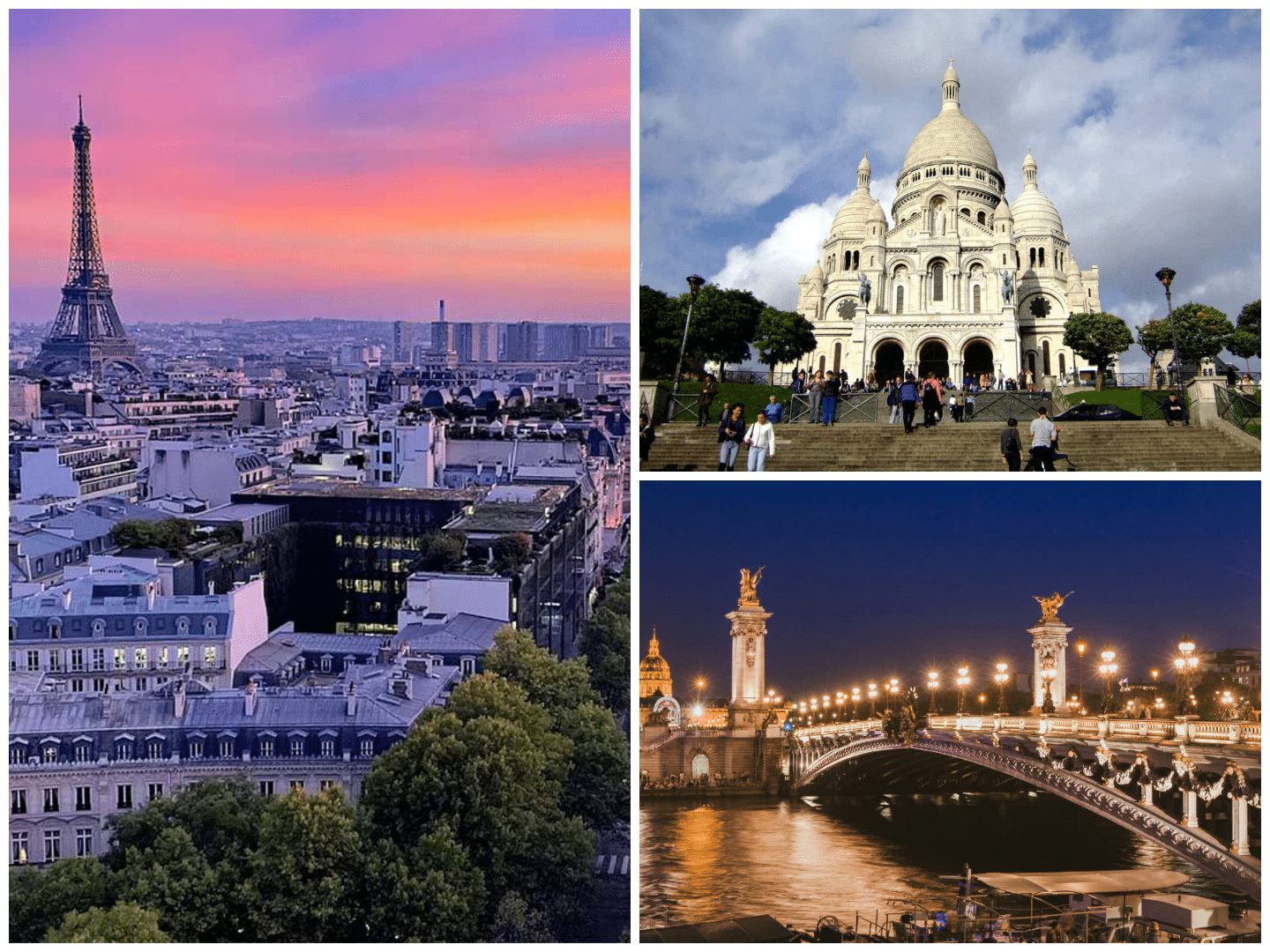
Firstly, Paris, the capital of France, is a beautiful city with numerous attractions, including the Eiffel Tower, the Arc de Triomphe, and Notre-Dame Cathedral. Enjoy the famous Moulin Rouge cabaret shows or stroll through the picturesque Montmartre neighborhood.
Furthermore, it is the world capital of art, fashion, food, literature, and ideas. Thus, it has many attractions, such as sweeping boulevards, world-class art galleries, and farmers’ markets. You can also sip an un café crème with deconstructionists at a sidewalk café and step into an Impressionist painting in a tree-lined park.
Paris is the most visited city in the world, and numerous travel guides are available. Its capital city is the main reason for this, with world-class museums, wide-open boulevards, Belle Époque architecture, and distinct cuisine.
How to Plan Your Trip to Paris – The Basics
The first section of our Paris guide will be pre-travel planning. Planning a trip to Paris can be exciting yet overwhelming. The city boasts numerous attractions, cafés, and markets to explore. If it’s your first time, plan to book a few months in advance for better prices on flights and hotels. If you’re an experienced traveler, you might only need 2-3 months. Most visitors spend four to five days in Paris, seeing the main sights and exploring neighborhoods like Le Marais.
Start your trip mid-week to avoid closures on Mondays and Tuesdays. Get travel insurance for unexpected events. Consider getting a Paris Museum Pass for access to many museums and attractions. Learning some basic French phrases can also improve your experience. Use the Métro and buses to get around, as Paris has an efficient public transportation system.
Getting to Paris
Paris has excellent options for getting around within France and other countries. Firstly, the city has two main airports: Charles de Gaulle and Orly, about 10 km from the center. A smaller airport, Beauvais, is about 60 km away and mainly serves low-cost airlines. You can reach Charles de Gaulle and Orly by RER trains, which cost around 12€.
Paris has seven major train stations that connect it to many French and major European cities, including London, Amsterdam, and Barcelona. Train tickets are usually more expensive than those of low-cost airlines.
Bus travel is a cost-effective option for budget-conscious travelers. Paris offers numerous bus routes to and from the city, with affordable fares. Popular choices include BlaBlaBus/Ouibus and FlixBus, offering a budget-friendly way to explore the city and its surroundings. This affordability will give you a sense of reassurance and financial savvy, knowing you can explore Paris without breaking the bank.
Please note that taxis cannot pick you up directly from the airport. Look for designated taxi queues instead.
If you want to explore other parts of France, consider renting a car. However, parking in the city center is often challenging to find and expensive. Parking lots in Paris typically cost around 30 EUR per day.
How to Get Around
Paris boasts an efficient public transport system, making city exploration effortless. The Métro, with its frequent stops, ensures convenient travel. For unlimited travel, consider buying the ParisVisite pass. This pass offers unlimited travel on the Métro, buses, RER, and trams within Paris and its suburbs. It also provides discounts at popular attractions, including the Louvre, the Eiffel Tower, and the Palace of Versailles. The pass is available for 1, 2, 3, or 5 consecutive days, with prices starting at [plate_number_8]. You can easily acquire tickets at any métro station.
The RER (Réseau Express Régional) is an above-ground train that covers the same areas as the Métro and uses the same ticketing system. Keep your ticket handy for the exit barriers. This accessible option will make you feel accommodated and well-informed about your travel options.
Bus and métro ticket prices are the same, and Paris has 64 bus lines and four tram lines that all use the same ticketing system.
Velib offers bike-sharing, providing an alternative and eco-friendly way to explore the city. A single trip costs 3 EUR. One-day and three-day passes are available for €5 and €20, respectively. A one-day pass costs 10 EUR for use of an electric bike. With Velib, you can easily navigate Paris’s bike-friendly streets and enjoy the city’s scenic views while staying active.
Electric scooters are also popular. Taxis start at 7.10 EUR. However, you may not need a cab since the Métro runs late into the night. Due to heavy traffic, it’s best to avoid renting a car in Paris, which is why public transport is more efficient.
While many tourists visit famous landmarks, exploring lesser-known areas can reveal the true heart of Paris. This sense of adventure and curiosity can lead you to discover Paris’s hidden gems, enriching your travel experience.
Sticking to the city’s regulations is crucial when parking in Paris. Whether parking on the street or in underground lots, it’s essential not to double park in spaces designated for individuals with disabilities or deliveries. Street parking is subject to fees from Monday to Saturday, 9 am to 8 pm, but it is free at night and on Sundays. Be mindful of public holidays, which may offer free parking as indicated by a yellow meter sticker.
In central Paris (1st to 11th arrondissements), parking rates are usually €6 per hour. In the 12th to 20th arrondissements, the cost is €4 per hour. You can pay with a credit card or use apps like PaybyPhone, ParkNow, and Flowbird.
Do not park on the street if you have a camper or motorhome. Use designated camping spots instead. Sleeping in your vehicle is not allowed in Paris.
Tip: We recommend using the Paris Navigo card while staying in Paris. Let’s see why. For most tourists in Paris, the Navigo Découverte pass is generally more affordable and better value than the Paris Visite pass. The Paris Visite pass costs more and offers less value unless you are staying for a very short time or need to travel to specific places, like Disneyland or the airports, using public transport.
Top Things to See and Do
Firstly, the city boasts numerous attractions that it is impossible to list them all on your bucket list. That’s why we have selected only a few in our Paris guide. If you want to see more of them, please read our related article.
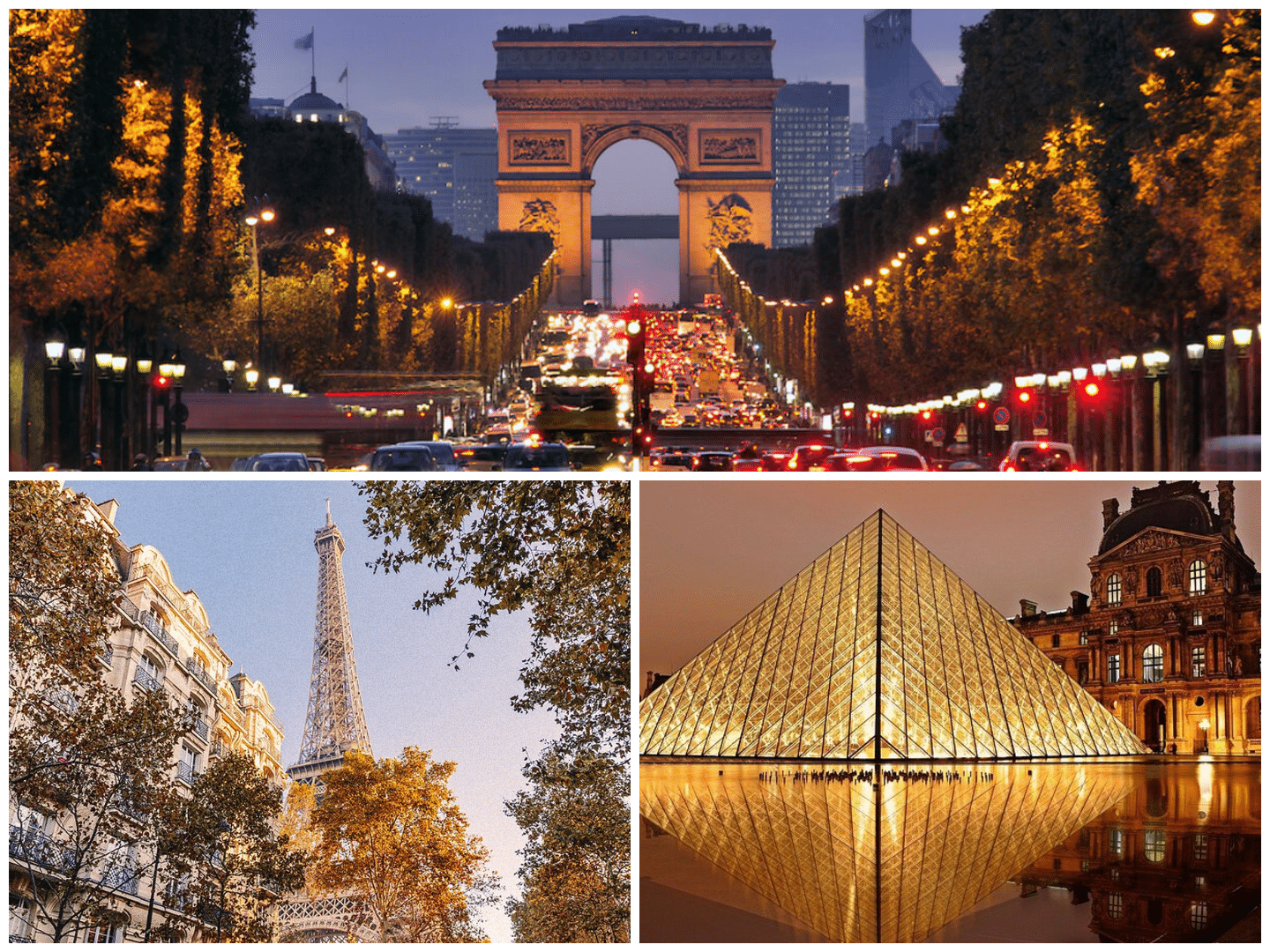
Let’s start with the most prominent building, built for the 1889 World’s Fair. The locals initially disliked the 300-meter tower, but it has now become the city’s most famous symbol.
Arrive early to avoid long lines. Consider paying extra for direct elevator access, especially during busy times. Joint tickets for the Eiffel Tower and a river cruise can save money, but purchasing in advance is wise.
Next on our list is the Louvre, the world’s largest museum, home to millions of antiques, including the Mona Lisa and Venus de Milo. For a complete experience, give at least two full days. Still, the Louvre Highlights Tour allows you to see the main attractions in an afternoon with skip-the-line entry. Tickets sell out quickly due to capacity limits; the Paris Pass includes skip-the-line tickets. Consider visiting if you are available on Wednesday night when it’s open until 11 pm.
Don’t miss Sainte-Chapelle, which showcases stunning 12-meter-high stained-glass windows, mostly original from the 12th century. Admission is included in the Paris City Pass, and a visit typically lasts between 30 and 60 minutes.
The Latin Quarter, situated near Notre Dame, is a historic area characterized by winding streets that lead to charming, cafe-lined squares. It feels like stepping back in time. There are also many restaurants, bars, and jazz clubs to explore.

Enjoy the Parisian Opera, or the French fashion, or even smell some Parisian perfumes.
For a memorable experience, consider an in-depth walking tour with skip-the-line tickets to Sainte-Chapelle, our favorite church in Paris. Built in 1938 by Saint Louis, this small Gothic chapel houses exquisite stained glass and costs €11.50 for entry. Tickets sell out quickly, so book ahead!
The Arc de Triomphe, commissioned by Napoleon in 1806, stands 146 feet tall and symbolizes French military victories. It has witnessed historic events, including Napoleon’s funeral and the celebrations marking World War II.
Montmartre is a charming district known for its cobbled streets, the Sacré-Cœur Basilica, and vibrant bistros. Visit Place du Tertre for local artists and the famous “I love you” wall. The neighborhood can be easily reached via Métro or the Funicular, and it features attractions such as the Musée de Montmartre and popular brunch spots.
In the spring, Paris blooms with color, making it an ideal time to explore its gardens. Start at Monet’s Garden in Giverny, then visit the Tuileries Gardens, Palais Royal Gardens, and Luxembourg Gardens. Don’t miss Parc Monceau for a quiet stroll and the historic Place des Vosges. Finally, picnic at the Champs de Mars below the Eiffel Tower.
Embrace these experiences for a glimpse into the beauty of springtime in Paris!

Try local food like a true Parisian.
French cuisine offers a delightful three-course experience: starter (entrée), main course (plat), and dessert. With smaller portions, you can indulge freely. Always greet with “bonjour” or “bonsoir” upon entering a restaurant, and make reservations in advance due to limited seating.
When served, address your server as “Monsieur,” “Madame,“ or “Mademoiselle.“ Be adventurous—try escargots, duck confit, or unfamiliar dishes. Moreover, eating with your fingers is not advised, and a glass of champagne is preferred before dinner. We recommend requesting the French menu, as the English version can be poorly translated or misleading.
Don’t miss these must-try foods in Paris:
Croissants & Viennoiseries
Start your mornings the Parisian way with a buttery croissant, pain au chocolat, or pain aux raisins from a local boulangerie. These flaky pastries are simple, yet divine when fresh out of the oven.
Baguette Tradition
Nothing says Paris like a warm, crusty baguette. Locals often grab one from the bakery daily—perfect on its own, with Cheese, or for sandwiches like jambon-beurre (ham, butter, and baguette).
French Onion Soup (Soupe à l’oignon)
A comforting Parisian classic made with caramelized onions, beef broth, and topped with gooey melted Cheese over toasted bread. Perfect on a cool evening.
Steak Frites
A staple bistro dish: juicy steak served with crispy French fries. Pair it with a glass of red wine for the authentic Paris experience.
French Cheese
Paris is heaven for cheese lovers. From creamy camembert and brie to strong roquefort or nutty comté, Cheese is enjoyed before dessert, often with bread and wine.
Omelette & Quiche
A fluffy omelette or a slice of quiche (like quiche Lorraine with bacon and Cheese) makes for a quick yet delicious Parisian meal.
Escargots (Snails)
A French delicacy often cooked with garlic, parsley, and butter. Adventurous eaters should definitely give this unique dish a try at least once in Paris.
Coq au Vin
A slow-cooked chicken stew braised in red wine with mushrooms, onions, and herbs—a rustic French classic.
Sole Meunière
A delicate fish dish pan-fried with butter, lemon, and parsley. Light and elegant, it’s been a Paris favorite for generations.
Classic French Desserts
- Crème brûlée: Silky custard topped with a caramelized sugar crust.
- Tarte Tatin: Caramelized upside-down apple tart.
- Éclairs & Macarons: Sweet, colorful, and oh-so-Parisian.
Wine & Champagne
Though not “food,“ no Paris dining experience is complete without French wine or bubbly. Each region contributes its own specialties, but in Paris, you can sample them all.
Insider Tip: For a truly local experience, visit a Parisian food market (like Marché d’Aligre Rue Mouffetard) and build your own picnic with a baguette, Cheese, charcuterie, fruit, and wine—then enjoy it by the Seine or in a city park.
The best day trips from Paris
The odds of getting bored with Paris are slim to none, but if you want to pack in as much sightseeing as possible on your trip to the City of Lights, plan to venture outside the arrondissements—if only for a day. So, if you’re unsure about your ideal 24-hour excursion, we have some suggestions.
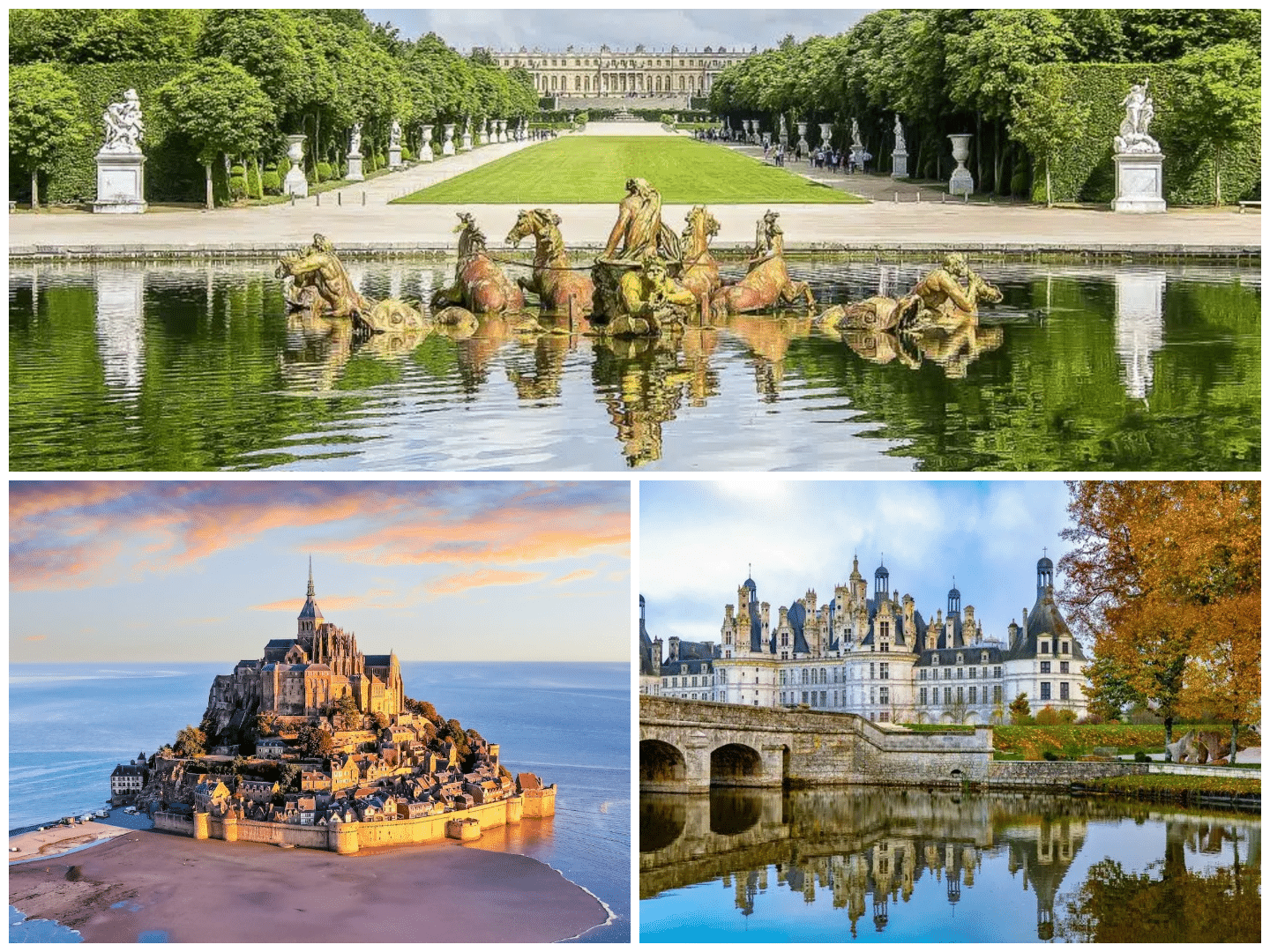
The Palace of Versailles is a stunning symbol of royal power. It attracts over 10 million visitors annually, making it France’s second most popular attraction after the Eiffel Tower. Initially built by Louis XIV in 1682, this UNESCO World Heritage Site showcases exquisite 17th-century French art.
To fully enjoy your visit, allocate a full day and consider spending time in the Gardens, which are free during certain months. Buy tickets online to avoid long lines and arrive early, as the Palace sees over 27,000 visitors daily. A Paris Museum Pass grants priority access but not to the security queue.
Next on our list is Giverny, located 74km from Paris. It is essential for impressionist fans. It was Claude Monet’s home until 1926 and features beautifully landscaped gardens. Though popular in summer, it’s worth a visit.
Furthermore, the Loire Valley is famed for its wines and castles. It is best visited in spring and autumn. You can explore it by car, train, or on guided tours, which include local wine sampling.
Colmar, the capital of the Alsace wine region, captivates with its fairy-tale scenery of cobbled streets and colorful houses. It offers a blend of dining, vineyards, cultural events, and shops selling local products.
Lastly, Disneyland Paris promises a fun-filled experience for all ages. To avoid crowds, plan your visits for Tuesday to Thursday during quieter periods. Tickets are available for one to four days, with dated ones typically cheaper.
Note: For more information on the best day trips from Paris, refer to our related article.
When to Go to Paris
Summer is the busiest and most expensive time to visit Paris, so expect big crowds and long wait times at attractions. If you plan to visit in the summer, book your hotel and activities well in advance.
The best times to visit are from May to early June and September to October. During these months, there are fewer crowds and lower prices. The weather remains pleasant, typically ranging from 20-23°C.
Winter is cold and dark, but it can be a good time to visit Paris. You can find cheap flights and hotel deals. Although there are still tourists, the city is less crowded, making it an ideal destination for visiting museums and historic sites. Remember that winter is also the rainiest season, with daily highs around 7°C.
Where to stay
This section of our Paris guide will focus on booking a room in the city and the best areas to stay. However, for more information, you can also read our related article. When choosing an ideal accommodation, consider your personal preferences. What do you like and prefer, and what kind of traveler are you? For instance, accommodation prices can be cheaper on the outskirts of a city; however, you will spend more time and money on transport. That’s why our Paris guide recommends choosing your room wisely and carefully. The next thing we want to stress is safety. We constantly check which areas are safe to live in and which aren’t. After all, we are all traveling to have fun and not to be afraid to leave our rooms.
When talking about the type of travelers, we usually mean the following: Are you a solo traveler, LGBT+ traveler, a traveler with a family, etc.? For instance, if you are a solo traveler, consider hostels or other accommodations that offer organized social activities. But if you are an LGBT+ traveler, you will most likely want to stay in gay-friendly areas.
Lastly, when choosing your accommodation, always read the comments, owners’ reviews, and other relevant information. This will make your vacations much more pleasing and effortless.
Paris is certainly no exception. Many guides recommend the best places to stay. However, it is always up to you and your personal preferences. Don’t get us wrong; all those tips are helpful, but always consider who wrote them and for whom they were intended. And if you want more tips about where to stay, please read our article about the best places to stay in Paris.
Note: For information on the safest areas in Paris, please refer to our related guide.
How to Stay Safe
Firstly, Paris is generally a safe city, with low rates of violent crime. However, like any major city, it has issues with petty theft and pickpocketing, especially on crowded public transportation and in busy tourist spots. Keep your valuables hidden and secure.
Watch out for tourist scams, such as people asking you to sign a petition and demanding money. If someone asks you to sign anything, politely say no. Scams involving ring and card games are also common.
Solo female travelers usually feel safe in Paris, but it’s wise to take precautions. Don’t leave your drink unattended at bars, and avoid walking home alone if you’ve been drinking. For more advice, look for blogs about solo female travel. Be especially cautious when walking at night in areas such as Gare du Nord, Stalingrad, Jaurès, and Les Halles.
The primary concerns you may encounter in Paris are petty theft and tourist scams. In case of an emergency, dial 112 for assistance. Trust your instincts. Avoid isolated areas at night and remain aware of your surroundings. Make copies of important documents, such as your passport and ID.
Most importantly, buy travel insurance. It protects you against illness, injury, theft, and cancellations. We always get travel insurance before a trip.
Money-Saving Tips
Visiting Paris can be pricey, but you can save money while enjoying the city’s beauty and charm. Here are some friendly tips to help you budget wisely:
- Grab a Métro Card: Getting around is easy with over 300 subway stations! A day pass costs € 13.55, and a 10-ticket pass costs € 17.35, making it more affordable than purchasing single tickets.
- Enjoy a Picnic: Take advantage of Paris’s lovely parks! For a delightful outdoor picnic, buy fresh bread, cheese, and meats from local shops. It’s fun and way cheaper than dining out.
- Use the Paris Museum Pass to gain access to over 70 museums and monuments. A two-day pass costs €70, a four-day pass is €90, and a six-day pass is €110. It’s perfect for art lovers and lets you skip the lines!
- Dine Out at Lunch: Many restaurants offer a pre-fixe menu for just 20 EUR during lunch. You’ll enjoy great meals at half the price!
- Take a Free Walking Tour: Join a free walking tour with New Europe Tours to get an overview of the city and discover budget-friendly eats. Remember to tip your guide!
- Bring a Water Bottle: Tap water is generally safe to drink, but consider bringing a reusable bottle for convenience. This is an eco-friendly option that can help you save money, too!
With these tips, you can fully enjoy Paris without overspending.
Helpful Travel Advises
Visa/Passport:
If you are an EU citizen planning a trip to Paris, you only need to bring your passport or ID.
For U.S. and U.K. citizens, a visa is optional for visits to France lasting less than 90 days. However, you must have a valid passport extending beyond your stay by at least six months. Additionally, immigration officers may request that you provide sufficient funds and return airline tickets as part of their screening process.
Use public transport.
Paris is a large city, so we recommend using the Métro for easier travel. If you have limited time, learn how to use the métro and bus system. The Paris Métro Map and Routes App can help you navigate. Moreover, the Visite Pass offers unlimited bus and métro rides in zones 1-3, which can be helpful.
Note: Avoid shopping on Sundays because many stores may be closed. Museums and attractions may close on certain days, so it’s best to check their hours beforehand to avoid any surprises.
Tipping is Not Required
The tipping is unnecessary in France, as it is not a cultural norm. By law, a generous tip is already included in your bill. Leaving a few Euro coins is fine if your server impresses you, but remember that a 19% tip is already included. This no-tip rule also applies to other service providers.
The Métro and RER are the quickest way to get around.
Paris has an easy-to-use train network, comprising the Métro and the RER. The Métro has 16 lines, numbered 1 to 14, plus two extra lines, 3bis and 7bis. The Grand Paris Express project will add four more lines. The RER has five main lines labeled A to E. The Métro and RER work well together, making it simple to switch between them. RER trains are faster for traveling across the city and to the suburbs.
Some stations have escalators and elevators to help with steep climbs, but not all do. Trains come frequently, usually every five minutes or less. Some métro lines go above ground and offer lovely views. For short trips, walking to the next métro station can be quicker than taking the train for one or two stops.
Learn Some French
Most locals are charming as long as you greet them with a “”onjour”” and are polite. Learning a few key French phrases will be helpful. In our experience, people are generally happier when you try to use their language, whether in France or worldwide.
FAQs
Is there an Uber in Paris?
Yes. The Uber app allows you to request a ride around Paris at any time, 24/7. What’s the most affordable way to travel in Paris? With Uber, you can choose the ride option that works best for your budget when you travel in Paris.
Do Paris taxis only take cash?
Paris taxi drivers must accept payments via bank cards (and contactless). Nevertheless, they may claim to have a broken POS to avoid being paid with a card. Generally, cash payments are preferred.
How long should I stay?
Three or four days is a good starting point for a first-time visitor, but you’ll likely want more time to explore.
Should I buy a Paris Pass or a métro pass?
Consider a Paris Pass or a Go City if you plan to visit many attractions, or a métro pass if you mainly use public transportation.
Should I book attractions in advance?
It’s highly recommended that you book popular attractions, such as the Eiffel Tower, Louvre Museum, and Versailles, in advance, especially during peak season. Some attractions require reservations, while others do not. Check the specific attraction’s website for details.
How do you dress when you are in Paris?
Parisians are renowned for their stylish yet understated fashion sense. They dress nicely but not too fancy. For instance, gym clothes are not acceptable for lunch outings, and hiking boots should only be worn while hiking. Additionally, shorts and flip-flops are typically avoided.
You don’t need to resemble a model from Paris Fashion Week; instead, aim for a look with clean lines, neutral colors, and well-fitted clothing.
For sightseeing, opt for comfortable yet stylish attire, such as dark jeans, sleek walking shoes (sneakers should be avoided unless they have a refined appearance), and layers to accommodate changing temperatures.
Elevate your outfit when dining at restaurants or visiting museums. Wear nice pants or a dress, a blazer, and polished shoes to maintain the sophisticated Parisian style.
Take a look at
Our Amsterdam Travel Guide
This Amsterdam guide will show you why you should visit this magnificent city, how to get there, what to do and see, where and when

Our Milan Tour Guide
Our Milan Guide will introduce you to the city, its culture, sights, history, etc. Not just that, we will also share with you some helpful

Charming guide to Barcelona
Charming guide to Barcelona This Charming guide to Barcelona will reveal the essence of this magnificent city, its significant attractions, valuable tips, and some good-to-know