
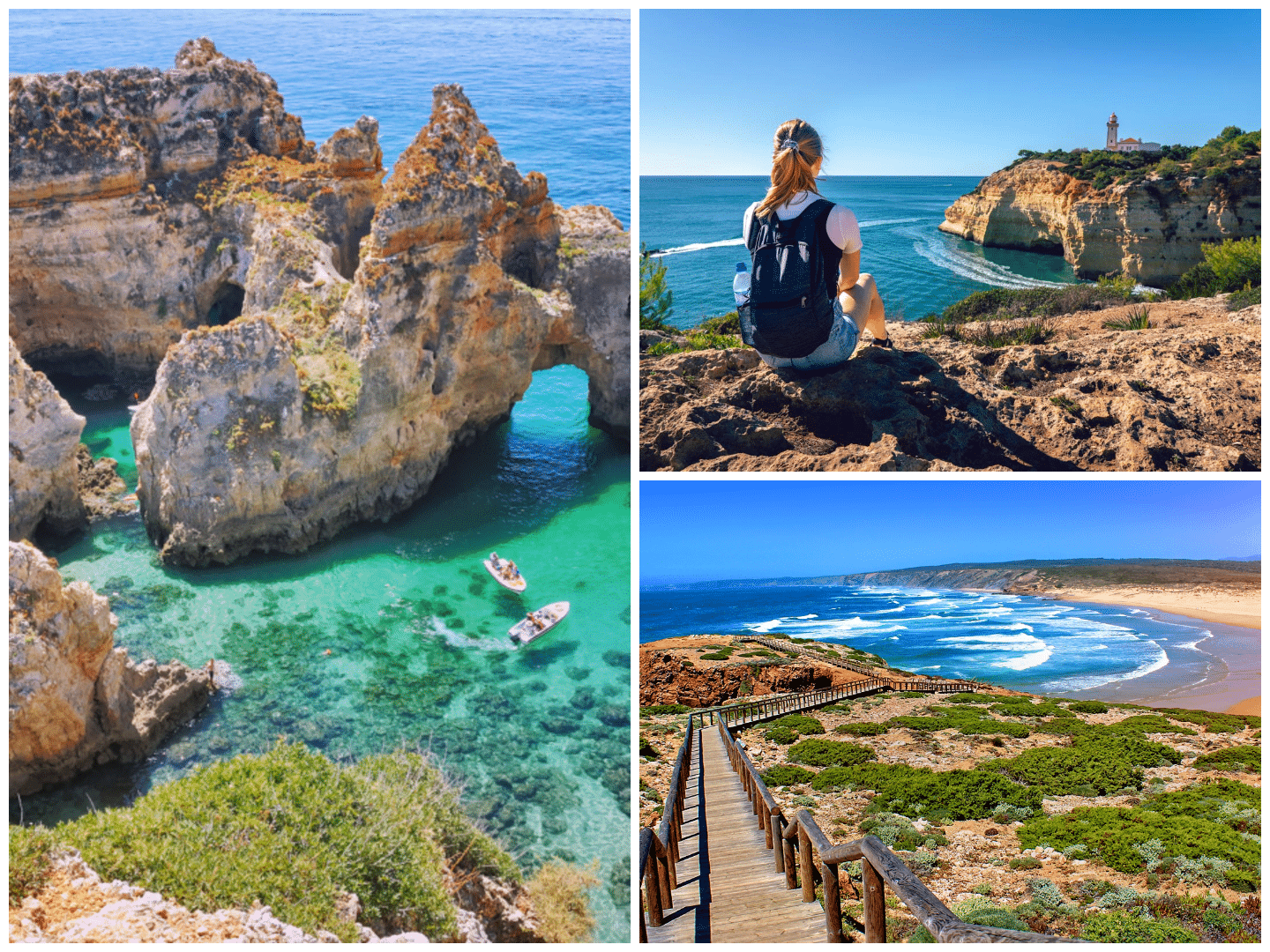
In this post, we will reveal to you the best time to visit the Algarve. Of course, we know a lot depends on your personal preferences. But we covered that too. So, read on if you want to learn more.
©Worldwide Walkers
Introduction to the best time to visit the Algarve post
Most importantly, the Algarve’s beaches rank among Europe’s most beautiful stretches of sand. Southern Portugal draws big crowds due to its natural beauty and fantastic surfing, kayaking, and other aquatic activities.
Although temperatures vary monthly, the Algarve gets reliable sunshine 300 days a year. Summertime sees the most significant influx of tourists, while winter feels like an entirely local experience. Plenty of activities are happening no matter when you visit.
Until recently, many resort towns in the Algarve virtually closed up for the winter, with limited options for lodging, dining, and organized tours. That has changed in the last few years as the Algarve’s tourism authority has begun promoting the region as a year-round destination.
Nevertheless, some places are still closed for the season, so keep that in mind when making your plans. Here’s our guide to the best times to visit the Algarve.
June to August are perfect for swimming.
Firstly, you should know that the Algarve is immensely popular in the summer. It’s perfect for spending days on the beach and taking refreshing swims in the ocean. The Atlantic Ocean stays cooler than the Mediterranean, so the water doesn’t warm up as much. There is very little rain and clear skies during the summer. The festival season starts in June, with events like Festival MED in Loulé bringing excitement to the region.
In July and August, the Algarve reaches its hottest temperatures, averaging around 28°C. However, calm ocean breezes help keep evening temperatures around 22°C, making it great for outdoor dining. Music festivals attract many visitors in July, such as the Afro Nation Portugal in Portimão. A candlelit culture festival also takes place at Mercado de Culturas à Luz das Velas in Lagoa.
August is a great time to swim in the calm Atlantic waters and go on boat trips to spot dolphins. Local festivals, like the Portimão Street Food Fest and Olhão Seafood Festival, let you taste delicious local food and meet locals.
Because summer is the peak tourist season, hotel prices rise, and crowds become larger. If you plan to visit during this time, it’s best to book your accommodation well in advance. You may pay higher prices for your preferred places. While the beaches can be crowded, you can still find quieter spots by exploring areas away from busy tourist towns like Albufeira and Lagos.
April to May and September to October are ideal for enjoying outdoor adventures.
The best times to visit the Algarve for hiking, horseback riding, mountain biking, and other outdoor activities are from April to May, and mid-September to October. During these months, the weather is warm and sunny, but not too hot.
April marks the end of the off-season. Easter celebrations bring life to the seaside towns, with processions adding excitement. Liberation Day on April 25 features fireworks and parades in some cities.
It’s an excellent time for outdoor activities. You can enjoy long hikes like the 300km Via Algarviana or take a leisurely walk by the sea. The Kizomba Open Summer Festival in Albufeira offers dance parties and workshops with international artists.
In September, the water temperature is similar to that in August. Still, the air is cooler, making beach days pleasant with fewer crowds. The Flamenco Festival in Lagos is a fun event to experience during this time.
Many birdwatchers visit in October to see birds migrating to Africa. It’s a wonderful month for outdoor activities with the beautiful summer heat.
These shoulder seasons have fewer tourists, and you can save up to 30% on lodgings compared to high season. April and May are also good months to spot wildflowers blooming in the Algarve.
November to March is the best time to visit on a budget.
If you travel to the Algarve during the off-season, you will find it quite different. There are fewer crowds, and you’ll hear more Portuguese being spoken. The temperatures are cooler, with average highs around You’ll in January and February. Most of the rain falls in winter, but it usually comes in short showers, so you can still enjoy many sunny days.
In December, the days are shorter, and nights are longer, but day temperatures remain mild with highs around 17°C. Leading up to Christmas, towns host festive markets and display large nativity scenes, like the one in Vila Real de Santo, which is among the largest in Portugal. In January, there are many cultural events, including art shows, dance and theater performances, and special winter movie screenings.
In February, the nights get colder, and locals often go out to enjoy live music and dance shows in major cities. Seaside towns are generally quiet, except during the carnivals, when parades and celebrations take over the streets. March marks the start of spring, with longer days and blooming flowers. The weather is pleasant, making it an excellent time for long walks without the crowds.
Portugal’s Algarve is still perfect for outdoor activities, such as taking long walks by the sea (bring a light jacket) instead of swimming in the ocean.
Take a look at

The Best Algarve places to Visit
The Algarve in southern Portugal is a popular vacation spot known for its variety of attractions. It has beautiful beaches,

Our Porto Guide
This Porto Guide will show you why to visit this city, how to get there, when to see it, and
Lisbon guide
Lisbon, the capital city of Portugal, is a vibrant and historical destination with plenty to offer. Here is a comprehensive

References and sources:
The best time to visit the Algarve, Portugal’s golden coast
Photo credits:
Featured photo: ©Worldwide Walkers