
The Algarve is the southernmost region of Portugal. Known for its excellent weather, long golden beaches, beautiful hotel resorts, and top-notch golf courses. That’s why it’s a perfect destination for relaxation. So, if you’d like to learn more about the Algarve, stay with us!

Praia do Camilo, Carvoeiro, and Benagil sea cave
Our website includes affiliate links. So, remember that we may receive commissions when you click our links and make purchases. Please read our legal disclaimer document for more information about our Affiliate disclaimer and other disclaimers like the Fair-Use disclaimer.
Why visit the Algarve?
The Algarve in Portugal is not just a beach destination; it has much more to offer. With a history of over 3,000 years, you can explore towns like Aljezur, Lagos, Silves, and Faro, where you can visit museums, churches, and historical sites.
The coastline is beautiful, featuring sandy beaches and rocky coves. Inland, you will find lush woodlands and charming market towns. The region is known for its delicious Mediterranean food and local wines.
The Algarve enjoys about 200 km of coastline and over 3,000 hours of sunshine each year. This makes it an excellent place for both relaxation and adventure, with options for water sports and golf at many courses.
Nature lovers can explore protected areas like the Vicentina Coast and Ria Formosa. At the same time, hiking trails are available for those who enjoy walking.
The nightlife is lively in towns like Albufeira, and there are seasonal events, including food festivals. You will find fresh seafood and traditional dishes in many restaurants. The Algarve also offers various accommodations, from simple hotels to luxurious resorts, all focusing on warm hospitality.
Things you should know before visiting the Algarve.
To plan a trip to the Algarve, Portugal, consider the time of year, transportation, accommodation, and desired activities. The Algarve offers year-round appeal, but the best time to visit depends on your preferences, with spring and autumn offering pleasant weather and fewer crowds. At the same time, summer is ideal for beach lovers. Renting a car is recommended for exploring different areas, and booking accommodations and popular activities in advance, especially during peak season, is wise.
Tips for planning your trip
- Consider visiting outside peak season: June-August is the busiest and most expensive time to visit.
- Car Rental: Highly recommended for exploring different beaches and areas, as public transportation can be limited.
- Plan a road trip: Exploring the coastline by car allows you to discover hidden gems and scenic spots.
- Research accommodations: Book your stay in advance, especially if traveling during peak season.
- Learn some basic Portuguese phrases: While English is widely spoken, learning a few words can enhance your experience.
- Try local delicacies: Don’t miss the opportunity to savor fresh seafood and other Portuguese specialties.
- Beaches: Explore the Algarve’s stunning coastline, including popular spots like Praia da Marinha, Praia do Camilo, and Praia da Rocha. ialties.
- Pack for warm weather: Bring sunscreen, a hat, comfortable shoes for walking, and swimwear.
- Be aware of potential crowds: Popular attractions and beaches can get crowded, especially during peak season.
For your Algarve trip, it’s essential to pack strategically. Here’s a clear packing list to ensure you have everything you need:
- Swiming suit
- A pair of comfortable walking shoes.
- Sandals/Flip-flops pair for the beach or pool.
- Sunscreen: High SPF sunscreen to protect against the intense sun.
- Hat: A sun hat to shield your face and head.
- Sunglasses: For protecting your eyes from the sun.
- Lightweight Sack/Shoulder Bag: Convenient for carrying essentials on hikes or walks.
- Power Plug Adapter/Voltage Converter: If your electronics use different plugs or voltage.
- Camera/Phone: To capture the stunning scenery.
- Travel Insurance: To cover unforeseen circumstances.
- Mosquito Repellent: To protect against mosquitoes, particularly in the evenings.
- Medications: Any necessary prescription or over-the-counter medications.
- Identification: Passport or other essential travel documents.
- Money: Euros are the currency used in Portugal.
By packing these items, you’ll be well-prepared for your trip to the Algarve!
How to get to and around the Algarve?
The Algarve is accessed via Faro Airport, with a variety of low-cost, charter, and scheduled flights available. It’s approximately 2.5 hours from Lisbon and 2 hours from Seville. We recommend booking flights and car rentals early for the best prices.
The region has reliable public transport with bus services by Eva Transportes and Renex, and trains connecting Faro to Vila Real de Santo António and Lagos. Cycling is also an option, especially on rural routes with guided tours and bike rentals available in Albufeira and Faro.
Taxis are easily identified by their “taxi” sign and can be found at airport stands or hailed in towns. For more freedom, car rentals are popular, with many companies like Hertz and Avis available at the airport, but note that some motorways have tolls. Smaller cars can be an advantage when navigating narrow streets and parking spaces in the Algarve.
Parking in the Algarve can be challenging, especially during peak season. Many towns and beaches have metered parking, and it’s essential to pay attention to parking regulations to avoid fines. Consider parking on the outskirts of popular areas and walking in, especially in busy resorts and urban centers.
The best time to visit
The best time to visit the Algarve is in spring (March-May) when the country blooms after winter or fall (September-October) when warm weather and fewer crowds prevail. The Algarve region is perfect for relaxation and adventure, offering stunning coastlines, vibrant cities, and charming towns. Spring in the Algarve features warm temperatures and blooming landscapes. At the same time, summer (June-August) attracts travelers to its golden beaches and clear waters. Autumn (September-November) brings mild weather and tranquil scenery, making it an enjoyable time to visit. Winter (December-February) offers a unique charm with mild temperatures averaging 16°C to 18°C, ideal for outdoor exploration despite being cooler and potentially wetter. Notable events include Carnival in February and Dia de Reis on January 6, celebrating Portuguese traditions amidst thinner crowds.
How Many Days to Spend in the Algarve
Minimum Days Needed: 5 Days
To truly experience the Algarve, you must dedicate a minimum of five days to your visit. This duration is essential for exploring the main towns, stunning beaches, and natural wonders, as well as for venturing off the beaten path and taking time to relax.
If your stay is limited, concentrate on your travel preferences—whether they are beaches, cities, adventure, or nature—and choose a few key destinations and activities that resonate with you.
In just 5 days, you can make the most of your trip. If you’re a beach lover, establish a base in a coastal town and make day trips to the surrounding areas. For those keen on exploring the countryside, take a road trip to discover small mountain villages, spending a night or two in different locations. If history and gastronomy excite you, five days is more than enough to visit important landmarks and indulge in the delicious traditional cuisine the region has to offer.
Ideal Number of Days: 7 to 10
For an optimal experience, aim for between 7 and 10 days in the Algarve. This timeframe gives you the freedom to explore various coastal towns, enjoy the beach every day if desired, venture into natural parks, and uncover smaller, hidden mountain villages. Additionally, this extended stay allows you to engage in authentic local experiences, such as wine tastings, orange and medronho picking, or participating in traditional Algarvian cuisine workshops. Don’t shortchange yourself—plan for a whole week or more to make the most of your Algarve adventure.
The best areas to stay in the Algarve.
Choosing the right destination in the Algarve depends on your preferences. For families, Carvoeiro is ideal, with its calm seas, lifeguarded beach, and walkable village center full of outdoor restaurants.
If you’re into Surfing, head to Sagres, known for its stunning scenery and the impressive Fortaleza de Sagres, where you can admire sheer cliffs and crashing waves.
For tranquility, culture, and history, Tavira is captivating with its Roman heritage, hilltop castle, and the charming Ponte Romana. You can explore the Núcleo Islâmico to glimpse its past under Islamic rule.
Lagos offers a mix of dining, nightlife, and breathtaking beaches, highlighted by the picturesque Praia de Dona Ana and historic architecture. The town has history, good food, parties, and stunning beaches.
Lastly, Albufeira is the liveliest spot, perfect for a beach holiday, nightlife, and celebrations. It’s a popular choice, especially among younger visitors, but it can be busy for families.
Top things to do in the Algarve
The Algarve offers a diverse range of activities, from stunning beaches and coastal hikes to charming towns and delicious seafood. Popular options include exploring the cliffs and caves of Ponta da Piedade, hiking the Seven Hanging Valleys Trail, visiting the Benagil Cave, and enjoying scenic boat tours. Don’t miss the chance to experience the region’s beautiful beaches, historic sites, and vibrant towns like Lagos and Faro.
As the ultimate destination for a seaside getaway, the Algarve is known for its inviting beaches and perfect weather. However, there’s much more to this southern part of Portugal than just sun and sand. The region is home to impressive castles, historical cobblestone streets, and picturesque cliff-top villages that overlook the dramatic coastline. Whether you’re traveling solo, on a romantic getaway, or seeking a family-friendly destination with plenty of activities, the Algarve is an ideal choice. If you’re planning your visit, be sure to explore some of the top attractions this region has to offer.
Note: You can also read our related article about the best places to visit in the Algarve.

Falesia beach, Cape St. Vincent, and Ponta da Piedade near Lagos ©
Visit the Beautiful Algarve Beaches and coast.
The Algarve boasts some of Europe’s most stunning beaches, offering unique experiences from hidden coves to golden sands.
- Ponta da Piedade: Explore the iconic cliffs and grottoes by boat or on foot.
- Praia da Marinha: Admired for its golden sands and striking cliffs, the Michelin Guide recognizes it as one of Europe’s 10 most beautiful beaches.
- Praia da Falésia: Known for its red and white cliffs, this popular beach near Albufeira is perfect for relaxing and swimming.
- Praia do Camilo: Accessed by 227 wooden steps, this scenic beach near Lagos features a beach bar and stunning views.
- Praia dos Três Irmãos: With its impressive rock formations, this beach is a favorite for its beauty and amenities.
- Seven Hanging Valleys Trail: A coastal hike offering panoramic views.
- Cape St. Vincent: Visit the southwesternmost point of Europe for dramatic scenery.
Note: Check out our related guide to the best Algarve beaches to learn more.
Caves and rock formations
- Benagil Cave: A magnificent sea cave with a skylight and multiple ocean entrances, best explored by boat or kayak (swimming into the cave is no longer permitted).
- Ponta da Piedade: A dramatic headland near Lagos featuring towering cliffs, sea arches, caves, and grottos. It can be explored by walking the cliff-top trails or taking a boat tour.
- Algar Seco: A fascinating site near Carvoeiro resembling a lunar landscape, with rock pools, caves, and balconies over the sea. Features the famous “A Boneca” (The Doll) cave and a boardwalk trail.
- Praia da Coelha: A small, sandy cove surrounded by rock formations, ideal for swimming and known for its purple sand and cliffs that offer shade.

Lagos town, Silves town, and Albufeira
Towns and Cities:
- Lagos is a charming coastal town known for its historical significance during the Portuguese maritime expansion. The city center is lively, filled with shops, restaurants, and bars, making it an excellent base for exploring the region. While it features modern aspects, the old town boasts historical buildings like the Santa Maria Church and the ancient city walls. Nearby, Ponta da Piedade showcases stunning limestone cliffs best explored by kayak.
- Faro, the Algarve’s regional capital, may not be the prettiest town. Still, it has a lot to offer, including a picturesque old town, the Santa Maria Church, and a scenic riverfront. Don’t miss taking a water taxi to Ilha do Farol for its beautiful beach.
- Tavira features charming streets, a Roman bridge, and great dining options. It’s perfect for combining visits to Praia do Barril and Vila Real de Santo António.
- Albufeira is centrally located and popular with young party-goers. While its old town is touristy, the lovely beaches and surrounding resorts offer great dining and relaxation options, including the Windmill restaurant and Praia da Falésia.
- Silves is known for its well-preserved Moorish castle. Visitors can walk the castle walls for panoramic city views and explore ancient remains and archaeological sites.
Natural parks and other attractions
- Parque Natural da Ria Formosa is a protected wetland spanning 60 kilometers of the Algarve coastline, featuring diverse ecosystems and bird species, including the purple swamphen. Visitors can start at the Marim Environmental Education Centre for guided trails and observatories. Traditional boat rides for tuna fishing also offer unique experiences.
- Costa Vicentina, known as Europe’s last wild coast, features dramatic cliffs and wide surfing beaches. **Cabo de São Vicente**, the southwesternmost point of mainland Europe, is famous for its stunning cliffs and breathtaking sunsets, as well as its vast, biodiverse natural park with deserted beaches and quaint villages.
- Serra de Monchique: provides hiking trails and panoramic views from Mount Foia.
- Zoomarine Algarve is a family-friendly marine park with dolphin and seal shows, an aquarium, and a sandy beach with rides and pools, ensuring a fun-filled day for visitors.
Other Activities:
The western coast of the Algarve is the best area for surfing big waves, making it ideal for experienced surfers. However, surf schools are available for beginners as well. Some of the best beaches for Surfing on the western coast include Tonel Beach, Beliche Beach, Praia da Arrifana, and Praia do Amado. Surf schools can also be found at Bordeira Beach and Praia da Cordoama.
On the southern coast, the waves are generally smaller and calmer, making it a better choice for beginners. The beaches around Albufeira, especially Praia da Falésia, are among the top surfing spots on the south coast. If you’re interested in taking surf lessons, a highly recommended 2-hour surf lesson is available on Falésia Beach.
- Boat Tours: Explore the stunning coastline, visit scenic sea caves, and go dolphin watching.
- Water Sports: Experience Surfing, kayaking, or stand-up paddleboarding.
- Hiking and Biking: Discover the region’s trails and enjoy the picturesque landscapes.
- Golf: Play a round on one of the Algarve’s world-class golf courses.
- Food and Wine: Savor fresh seafood, traditional Algarvian dishes, and local wines.
- Cultural Experiences: Visit historical castles, museums, and local markets.
- Go Surfing: Portugal is renowned as a popular surfing destination, with Nazaré being famous for its giant waves during the winter months. The Algarve offers numerous beaches with excellent surfing conditions.
- Dine on Fresh Seafood: Given its seaside location, the seafood in the Algarve is delicious. Dining at local restaurants and enjoying fresh seafood is one of the highlights of visiting this region. Prices are reasonable, allowing you to have a delightful dinner without spending a fortune. You can indulge in grilled sardines, cataplana de marisco (seafood stew), conquilhas á Algarvia (clams cooked with sausage, onions, and garlic), and squid Algarve style.
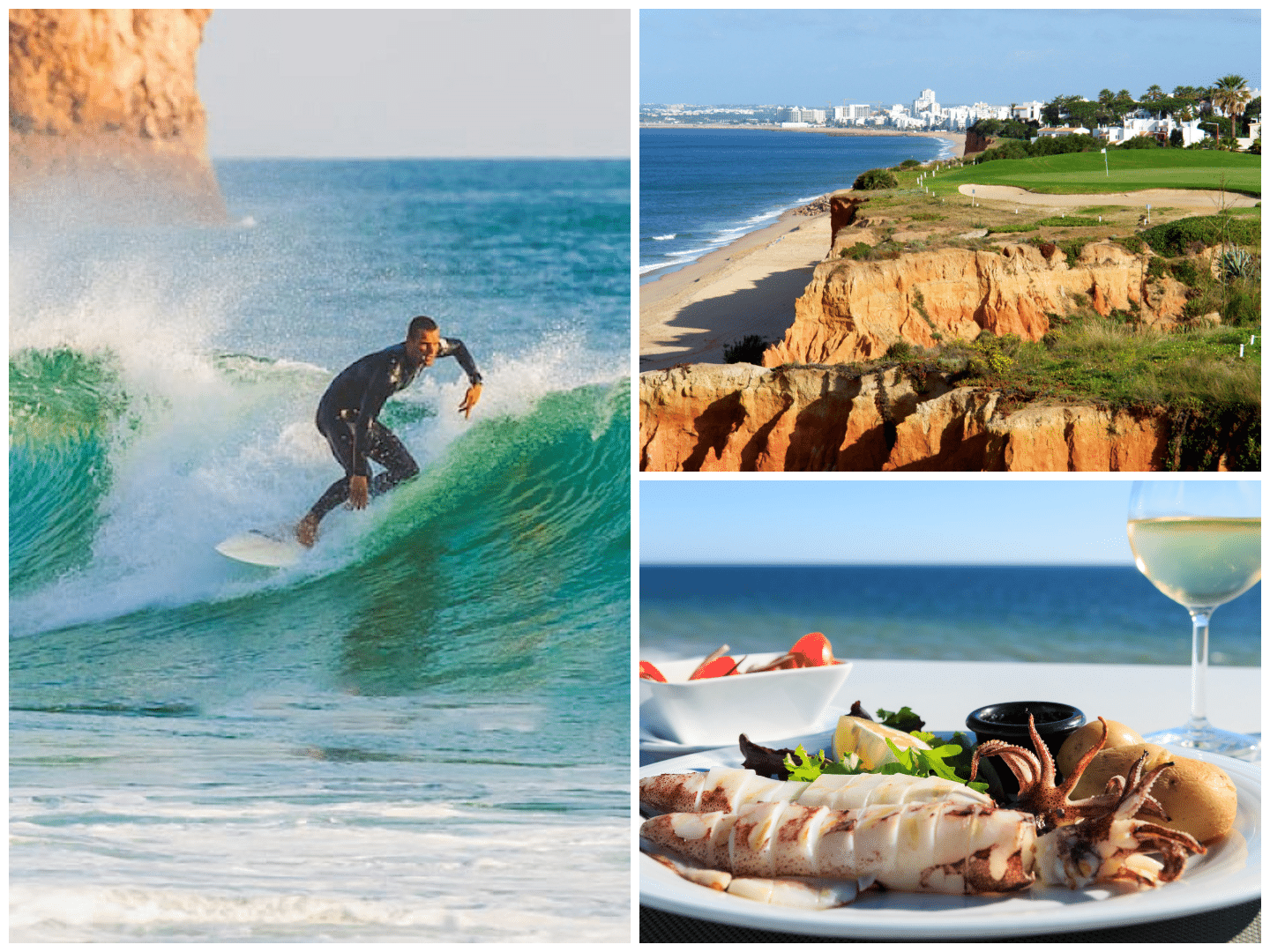
Surfing in the Sagres region, enjoying the gold, and eating delicious seafood.
Must-try dishes
Must-try dishes in the Algarve include Cataplana de Marisco (a seafood stew cooked in a special pot), Frango da Guia (spicy piri-piri chicken), Sardinhas Assadas (grilled sardines, especially in summer), Arroz de Lingueirão (razor clam rice), Xarém com Conquilhas (cornmeal with clams), Choco Frito (fried cuttlefish), and Polvo à Lagareiro (octopus with olive oil). Don’t forget to try the sweets, like Dom Rodrigo, a traditional Algarve confection, and enjoy fresh Algarvian orange juice.
- The cataplana—seafood in a delicate, savory broth served in a hinged copper pot—sums up everything excellent about the Algarve cuisine. It’s usually made to share, so grab a friend and order up.
- You can also try the famous Portuguese piri piri chicken—trust us, it leaves Nando’s in the dust.
- Another meaty treat is Ibérico pork, which comes from the highly prized Black Iberian breed of pig. It makes fantastic ham, but you’ll also see it on menus grilled with various sides.
- The Algarve offers some amazingly fresh seafood, and while it’s worth trying a range of options, a trip to the region is only complete with a plate of grilled sardines—simple, delicious, and utterly unforgettable.
- For dessert (or as a little pick-me-up with a nice cup of coffee), pastel de nata is sold everywhere. This tiny custard tart is a national treasure in Portugal, and if you’re fortunate, you can grab one warm and freshly baked.
Important: The appetizers are optional!
It’s essential to keep in mind that nothing that’s served on your table is complimentary when dining out. Bread, cheese, olives, and sometimes other appetizers are often brought to the table shortly after you sit down, which are called couverts and come at a cost. If you don’t want them, a polite “no thank you” (“não obrigado/não obrigrada” if you’re a man/woman) will see them sent back to the kitchen. The price of a couvert can vary from €2 to €9 per person or more at fancier restaurants.
Book restaurant reservations in advance
Fresh seafood right off the boat is the highlight of the culinary scene in the Algarve. The region is now a significant dining destination with new restaurants led by renowned chefs. It has five Michelin-starred restaurants and two two-star restaurants, Ocean and Vila Joya.
To secure a reservation at top restaurants:
- Book a few weeks in advance.
- If you’re keen on Vila Joya, stay at the hotel so guests get priority.
- If not, book a few days or seven days ahead for weekends.
The prime dining times are from 7 to 9 pm.
Enjoy the Golf
Golf has brought the Algarve many international prizes and awards, and the region has been voted the best golfing destination in the world on multiple occasions. The Algarve has about forty courses with excellent conditions for experienced players and those taking up the sport for the first time. The Algarve is home to 34 18-hole and six nine-hole golf courses. Five courses in the region have been ranked among the top 100 golf courses in continental Europe, and six made it into the recent Rolex World’s Top 1000 Golf Courses. A jewel in the crown of the five courses near the Anantara Vilamoura Algarve Resort is the D. Pedro Victoria Golf Course, designed by the late Arnold Palmer. It has hosted the Portugal Masters since 2007 and was home to the World Cup Championship in 2005. Considering its pedigree and facilities, green fees are affordable, at under $200 for 18 holes. Other nearby courses are The Old Course, Millennium, Pinhal, and Laguna.
Algarve Safety Guide
The Algarve is a safe and welcoming place to visit, often rated as one of the safest destinations in Europe. Portugal is known for its low crime rates, reliable public transport, and friendly locals, making it especially good for solo travelers. Still, it’s essential to be careful. Use hotel safes for valuables, keep your belongings close, and avoid risky areas at night since petty crimes like pickpocketing can happen in tourist areas.
While political demonstrations do occur, most are peaceful. When you go out, watch your drinks and do not let friends walk alone. Only swim at beaches supervised by lifeguards, and when hiking, choose marked paths and ask local guides about conditions.
If you plan to drive, you will need a photocard driving license. You can use your vehicle for tourism for up to 183 days. Be cautious about home burglaries in larger cities and check that your accommodation has good security.
Portugal is a safe country for solo female travelers, with a lower crime rate than many European countries. The locals are welcoming and willing to help. Stay aware of your surroundings, keep your belongings secure, and blend in with the locals to avoid drawing attention.
Portugal is friendly toward LGBTQ+ people, with legal protections in place. You can expect respect and acceptance across the Algarve, but be mindful that some rural areas may be more conservative.
Coastal safety is essential; follow beach warning flags and avoid swimming in hazardous weather conditions. Stay informed about entry and exit requirements, as these can change.
FAQs
How expensive is the Algarve?
The Algarve has always been known as a budget-friendly destination, but that depends on where you stay and dine. There are luxury resorts, Michelin-starred restaurants, budget apartments and hotels for families, and restaurants serving good-value meals of fresh fish and other local delicacies.
Where do I party in the Algarve?
Entertainment is red hot every summer in the many bars and clubs, especially in the most cosmopolitan areas like Albufeira, Portimão, and Vilamoura. Throughout the year, various events bring color and fun to the region, such as Carnival, music or food festivals, historical re-enactments, and traditional fairs and festivals held all over the area.
Do I have to give tips in the Algarve?
Tipping in the Algarve, and Portugal generally, is not mandatory but is a kind gesture and always appreciated for good service, especially in tourist areas. A common practice is to round up the bill or leave a small tip for good service in restaurants, bars, and cafes. For excellent service, a tip of around 5-10% is generally appropriate. Always use local currency (Euros), and when paying by card, it’s best to leave the tip in cash if possible, as servers might not receive tips added to the card.
Take a look at

Our Porto Guide
This Porto Guide will show you why to visit this city, how to get there, when to see it, and
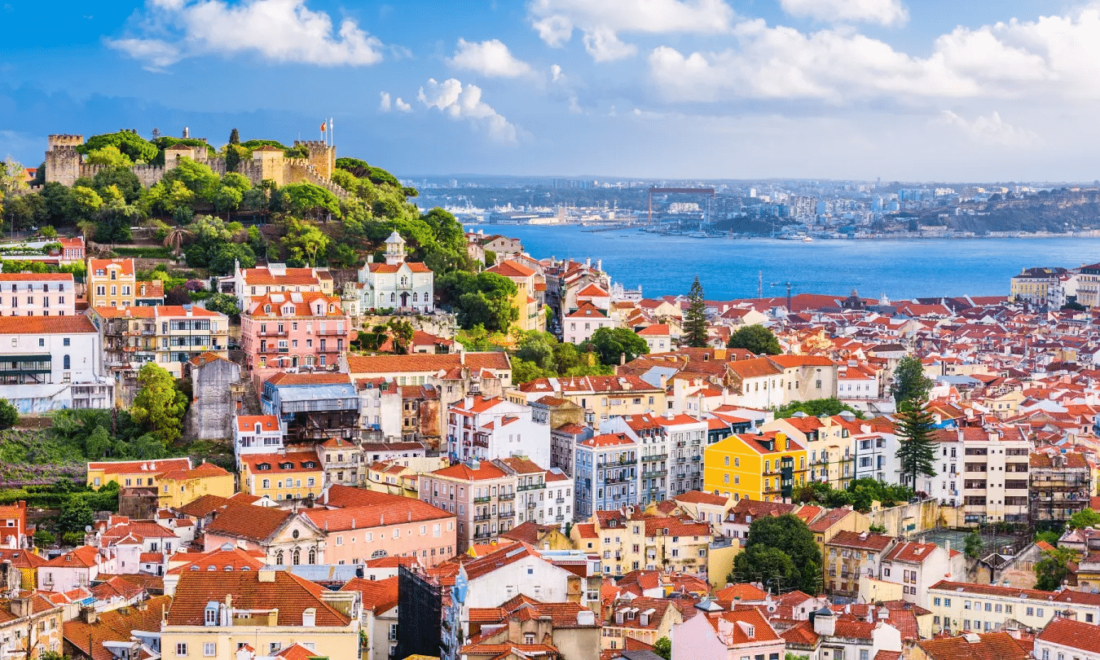
Lisbon guide
Lisbon, the capital city of Portugal, is a vibrant and historical destination with plenty to offer. Here is a comprehensive
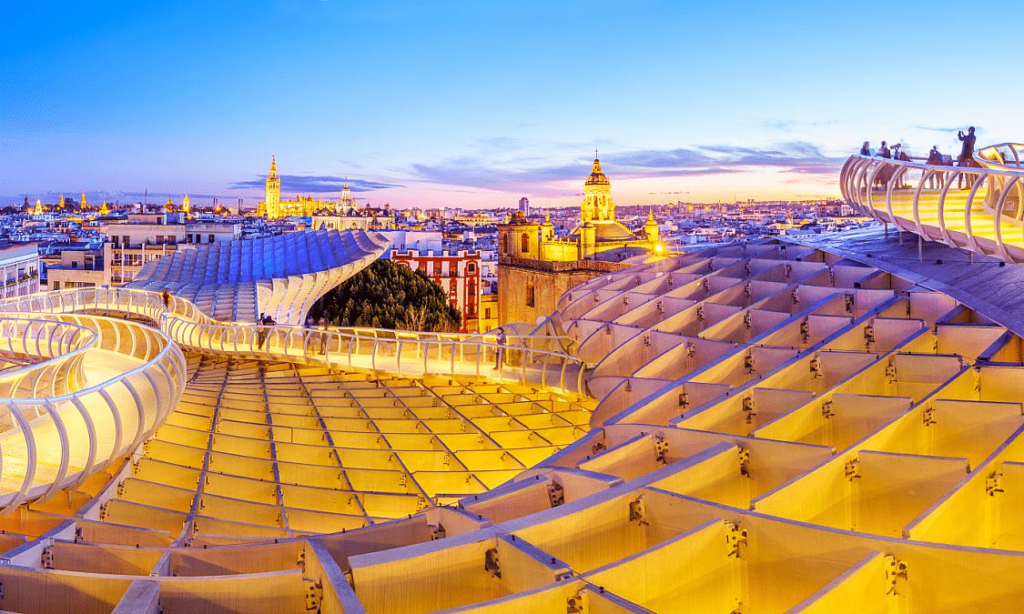
Seville travel guide
This Seville travel guide will introduce you to everything you need to know to eat well, save money, and see